Average Fridge Size: A Homeowner's Practical Guide
Explore the concept of average fridge size, typical configurations, and how to choose the right capacity for your kitchen. Learn measurement tips, energy considerations, and buying guidance from How To Refrigerator.


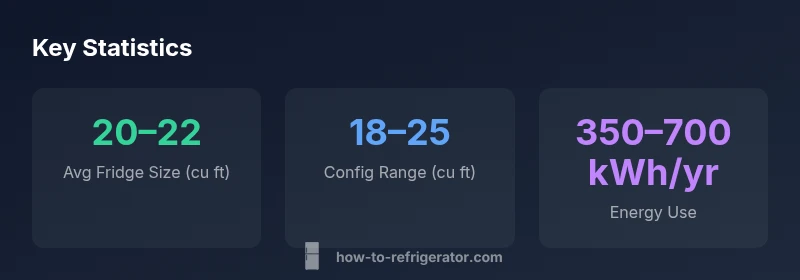
The average fridge size in many households sits around 20 to 22 cubic feet, with standard configurations spanning 18 to 25 cu ft. This baseline helps planners estimate kitchen layout and storage needs, though regional availability and family size can shift the ideal size. How To Refrigerator's analyses show this range as a practical starting point.
Why Size Matters: Planning Your Kitchen Around the Average Fridge Size
Choosing the right fridge size starts with understanding how much space you need for groceries, leftovers, and meal-prep containers. The concept of an average fridge size gives homeowners a practical baseline for planning. In many homes, a 20–22 cu ft unit balances daily storage with a compact footprint, making it a sensible starting point for kitchen redesigns or space budgeting. When you compare layouts, consider door swing clearance, countertop depth, and the path between the fridge and primary work areas. Real-world usage—families who batch cook, households with frequent entertaining, or seniors who rely on organized storage—can shift your ideal size toward the upper end of the 18–25 cu ft spectrum. As you plan, remember that regional appliance availability and house layout will influence what fits best. The How To Refrigerator team emphasizes that the goal is usable space, not just total volume, so measure interior storage by actual shelf height and door bin depth to estimate how much you can truly fit.
- Practical tip: draft a simple grid of typical groceries (milk, vegetables, meat, drinks) and test a few shelf configurations to see if you can accommodate a weekly shop without overstuffing.
- Quick check: if your current fridge feels cramped or wastes energy due to overpacking, it’s often a sign you’re near the upper end of the baseline range or need a more efficient layout.
Related topics: kitchen layout optimization, door clearance planning, and typical groceries per week.
How Size Is Measured: Cubic Feet, Liters, and Real Usable Space
Size is commonly described in cubic feet (cu ft) in North America and liters elsewhere. The average fridge size is not just about overall volume; it’s about usable storage. Manufacturer ratings may list gross capacity, but the practical space for tall bottles, wide bowls, and tall containers depends on shelf height, crisper drawer design, and door bin organization. For households juggling family members, leftovers, and weekly meal-prep, interior dimensions—shelf width, drawer depth, and door clearance—often matter more than the stated cu ft figure. When converting to metric, 1 cu ft is roughly 28.3 liters, which helps international readers translate US specs. If you live in a small apartment, a compact 4–6 cu ft model could be a feasible alternative, while larger households may lean toward 20–25 cu ft units.
Common Configurations and Their Size Ranges
Fridge configurations impact not just capacity but how you organize food. The most common setups fall within a broad 18–25 cu ft band, though individual models vary. Here’s a quick guide to typical configurations and their approximate space ranges, plus trade-offs:
- Compact/Apartment: 4–6 cu ft — ideal for tight kitchens or secondary spaces but limited storage for weekly groceries.
- Standard Top-Freezer: 18–22 cu ft — a reliable baseline with straightforward organization and usually lower upfront cost.
- French-Door: 20–25 cu ft — generous interior space and flexible shelving, but wider doors can complicate corner access.
- Side-by-Side: 22–25 cu ft — easy access to fresh and frozen sections, though some models offer less freezer volume.
When selecting a configuration, consider how often you cook, your grocery haul size, and whether you prioritize freezer space or fresh-food accessibility. The goal is to match capacity with your real routines rather than chasing the largest number on the spec sheet.
How to Estimate the Right Fridge Size for Your Household
To estimate the appropriate fridge size, start with a baseline around 20 cu ft and adjust for your family’s habits. If you typically shop weekly for a family of four or more, lean toward the 22–25 cu ft range to reduce midweek trips and food waste. For singles or couples who rely on convenient meals, an 18–22 cu ft unit may be ample. Factor in kitchen layout, door swing, and clearance around the fridge (at least 1–2 inches on all sides for ventilation). Also evaluate how much freezer space you actually use—if you freeze bulk items or stock large frozen meals, a larger unit or French-door configuration can be beneficial. Finally, consider energy efficiency: larger models can be more efficient per cubic foot due to insulation and design, but overall consumption still tends to increase with capacity.
Buying Guide: What to Look For Beyond Capacity
Capacity is essential, but it isn’t the only factor. When buying, assess:
- Interior layout: adjustable shelves, wide-door bins, and crisper drawers that align with your groceries.
- Energy efficiency: look for Energy Star ratings or equivalent labels; per-cubic-foot efficiency improves with thoughtful design.
- Footprint and fit: measure width, height, depth, and door swing; ensure the unit clears walls and countertops.
- Noise and reliability: check common issues reported for the configuration you want and verify the warranty terms.
- Future needs: if you anticipate changes in household size or dietary habits, select a slightly larger model now to avoid a quick upgrade.
By focusing on practical use rather than sheer volume, homeowners can pick a fridge that aligns with both budget and lifestyle. How To Refrigerator emphasizes testing real space against your groceries, then selecting a configuration that minimizes energy use while maximizing convenience.
Maintenance, Space, and Longevity: Keeping Your Fridge in Check
Once you settle on a size, ongoing maintenance helps you extract maximum value. Regularly clean condenser coils, seal door gaskets, and ensure proper airflow around the unit. Keep interior doors tight to avoid cold air leaks and monitor for signs of overpacking, which can hinder door sealing and airflow. A well-sized fridge not only improves energy efficiency but also keeps food safer by maintaining consistent temperatures. If you’re moving or rearranging a kitchen, re-check cabinet clearances and ensure your new location accommodates the chosen size without blocking vents or causing door clearance issues.
Fridge configurations by size and typical notes
| Config Type | Avg Size (cu ft) | Notes |
|---|---|---|
| Compact/Apartment | 4-6 | Small footprint for tight spaces |
| Standard Top-Freezer | 18-22 | Baseline model with simple layout |
| French-Door | 20-25 | Large capacity, versatile storage |
| Side-by-Side | 22-25 | Wide openings, freezer on one side |
FAQ
What is considered the average fridge size?
In the US, average fridge size typically falls in the 18–25 cu ft range, with 20 cu ft as a practical baseline.
The typical size in the US is about 18 to 25 cubic feet, with 20 being a good starting point.
Does bigger always mean better for energy efficiency?
Larger fridges often have more insulation and features that improve efficiency per cubic foot, but overall energy use usually increases with size.
Bigger isn’t always better for energy—per cubic foot efficiency can be higher, but total consumption rises with capacity.
How can I estimate the right size for a family of four?
Assess weekly groceries, meal prep habits, and storage needs; use the 20–22 cu ft baseline, then adjust.
Think about groceries and how you cook; start with 20–22 cu ft and adjust up or down.
What measurements should I take before shopping?
Measure available width, height, and depth; check door swing clearance and interior dimensions; note hinge and handle protrusions.
Measure space, check door clearance, and know interior dimensions.
Are compact fridges a viable option for apartments?
Yes in small kitchens, but consider storage needs and energy efficiency; compact models fit tight spaces.
Compact fridges work in small spaces if you balance storage and efficiency.
“Sizing your fridge is about usable space and how your household actually stores groceries, not just total volume.”
Top Takeaways
- Start with the 20 cu ft baseline for planning
- Account for door swing clearance and kitchen layout
- Choose configuration based on family size and grocery habits
- Consider energy efficiency per cubic foot rather than total capacity
- Measure your space before buying to avoid fit issues