36 Inch Refrigerator Counter Depth: Features, Fit, and Buying Guide
Explore how a 36 inch refrigerator counter depth fits your kitchen, the common configurations, measurement tips, and a practical buying guide to help homeowners choose the right model.


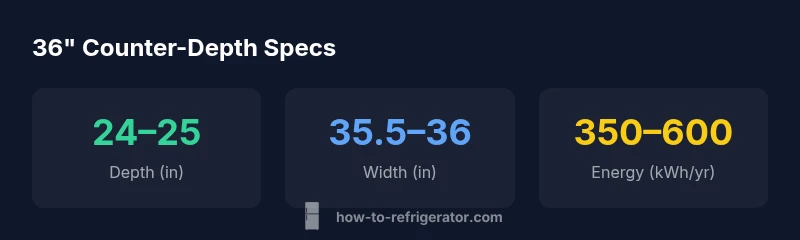
According to How To Refrigerator, a 36 inch refrigerator counter depth typically sits about 24–25 inches deep, with a width near 36 inches and doors that align with standard countertops. This size balances kitchen flow, cabinet alignment, and usable interior space. When shopping, compare French-door, side-by-side, and bottom-freezer layouts to match your space and daily routine.
What 36 inch counter-depth means in practice
For many kitchens, a 36 inch refrigerator described as counter-depth is designed to sit close to the standard countertop line rather than protruding into the room. In practical terms, expect a depth around 24–25 inches from the wall, with overall width near 35.5–36 inches. This configuration yields a flush, built-in look that visually enlarges the cabinet run while keeping doors easy to access. The interior layout usually prioritizes reach-in shelves, cooler drawers, and door storage, with some models offering adjustable shelves to maximize odd-sized containers. Homeowners who prioritize a seamless, modern aesthetic often choose counter-depth units to preserve traffic flow in a galley or open-plan kitchen. The How To Refrigerator team notes that while you gain a streamlined appearance, you may trade some overall storage capacity and deeper freezer space compared with full-depth models. Always compare interior dimensions and door swing to avoid fitting surprises in your space.
Comparison of common 36 inch counter-depth refrigerator configurations
| Model Type | Depth (approx) | Width (approx) | Door Configuration | Energy Use (kWh/yr) |
|---|---|---|---|---|
| Counter-Depth French Door | 24–25 in | 35.5–36 in | French-door | 350–450 |
| Counter-Depth Side-by-Side | 24–25 in | 35.5–36 in | Side-by-side | 400–550 |
| Counter-Depth Bottom-Freezer | 24–25 in | 35.5–36 in | Bottom-freezer | 350–500 |
FAQ
What does the term '36 inch counter-depth' mean for refrigerators?
It means the unit’s depth is designed to sit close to standard countertops, typically around 24–25 inches deep. This creates a flush look with cabinets while preserving interior space.
Counter-depth means the fridge sits close to the wall and countertop, giving a built-in look with less depth.
Are all 36 inch counter-depth models the same width?
Most models in this category are about 35.5–36 inches wide, but always verify the exact specs since a small tolerance exists between brands.
Most are around 36 inches wide, but check exact specs before buying.
Will a 36 inch counter-depth fridge fit a standard 36 inch cabinet opening?
If your opening is a true 36 inches, you can fit many counter-depth models, but consider clearance for doors and ventilation. Some kitchens may need minor cabinet adjustments.
A 36-inch opening can work, but measure clearance and leave space for doors.
What configurations are available in 36 inch counter-depth models?
Common configurations include French-door, side-by-side, and bottom-freezer. Each offers different interior layouts and door swing; choose based on storage needs.
French-door, side-by-side, and bottom-freezer are common options.
How much ventilation should surround a counter-depth fridge?
Provide at least 1–2 inches of clearance on the sides and back, plus any manufacturer-specific recommendations. Proper airflow helps efficiency and longevity.
Give some space on the sides and back for airflow.
“36 inch counter-depth refrigerators offer a clean, integrated look without sacrificing essential storage, but precise measurement and ventilation are essential for best performance.”
Top Takeaways
- Measure cabinet openings and clearances before shopping
- Compare depth and width specs across models
- Choose configuration based on door swing and storage needs
- Ensure proper ventilation and space for installation
- Check energy use to estimate long-term operating costs