How to Clean Refrigerator Condenser Coils: Step-by-Step Guide
Learn to locate, safely clean, and maintain refrigerator condenser coils to improve cooling efficiency and extend your appliance’s life. Follow step-by-step instructions, safety tips, and a practical maintenance plan from How To Refrigerator.


By cleaning your refrigerator condenser coils, you’ll restore proper airflow, reduce cooling effort, and extend the appliance’s life. This guide shows you how to locate the coils, safely unplug power, choose an effective cleaning method, and finish with a quick maintenance routine. It’s designed for homeowners and includes clear steps, safety tips, and realistic time estimates.
What condenser coils do and why cleaning matters
Condenser coils are the radiator-like fins located either at the back of a fridge or hidden under a grille along the base. They dissipate heat from the refrigerant as it circulates through the system. When these coils get covered in dust, pet hair, and cooking grease, airflow is hampered. That restriction forces the compressor to work harder, wasting energy and potentially shortening the appliance’s life. According to How To Refrigerator, keeping coils clean is one of the simplest and most effective maintenance tasks homeowners can perform to keep a fridge running efficiently. Signs of buildup include longer cooling cycles, a warm grille area, and visible dust on the back of the unit. A clean coil system helps your fridge reach the right temperatures faster and reduces frost on related components.
Understanding coil placement matters: some models hide coils behind a base grille, others behind a rear panel. The basic idea remains the same—dust-free coils allow air to pass freely, which improves heat transfer and reduces strain on the compressor. Regular visual checks and light cleaning as part of a seasonal maintenance routine can prevent unexpected failures and costly repairs. The How To Refrigerator team emphasizes that a quick coil clean is a small investment with meaningful payoffs in performance and energy efficiency.
Safety first: power down, unplug, and prep
Safety comes first when cleaning condenser coils. Always unplug the refrigerator or switch off the circuit at the breaker before you touch any electrical components. Remove items around the area to create a clean, dry workspace and avoid tripping hazards. If your fridge sits on a rug or carpet, place a towel or mat underneath to catch any dust or moisture that may fall during cleaning. Wear gloves and use a flashlight to inspect the coils closely so you don’t miss embedded dust. The How To Refrigerator team recommends taking a moment to plan your approach, because a calm, methodical removal of panels minimizes the risk of damaging components or accidentally unplugging something else. Keep a container handy for screws or small parts to prevent misplacement.
Tools & Materials
- Vacuum cleaner with hose attachment(Use a crevice tool or brush attachment to reach tight spaces without bending coils.)
- Stiff nylon coil brush(Best for dislodging dirt between fins without bending them.)
- Fin comb(Used to straighten bent coil fins after cleaning.)
- Gloves(Protect hands from sharp edges and dusty debris.)
- Flashlight(Illuminates dark areas behind panels.)
- Screwdriver (Phillips or flathead)(Needed for model-specific panels; check manual first.)
- Microfiber cloth(Wipe surfaces around coils with a damp (not wet) cloth if needed.)
- Drop cloth or old towel(Protects the floor from dust and debris.)
Steps
Estimated time: 25-40 minutes
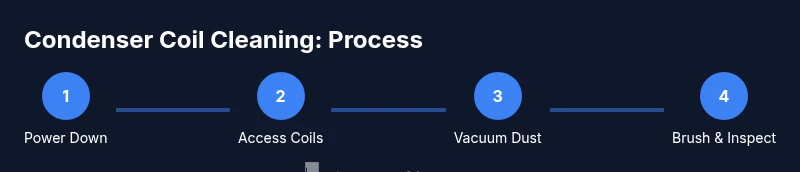
- 1
Power down and prepare
Unplug the refrigerator or switch off the dedicated circuit. Clear the area, remove items, and set a drop cloth to catch any dust. Keeping the area dry and safe minimizes the risk of electric shock and accidental spills once you start removing panels.
Tip: Have a helper hold panels while you unfasten screws if needed. - 2
Access the condenser coils
Locate the access point for your model—usually the front grille at the base or a back panel. Use the screwdriver if required to remove screws. Keep track of all fasteners in a labeled container so you can reassemble easily.
Tip: Consult the user manual if you’re unsure where the coils are located. - 3
Vacuum loose dust
With the vacuum’s brush or crevice tool, gently remove loose dust and debris from the coil surfaces. Hold the nozzle a few inches away to avoid bending fins and never press hard into the coil itself.
Tip: Keep a steady, sweeping motion to capture dust between sections. - 4
Dislodge stubborn debris
Use the stiff nylon coil brush to loosen dust trapped between fins. Work in long, light strokes along the coils and avoid prying between fins with force.
Tip: Never strike the coils with metal tools; that can bend fins permanently. - 5
Inspect and straighten fins
Check for bent fins and use a fin comb to restore alignment. Bent fins reduce airflow, so this step can boost cooling efficiency significantly.
Tip: Take your time; a few gentle passes are better than forcing the fins back into shape. - 6
Reassemble and test
Reattach the grille or back panel, plug the fridge back in, and run it for a short cycle to verify airflow and temperature. Listen for unusual noises and monitor interior temperatures over the next several hours.
Tip: If temperatures are still high after a cleaning, there may be a separate issue needing professional attention.
FAQ
Should I unplug the refrigerator before cleaning the condenser coils?
Yes. Always unplug or switch off the circuit before touching the coils to reduce the risk of electric shock. This protects you while you work and prevents accidental electrical contact.
Yes—unplug the fridge before you start.
How often should condenser coils be cleaned?
There isn’t a fixed schedule for every home. In dusty environments, inspect coils every few months and clean as needed. In cleaner homes, follow a seasonal or annual maintenance routine.
Check every few months and clean when you see dust.
Is it safe to use water or a steam cleaner on the coils?
Avoid soaking coils with water or using steam directly on them. Use a dry vacuum and brush first. If you must wipe, use a barely damp cloth and ensure the unit is unplugged.
No steam, no soaking—use a dry approach first.
What if the fins are bent or damaged?
Bent fins reduce airflow and should be straightened with a fin comb. If fins are severely damaged or coils are dented, consider professional service.
If fins are bent, use a fin comb or call a pro.
Can I clean coils on every fridge model?
Most models allow coil access for cleaning, but check your owner’s manual or manufacturer site for access points and cautions. Some models require professional service for panel removal.
Check the manual to be sure you can access the coils safely.
Watch Video
Top Takeaways
- Unplug before you touch any coils
- Locate coils in back or under base grille and access safely
- Use vacuum and brush to remove dust, avoiding damage
- Inspect fins with a fin comb and straighten as needed
- Reassemble, power up, and monitor cooling performance