How Long Is Chicken Broth Good for in the Refrigerator
Discover exact fridge life for chicken broth, how to tell if it's safe, and practical tips to maximize freshness for homemade and store-bought broths. Expert guidance from How To Refrigerator.


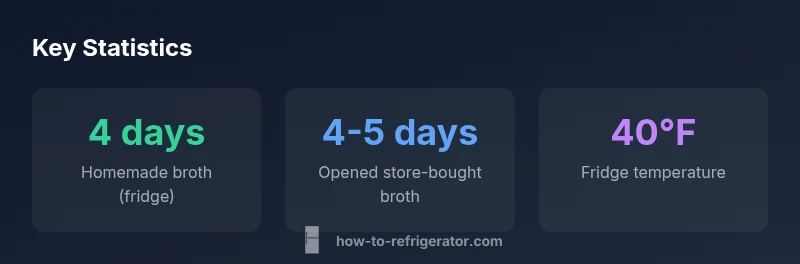
Chicken broth, whether homemade or store-bought, is generally safe in the refrigerator for about 4 days if kept at 40°F (4°C) or below. Opened store-bought broth typically lasts 4-5 days. Unopened shelf-stable broth can be kept longer in a pantry until opened, but once opened and refrigerated, use within 4-5 days. Discard if there is off odor, color changes, or mold.
Why Broth Shelf-Life in the Refrigerator Varies
For homeowners wondering how long is chicken broth good for in the refrigerator, the short answer depends on the broth’s origin and how it was stored. In general, broth that has been simmered at home and then cooled quickly tends to last about four days in the fridge when kept at a safe temperature of 40°F (4°C) or below. Store-bought varieties, once opened, follow a similar window, but always check the label for any chilling instructions. Temperature fluctuations, improper cooling, and lingering contaminants can shorten this window. The How To Refrigerator team emphasizes that proper handling—cooling broth promptly, storing it in clean containers, and keeping it closed—profoundly affects safety and flavor. Throughout this article we’ll break down the differences, signs to watch for, and practical steps to maximize freshness as you answer the question of how long is chicken broth good for in the refrigerator.
Homemade vs Store-Bought: What Changes in the Fridge
When you make broth at home, you control the ingredients and the cooking process, but you still face the same refrigeration constraints. Homemade broth typically retains quality for about four days in the refrigerator if stored in shallow, airtight containers and cooled quickly after cooking. Opened store-bought broth (even if it’s a high-quality product) shares the same safety window, though some manufacturers advise consuming it sooner for peak flavor. The critical factor is not the brand but how quickly the broth is cooled, sealed, and kept consistently cold. How To Refrigerator analysis shows that the difference between homemade and store-bought often comes down to added salt, preservatives, and handling. Both should be treated with the same respect for hygiene and temperature control.
Signs That Chicken Broth Is No Longer Safe
A broth that has passed its safe window may still appear or smell normal at first glance, but subtle cues signal decline. Cloudiness, sour or musty odors, a change in color, or visible mold are strong indicators to discard. If you’ve stored broth past the recommended period, always perform a safety check before reusing. Transfer broth to a clean container, sniff it, and inspect for unusual sediment. If anything seems off, it’s best to err on the side of caution and dispose of the broth.
How to Store Broth Properly in the Fridge
To maximize freshness and minimize waste, divide broth into small, dish-sized portions and chill rapidly after cooking. Use airtight, labeled containers with the date so you can track freshness easily. Place containers in the coldest part of the fridge, not in the door where temperatures swing. If you’re transferring from a large pot, use a splash guard and an ice bath to reduce cooling time. Proper storage is the best defense against deterioration and helps you answer the question, how long is chicken broth good for in the refrigerator with confidence.
Reheating and Reusing Leftover Broth Safely
When reheating broth, bring it to a rolling simmer and avoid reheating multiple times. Reheating destroys most bacteria but does not eliminate toxins that may have formed during storage. Smaller portions reheat more evenly and preserve flavor. If you plan to reuse leftovers with other ingredients, reheat to at least a gentle boil to ensure safety, then cool and store promptly. The goal is to preserve quality while maintaining safe temperatures throughout the process.
Quick Guidelines for Everyday Kitchen Practice
- Keep your fridge at or below 40°F (4°C). - Cool broth rapidly after cooking, ideally within two hours. - Use clean, airtight containers and date every portion. - Label leftovers to avoid guessing. - When in doubt, discard to prevent foodborne illness. - If you’ll store for longer, consider freezing into portions.
How To Extend Freshness with Smart Fridge Habits
Simple adjustments in how you store broth can extend its fridge life. Avoid keeping pots of hot liquid in the refrigerator; instead, portion and chill quickly. Keep raw poultry separate from broth to prevent cross-contamination, and ensure your fridge temperature remains constant. According to How To Refrigerator, the combination of rapid cooling, airtight packaging, and a steady cold environment makes the difference between broth that tastes good after a few days and broth that is unsafe to use.
Comparison of refrigeration windows for different broth types
| Broth Type | Fridge Window | Notes |
|---|---|---|
| Homemade broth | 4 days | Best used early for flavor |
| Opened store-bought broth | 4-5 days | Keep refrigerated in a covered container |
| Unopened shelf-stable broth | N/A in fridge | Store in pantry until opened and refrigerate after opening |
| Spoilage indicators | N/A | Odor changes, color shift, mold |
FAQ
Can I freeze chicken broth to extend its life?
Yes, freezing broth can extend its life for several months; freeze in small portions and thaw in the fridge when ready to use.
You can freeze broth in portions and thaw in the fridge when you need it.
Is store-bought broth safer than homemade?
Both are safe when handled properly; safety hinges on cleanliness and temperature control rather than brand alone.
Both are safe if handled properly; pay attention to storage.
What is the recommended refrigerator temperature for broth storage?
Keep your refrigerator at or below 40°F (4°C) for best results when storing broth.
Keep your fridge at 40 degrees or below to store broth safely.
How long does broth last after thawing?
Once thawed, use thawed broth within a few days and reheat promptly.
Use thawed broth within a few days and reheat properly.
Does broth stay safe in the fridge longer if sealed tight?
Yes—airtight containers minimize contamination and odor transfer, helping preserve quality for longer within the safe window.
Sealed containers help keep broth fresh longer within safe limits.
What are common signs broth has spoiled?
Sour smell, off color, cloudiness, or mold are indicators to discard immediately.
If it smells sour or looks odd, discard it.
“Properly stored broth in the fridge reduces waste and minimizes foodborne risk.”
Top Takeaways
- Use within 4 days for homemade broth.
- Opened store-bought broth lasts 4-5 days.
- Keep fridge at 40°F (4°C) or below.
- Discard if you detect spoilage signs.
- Freeze portions to extend shelf life when possible.