How Long Can I Keep Chicken in the Refrigerator? Safe Fridge Guidelines
Learn safe storage times for raw and cooked chicken in the fridge, plus tips on packaging, thawing, and when to freeze to prevent waste and foodborne illness.


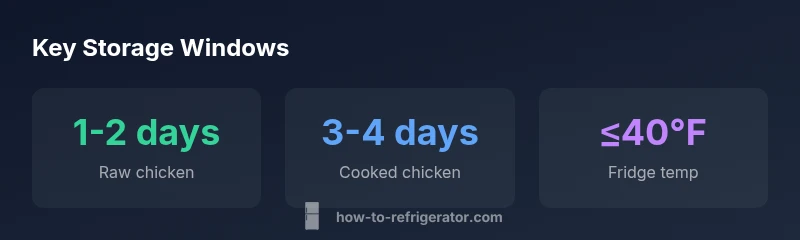
Raw chicken can be kept in the refrigerator for 1-2 days, while cooked chicken lasts 3-4 days. Always store at 40°F (4°C) or colder, in airtight containers, and refrigerate promptly after purchasing or cooking. For best results, label with the date and use within the recommended window, and consider freezing leftovers if you won’t use them soon.
Safe Time Frames: Raw vs Cooked Chicken
For homeowners asking how long can I keep chicken in the refrigerator, the answer depends on whether you’re handling raw pieces or leftovers from a recent meal. Raw poultry generally has the shortest fridge life, while properly stored cooked chicken lasts longer. These timeframes are designed to minimize the risk of foodborne illness and preserve flavor. How To Refrigerator recommends treating time as a starting point, not a guarantee—always inspect the product and trust your senses if you notice any doubt about safety.
Quality depends on more than time. Temperature stability, packaging, and separation from ready-to-eat foods matter as much as the clock. A clean, closed container with a tight seal prevents odors and cross-contamination, and placing items on a stable shelf prevents temperature fluctuations. If you’re cooking for a family, label leftovers with the date and plan to use or freeze them within the recommended windows. By following these guidelines, you’ll reduce waste and keep meals safe for busy weeknights.
How to Store Chicken Safely in the Refrigerator
Begin as soon as possible after you buy it. Keep raw chicken in its original packaging if you plan to cook it within a day or two; otherwise, transfer to a leak-proof container to prevent drips. Place raw poultry on the bottom shelf to minimize drip contamination onto other foods. Cooked chicken should be stored in airtight containers or wrapped securely to maintain moisture and prevent odors from traveling between foods. Store both raw and cooked chicken away from produce and ready-to-eat items. Do not thaw or marinate on the counter; instead, refrigerate or move to a cold container. Before placing meat in the fridge, make sure your appliance has a reliable temperature setting and that it is calibrated if you notice unusual cooling. Small habits, like tidying the fridge and rotating stock, can make a big difference in taste and safety over time.
Temperature, Placement, and Cross-Contamination
Your fridge needs to stay at or below 40°F (4°C) to slow bacterial growth. Use a fridge thermometer to confirm this, especially if the unit is older or frequently opened. Put raw chicken on the bottom shelf or in a dedicated meat bin to reduce cross-contamination. Cooked chicken should go on the upper shelves if possible, away from raw meat. Always store poultry in sealed containers or well-wrapped packaging. Do not wash raw chicken before refrigerating; washing spreads bacteria around the sink and kitchen surfaces. Washing hands and any utensils after contact is essential, and spills should be cleaned and sanitized promptly to prevent cross-contamination. These practices uphold safety regardless of whether you’re stocking a small apartment fridge or a larger family-size unit.
How to Tell If Chicken Has Gone Bad
Color alone isn’t a reliable indicator, but most spoiled chicken shows changes in color or texture along with an off smell. Fresh raw chicken should have a mild, almost odorless smell; cooked chicken should smell like normal leftovers. If you notice a sour or ammonia-like odor, a sticky or slimy surface, or any unusual sheen, discard immediately. Do not taste test unsafe poultry. Even if storage times look okay, a questionable aroma or texture is enough reason to discard. When in doubt, throw it out.
Common Mistakes That Shorten Freshness
Several everyday habits undermine safety despite good intentions. Leaving chicken out on the counter for more than two hours (or one hour in warm conditions) allows bacteria to multiply quickly. Improper sealing or using the wrong containers can increase odor transfer and moisture loss. Storing raw chicken above ready-to-eat foods on the fridge door adds risk of cross-contamination. Freezing is a safe alternative when you won’t use chicken in time, but avoid thawing meat on the counter and plan ahead to minimize waste.
Freezing and Thawing to Extend Shelf Life
If you won’t use chicken within the fridge windows, freezing is a practical option. Raw chicken can be frozen in its original packaging or a freezer-safe bag, while cooked chicken should be placed in airtight containers or well-wrapped to avoid freezer burn. Plan ahead for thawing: the safest method is to transfer frozen meat to the fridge the night before you intend to cook it; for smaller pieces, cold-water thawing in a sealed bag can be faster, followed by cooking promptly. Never thaw chicken at room temperature. After thawing, use chicken within a couple of days if kept refrigerated and reheat to a safe internal temperature before serving.
Storage duration table
| Category | Refrigerator duration | Notes |
|---|---|---|
| Raw chicken | 1-2 days | Store on bottom shelf in leak-proof packaging |
| Cooked chicken | 3-4 days | Store in airtight containers; refrigerate promptly |
FAQ
How long can raw chicken stay in the fridge?
Raw chicken can be stored in the refrigerator for about 1-2 days. If you’re unsure, err on the side of safety and use or freeze it sooner rather than later. Keep it sealed and on the bottom shelf.
Raw chicken lasts about 1-2 days in the fridge. Use or freeze it quickly for safety.
Can I store chicken on the fridge door?
Avoid storing raw meat on the fridge door due to temperature fluctuations. Use the bottom shelves to keep it consistently cold and reduce the risk of spoilage and drips.
Don't store raw chicken on the door; it isn't as cold there.
Is it safe to thaw chicken in the fridge?
Yes. Thaw chicken in the refrigerator to keep it at a safe temperature. Allow roughly overnight for small pieces, longer for larger portions, and plan ahead to minimize last-minute waste.
Thaw chicken in the fridge overnight for small pieces.
What are signs chicken has gone bad?
Look for a sour odor, off color, or a slimy texture. If anything seems unusual, discard it to prevent foodborne illness.
If it smells off or looks slimy, throw it away.
Can I freeze chicken to extend shelf life?
Yes, freezing preserves safety beyond fridge windows. Use within best-quality periods for flavor, and thaw in the fridge when ready to use.
You can freeze chicken to extend its life; thaw in the fridge later.
“Proper storage is the first line of defense against foodborne illness. If you follow the 1-2 day/raw and 3-4 day/cooked windows, your chicken will stay safer and tastier.”
Top Takeaways
- Store raw chicken 1-2 days max.
- Cooked chicken lasts 3-4 days.
- Keep fridge at or below 40°F.
- Label with date and freeze if needed.