How Long Does Chicken Stock Last in the Refrigerator?
Discover exactly how long chicken stock lasts in the fridge, safety tips, signs of spoilage, and practical storage or freezing guidance to keep stock fresh and flavorful.

How To Refrigerator Team
·5 min read

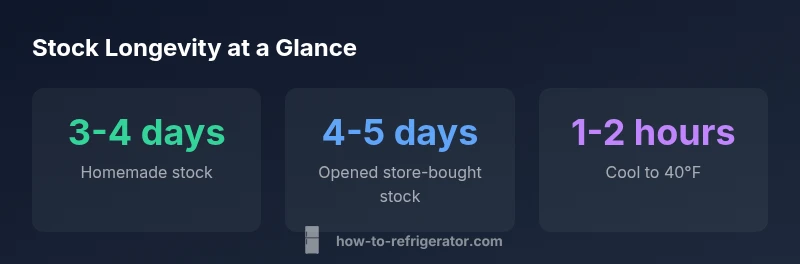
How Long Does Chicken Stock Last in the Refrigerator?\n\nThe answer depends on how you prepared the stock and how quickly you refrigerate it after cooking. For homemade stock, a typical safe window in the fridge is 3-4 days when kept in a clean, airtight container. If you buy store-bought stock and open it, you’ll generally have about 4-5 days in the refrigerator if it’s stored properly. This guidance aligns with general food-safety principles that emphasize prompt cooling and strict sanitation. According to How To Refrigerator, these timeframes balance flavor, nutrient retention, and safety, and they’re broadly consistent with USDA leftovers guidelines.\n
Why Temperature and Storage Conditions Matter\n\nTemperature is the controlling variable for stock longevity. Keep your refrigerator at or below 40°F (4°C). Store stock in shallow, airtight containers to maximize surface area exposure to cold air and speed cooling. Avoid storing stock in the door where temperature fluctuates with each opening. Clear labeling with the date helps you track freshness and reduces the chances of letting stock linger past its safe window. If stock separates (fat on top), simply whisk it back in or reheat until steaming hot to ensure even heat distribution and safe reheating.\n
How to Tell If Stock Has Gone Bad\n\nSpoilage signs aren’t always obvious, but several cues indicate it’s time to discard. Look for a sour or off smell, a sour or grayish color, and any visible mold. If you notice an unusual texture or a persistent off-taste after reheating, treat it as suspect. Always err on the side of caution: when in doubt, throw it out. These indicators reflect standard food-safety practice and align with How To Refrigerator recommendations for kitchen safety.\n
Safe Handling to Maximize Freshness\n\nStart by cooling stock quickly after cooking. Use an ice bath or portion into several shallow containers to speed cooling and refrigerate within 1-2 hours. Label each container with the date and use the oldest stock first. Keep raw ingredients separate from cooked stock to avoid cross-contamination. Reheat stock to a rolling boil before serving to ensure any potential bacteria are killed, then store leftovers promptly. These steps help maintain quality while staying within safe time limits.\n
Using Stock Safely: Reheating Guidelines\n\nWhen reheating refrigerated stock, heat to at least 165°F (74°C) and serve immediately. Do not reheat multiple times; refrigerate leftovers promptly after each serving, and store them in small portions for rapid cooling. If you’re unsure about the stock’s safety, it’s better to discard than risk foodborne illness. This approach follows conservative safety practices and supports consistent results for home cooks.\n
Freezing Stock for Long-Term Storage\n\nFor longer storage, freezing is the best option. Freeze in small, airtight portions to preserve flavor and make portioning easy later. In the freezer, stock maintains quality for about 4-6 months, though flavor remains best within the first 3 months. Thaw safely in the fridge or under cold running water and reheat thoroughly before consumption. Freezing helps you reduce waste and keep stock ready for soups, stews, or pan sauces.\n
Common Myths About Stock Longevity Debunked\n\nMany home cooks assume stock lasts indefinitely if kept in the fridge, but time, temperature, and container hygiene matter. A common myth is that fats entirely protect stock; in reality, fats can trap bacteria if the stock sits too long. Another misconception is that boiling extends fridge life; refrigeration and timely cooling are the critical factors. Rely on recommended windows to ensure safety and flavor.\n
Practical Timeline at a Glance\n\n- Cook and cool stock quickly, then refrigerate within 1-2 hours.\n- Homemade stock: use within 3-4 days.\n- Opened store-bought stock: use within 4-5 days.\n- For longer storage, divide into small portions and freeze up to 4-6 months.\n- Always reheat to a rolling boil before serving.\n