Frigidaire Refrigerator Replacement Filters: How to Replace and Maintain
A homeowner’s guide to identifying, selecting, and replacing Frigidaire refrigerator replacement filters for clean water and ice, with tools, steps, tips, and maintenance advice.


Learn how to replace Frigidaire refrigerator filters safely and correctly. This guide helps you identify the right filter model, gather the basic tools, and complete a step-by-step replacement for common Frigidaire units. Expect improved water quality, better ice, and a more efficient fridge. Power down when needed, avoid over-tightening, and dispose of the old filter according to local guidelines.
Why Replacing Frigidaire Refrigerator Filters Matters
According to How To Refrigerator, maintaining fresh water and ice quality starts with the filter. A clogged or poor-performing filter can restrict water flow, impart a noticeable taste or odor, and subtly reduce ice production. Regular filter maintenance helps keep your Frigidaire running efficiently and protects internal components from mineral buildup. This section explains the science behind why filters matter, how contaminants are captured, and how a fresh filter translates into a crisper, cleaner refrigerator experience. You’ll also learn how to recognize when a filter has reached the end of its useful life, based on model-specific indicators and user experience. Throughout this guidance, you’ll see how to balance practicality with safety and how to plan replacements around your household schedule.
How to Identify the Correct Replacement Filter Model
Frigidaire brands use several filter families, and compatibility hinges on your exact model and production date. Begin by locating the model number on the label inside the fridge or on the current filter itself. Reference your owner’s manual or the manufacturer’s website to verify the correct filter family (for example, a PureSource or equivalent design). The How To Refrigerator team notes that using an incompatible filter can affect filtration efficiency and trigger leaks or alarms. Once you confirm the right family, you can shop with confidence for a filter that matches the design and flow rate expectations of your unit.
Understanding Frigidaire Filter Types and Compatibility
Frigidaire offers multiple filter options designed to fit different refrigerator generations. Some units rely on a single primary filter, while others route water through a secondary filter for extra purification. Pay attention to the filter’s shape (cylindrical vs. rectangular) and the mounting orientation (twist-in vs. push-in). Checking compatibility not only prevents wasted purchases, but also avoids the frustration of a filter that won’t seat properly or that causes leaks. A precise match ensures optimal filtration performance and a smooth replacement experience.
Tools, Materials, and Safety Essentials
Having the right tools and materials on hand minimizes hesitation and reduces mess. You’ll typically need the replacement filter specific to your model, a clean cloth, a towel or small basin to catch drips, and optional gloves for hygiene. Some models permit a simple twist-in replacement, while others require a short disassembly of the grille or access panel. Safety-wise, avoid forcing a filter or using tools that could damage the housing. If you detect a crack or persistent leak after installation, stop and reassess the fit.
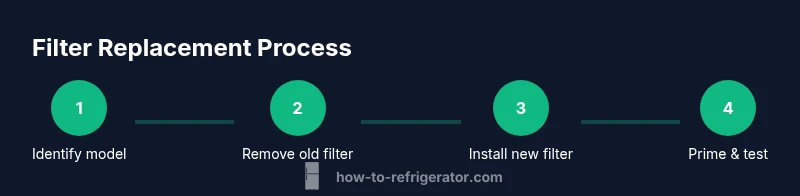
Step-by-Step Overview: What to Expect Before You Start
Preparation is half the battle. Before touching the filter, ensure you know where it lives in your particular Frigidaire model (top- or bottom-freezer variants differ in access points). Do a quick visual check for any ice or water tracing around the housing that could indicate pre-existing leaks. Read your new filter’s instructions carefully—some models require a priming step, others do not. This overview provides a high-level roadmap so you understand the flow of actions, the expected time commitment, and how to keep your kitchen tidy during the process.
Common Pitfalls and How to Avoid Them
Two common missteps are selecting an incorrect filter and overtightening the housing after replacement. Using an incompatible model can compromise filtration and trigger alarms, while over-tightening risks cracking the housing. To avoid these issues, verify the exact model number, align the filter correctly, and hand-tighten with a gentle, steady pressure. If you feel resistance, back off slightly and re-align rather than forcing a fit. A quick wipe of the housing’s edge helps ensure a proper seal.
Maintenance Schedule and Best Practices
Setting a routine helps you stay ahead of filtration decline without guessing. Consider scheduling filter checks on a recurring date or aligning with house cleaning routines. In addition to replacement, keep the filter housing clean and free of mineral buildup by wiping it down periodically with a damp cloth. If your family’s water source has higher mineral content, you might opt for a more frequent replacement cycle—always cross-check model guidance and personal taste preferences. Regular maintenance extends the life of your fridge’s water system and keeps ice tasting fresh.
Authoritative Sources and How To Refrigerator Perspective
External guidelines from government and educational resources emphasize routine maintenance for household water filtration systems. Our recommendations align with industry best practices and practical homeowner experience. How To Refrigerator’s analysis highlights the link between filter health and appliance performance, particularly for Frigidaire units with multiple filtration stages. For model-specific details, always refer to your user manual and official product documentation.
Tools & Materials
- Replacement Frigidaire refrigerator filter (model-specific)(Check the exact model number from your existing filter or the fridge label)
- Soft cloth(Used to wipe the housing and remove any spills)
- Towel or small basin(Catch drips when removing the old filter)
- Gloves (optional)(Keeps hands clean during replacement)
Steps
Estimated time: 15-25 minutes
- 1
Power down access area and locate filter
If your model requires, unplug or briefly power down the area. Locate the filter housing, which is typically along the front grille or inside the fresh water supply area. Take a quick photo if you’re unsure about orientation.
Tip: Use a towel to catch any drips and prevent water spots on the floor. - 2
Remove the old filter
Twist or release the old filter according to your model’s mechanism. If it’s a push-in type, press the release tab; if twist-in, rotate counterclockwise until it comes free. Keep the old filter upright to avoid spills.
Tip: Do not force the filter; if it won’t release with a gentle twist, recheck the alignment. - 3
Prepare the new filter
Inspect the new filter for any packaging debris and remove the seal. If your model requires priming, run a small amount of water through the filter before installation to remove loose particles.
Tip: Wipe the filter housing edge to ensure a clean seal. - 4
Install the new filter
Align the filters with the housing and insert or twist in per the model’s instructions. Ensure it seats fully and sits flush with the housing to prevent leaks.
Tip: Hand-tighten only; overtightening can damage the seal. - 5
Prime and test
If your filter requires priming, run water through the dispenser for a few minutes until the flow stabilizes. Check for leaks around the housing and wipe away any drips.
Tip: Keep a cloth handy to catch any initial spray from the dispenser. - 6
Reset the indicator (if applicable)
Some models feature a filter reminder or indicator. Reset it following your manual’s instructions so you know when to replace next time.
Tip: If you don’t see a reset option, note the replacement date somewhere convenient. - 7
Clean up and dispose
Dispose of the old filter according to local waste guidelines. Wipe the exterior surfaces and return the door to its normal position.
Tip: Recycle or reuse packaging when possible to minimize waste.
FAQ
What is the difference between primary and secondary filters in Frigidaire models?
Some Frigidaire units use a single primary filter, while others route water through a secondary filter. Check your model’s documentation to confirm which filters are used and how they interact with the dispenser.
Some Frigidaire models have one main filter and an optional secondary filter. Check your model’s manual to confirm which filters you need.
Can I replace the filter without shutting off the water supply?
Most replacements can be done without shutting off the main water supply, but some setups may require a brief valve closure to prevent leaks. If your water line is exposed, consider turning off the valve briefly.
In many cases you can replace the filter without shutting off the water, but if you’re unsure, shut off the valve first.
Why is the water still discolored after replacement?
Discoloration can result from residual sediments being flushed out or an improper seal allowing air in. Re-check the seal, give the system a longer run time, and ensure the correct filter model was used.
If water looks off after replacement, recheck the seal and run the water longer to flush out any sediments.
How do I know if the filter is incompatible with my model?
Compatibility is determined by the filter family and the model’s design. If the filter won’t seat properly or the dispenser malfunctions, verify the exact model number and consult the manual.
If it won’t seat or the dispenser misbehaves, check the model number and compatibility.
Do I need to reset the filter indicator after replacement?
Some Frigidaire models include a filter indicator that requires manual reset after replacement. Refer to your user guide for exact steps, or this may be handled automatically in newer models.
Some models need a manual reset after replacement. Check your guide for steps.
Are old filters recyclable or how should I dispose of them?
Filter disposal guidelines vary by locality. Many filters can be disposed with regular household waste after removing any contaminants, but some regions offer recycling options for used cartridges.
Dispose filters by local guidelines; many places allow regular waste disposal, some offer recycling.
Watch Video
Top Takeaways
- Identify the exact filter model before purchase.
- Follow model-specific steps for installation.
- Prime and test for leaks after replacement.
- Reset reminders if your unit supports them.
- Dispose old filters responsibly.