What Refrigerator Type Is Most Energy Efficient? A Practical Guide
Discover which fridge configurations deliver the best energy efficiency, how to compare models, and practical steps to cut energy use in your home. This guide explains common configurations and how to choose the right energy-saving option.


Bottom-freezer and modern top-freezer configurations often deliver the best energy efficiency for typical households, especially when equipped with inverter compressors and tight door seals. This comparison-focused guide helps you evaluate common refrigerator types and choose the most energy-efficient option for your needs.
What type of refrigerator is most energy efficient?
In the search for lower utility bills, homeowners ask: what type of refrigerator is most energy efficient? This guide answers that question by explaining how configuration, features, and usage interact with energy use. According to How To Refrigerator, the best energy efficiency often comes from bottom-freezer or modern top-freezer models equipped with inverter compressors and well-sealed doors. The aim is to reduce energy draw while maintaining reliable cooling, food safety, and convenience. Energy efficiency is influenced by design choices, not just label grades, so your decision should weigh real-world performance, maintenance requirements, and space constraints.
Key design features that influence energy use
Several design elements determine how much energy a refrigerator uses in daily life. First, the refrigeration system itself—continuously adjustable inverter compressors can match cooling demand rather than running at a fixed speed, saving energy during light loads. Second, insulation thickness and cavity air leakage play a big role: better insulation reduces heat ingress, keeping interior temperatures stable with less compressor work. Third, door seals and gasket integrity prevent cold air from escaping. Fourth, the interior layout, shelves, and airflow design affect how evenly cooling distributes, which in turn affects compressor run time. Finally, refrigerant type and cycle optimization contribute to efficiency, with newer models favoring low-GWP options that also enable better performance.
Inverter compressors and their impact
Inverter compressors adjust the motor speed to match cooling needs instead of switching on and off at full power. This results in smoother temperature control, less compressor wear, and lower energy consumption over time. While not every model uses an inverter, many of the most energy-efficient units today do. How To Refrigerator Analysis, 2026 indicates that inverter technology often corresponds with higher overall efficiency, especially when paired with efficient condensers and high-performance doors. When evaluating candidates, look for inverter compressor language in the specs and compare two models at similar sizes.
The impact of door seals and insulation
Even the most efficient compressor loses energy if door seals fail. A worn or damaged gasket can allow humidity and warm air to creep in, forcing the compressor to work harder. Regularly inspect gaskets, replace worn seals, and check that doors seal completely when closed. Insulation quality matters, too: older units or larger gaps can allow heat transfer that increases energy use. A compact interior with well-organized space reduces open-door time, further improving efficiency. Remember that optimal insulation works best when doors aren’t left ajar and the fridge isn’t placed next to a heat source like an oven or radiator.
Common configurations and their energy profiles
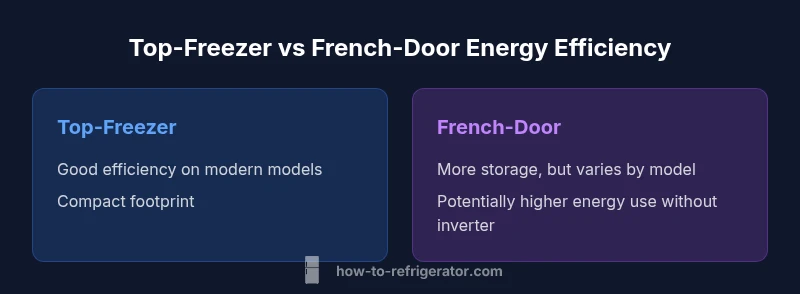
There are several common residential fridge configurations, each with different energy characteristics. Top-freezer models tend to be leaner and can be very energy-efficient when modernized. Bottom-freezer designs often place the freezer at the bottom for gravity-assisted cold air and can be efficient with proper insulation. French-door units offer expansive fresh-food space but typically rely on larger doors; energy efficiency varies widely by model, especially with inverter compressors. Side-by-Side refrigerators provide convenient storage but may require more energy due to wider air gaps and larger doors. When shopping, compare energy use per cubic foot and verify door sealing performance.
How to read Energy Star ratings and model numbers
Energy Star labels provide a standardized way to compare efficiency, but they aren’t the whole story. The label reflects tested performance under specified conditions; real-world energy use depends on your settings and usage. Look beyond the star rating to the annual energy consumption number, typically expressed in kilowatt-hours. Check the model's year and refrigerant type, as newer R600a systems often pair with higher efficiency and lower environmental impact. For reliable interpretation, compare at similar sizes and consider the climate where you live.
Real-world tips to improve fridge efficiency
Small changes can yield noticeable savings. Place the fridge away from heat sources, keep it in a cool, dry location, and avoid overfilling which blocks airflow. Set the refrigerator temperature to about 3-5°C (37-41°F) and the freezer to around -18°C (0°F) as a baseline; adjust only if food safety requires. Keep door openings brief and plan groceries to minimize door time. Regular cleaning of coils and fan blades, and ensuring proper drainage, also helps. According to How To Refrigerator, simple habits combined with a modern energy-efficient unit can deliver meaningful energy reductions.
How size and capacity affect energy use
Energy consumption scales with the interior volume and how well a fridge is insulated for that capacity. Bigger units aren’t automatically less efficient per cubic foot; a well-sized model with quality compressors, efficient defrost, and tight seals can outperform a larger, poorly insulated unit. When choosing size, balance daily storage needs with the likely energy use of larger units. For small spaces, a compact, well-insulated model may outperform a larger but inefficient alternative.
Maintenance practices that save energy
Maintenance matters as much as the model you pick. Clean condenser coils at least once a year, replace worn door gaskets promptly, and ensure the drain and defrost system function properly. If you have an automatic defrost system, monitor for frost buildup and service accordingly; heavy frost reduces heat transfer efficiency. Use a thermometer to verify temperatures and avoid overcooling, which wastes energy. Regular maintenance extends the life of the compressor and preserves efficiency.
The role of refrigerants and eco-friendly options
Newer refrigerators increasingly use natural refrigerants such as R600a, which provide strong energy efficiency while reducing environmental impact. The choice of refrigerant affects pressure, cooling cycles, and heat exchange efficiency. When evaluating models, review the refrigerant type and the presence of eco-friendly components, along with insulation quality and compressor design. Remember that refrigerant safety and disclosures are important for long-term reliability.
Practical buying scenarios: best for small kitchens vs large families
In compact spaces, a high-efficiency top-freezer or bottom-freezer model with tight seals and compact dimensions can deliver energy savings without sacrificing capacity. For larger households, French-door configurations with modern inverter compressors can be worth the extra upfront cost if energy efficiency and convenient layout justify the price. In all cases, prioritize models with solid insulation, good door seals, and realistic energy-use numbers based on your climate and usage.
How to verify energy efficiency at home
To confirm real-world performance, track electricity use for at least a month after installation, and compare it to the model’s rated energy consumption. Use a smart meter or utility data if available, and observe how daily use aligns with expectations. Check for frost buildup, door seal performance, and temperature stability during peak loads. If you suspect inefficiency, consult a certified appliance technician. The How To Refrigerator team suggests following a structured checklist and validating improvements against a baseline.
Feature Comparison
| Feature | Top-Freezer | Bottom-Freezer | French-Door | Side-by-Side |
|---|---|---|---|---|
| Energy Efficiency | High in modern units, especially with inverter tech | Very high when inverter compressors are used | Typically high, model-dependent | Moderate to high depending on model and size |
| Door Configuration | Single top door with freezer above | Bottom freezer with single bottom door | Two wide doors for fresh food, bottom freezer | Left-right paired doors with vertical freezer |
| Storage Flexibility | Compact, good for smaller spaces | Good balance of fridge/freezer access | Excellent fresh-food space, flexible shelves | Convenient access but narrower interior |
| Typical Upfront Price | Lower to mid-range | Mid-range | Higher, premium features common | Mid to high depending on model |
| Best For | Energy-conscious, compact kitchens | Families needing freezer space, efficiency | Large fresh-food storage with style | Convenience and accessibility with efficiency |
Strengths
- Typically lower upfront cost than premium configurations
- Strong energy performance in modern top/bottom-freezer designs
- Wide availability of parts and service for common configurations
- Simple design often means fewer potential seal issues
Cons
- Limited door space impacting storage of large items
- French-door and side-by-side can be energy-hungry if not well designed
- Larger models may require more energy if insulation is poor
Bottom-freezer and modern top-freezer designs are generally the most energy-efficient for most homes
For energy savings, prioritize inverter-equipped top/bottom-freezer models with solid door seals. If you need more fresh-food space, compare energy use carefully and choose a model with a high efficiency rating and good insulation.
FAQ
Which fridge type is most energy efficient?
Modern top-freezer and bottom-freezer models with inverter compressors are typically the most energy-efficient options for homes. Energy efficiency depends on the exact model, insulation, and door seals, so compare Energy Star ratings and real-world energy use.
For the best energy efficiency, look at inverter-equipped top-freezer or bottom-freezer models and check the Energy Star rating.
Do side-by-side fridges use more energy than other types?
Often yes, due to larger door area and potential for more energy loss; however, models with efficient compressors can be comparable to other configurations if well designed.
Side-by-side fridges can use more energy, but it depends on the model and efficiency features.
Is Energy Star enough to guarantee energy efficiency?
Energy Star provides a useful guideline, but you should compare the annual energy consumption and consider your climate and usage. The star rating alone isn’t a complete measure of efficiency for your home.
Energy Star helps, but always look at actual energy use for your situation.
Should I buy a larger fridge to save energy?
No. Energy use generally increases with capacity unless the larger unit is better insulated and has high-efficiency components. Choose a size that fits your typical storage needs and climate.
Bigger isn't automatically more efficient; pick a size that fits your needs and energy goals.
What maintenance improves energy efficiency?
Keep coils clean, replace worn door gaskets, verify temperatures, and defrost when needed. Small maintenance tasks can yield meaningful energy savings over time.
Clean coils and seals regularly to maintain efficiency.
How can I verify energy efficiency at home?
Track electricity use for a month and compare with the model’s rated consumption. Use a smart meter if available and look for frost issues or door seal problems that affect performance.
Use a meter or utility data to verify actual energy use and check for issues.
Top Takeaways
- Evaluate energy use per model, not just capacity
- Prioritize inverter compressors and good door seals
- Consider kitchen layout when choosing a fridge
- Check Energy Star rating and actual energy use
- Perform regular maintenance to sustain efficiency