What Type of Refrigerator Is Most Efficient: A Practical Guide
Explore which refrigerator type minimizes energy use, how to compare models, and practical steps to choose the most efficient option for your home.


Across standard refrigerator configurations, top-freezer models typically deliver the highest energy efficiency. You’ll trade some convenience and space for this efficiency in bottom-freezer, side-by-side, and French-door designs. For homeowners aiming to minimize energy use, prioritize Energy Star ratings, proper sizing, and reputable brand efficiency data when choosing what type of refrigerator is most efficient.
The Efficiency Imperative for Home Kitchens
The kitchen is a major energy consumer in many homes, and the refrigerator often operates quietly in the background. The central question homeowners ask is: what type of refrigerator is most efficient? According to How To Refrigerator, efficiency hinges on choosing the right configuration for your space and daily routines, then validating claims with energy labels and real-world use. This section establishes the lens for our comparison: design simplicity, insulation quality, compressor technology, and defrost strategies all drive long-term energy use. We’ll also cover practical pre-purchase steps—accurate sizing, fixture placement, and ensuring an Energy Star rating—so you can align your purchase with energy savings while meeting your family’s needs. The goal is a thoughtful balance of performance, reliability, and efficiency for your home lifestyle.
The Efficiency Imperative for Home Kitchens
The kitchen is a major energy consumer in many homes, and the refrigerator often operates quietly in the background. The central question homeowners ask is: what type of refrigerator is most efficient? According to How To Refrigerator, efficiency hinges on choosing the right configuration for your space and daily routines, then validating claims with energy labels and real-world use. This section establishes the lens for our comparison: design simplicity, insulation quality, compressor technology, and defrost strategies all drive long-term energy use. We’ll also cover practical pre-purchase steps—accurate sizing, fixture placement, and ensuring an Energy Star rating—so you can align your purchase with energy savings while meeting your family’s needs. The goal is a thoughtful balance of performance, reliability, and efficiency for your home lifestyle.
How Refrigerators Use Energy: Principles to Know
Refrigerators are essentially heat pumps that move heat from inside the unit to the room. Key energy drivers include the efficiency of the compressor, the quality of insulation, door seals, and the frequency of defrost cycles. In modern models, variable-speed compressors can adjust cooling intensity based on demand, helping reduce energy use during idle periods. Lighting and fan systems also affect consumption, especially in larger or feature-rich models. Defrost methods—manual, adaptive, or frost-free—impact energy needs differently depending on climate, door usage, and occupancy. How To Refrigerator emphasizes that understanding these principles helps homeowners interpret energy labels and make informed choices beyond cosmetic features. Keep in mind that real-world usage, household size, and climate all influence the bottom line.
How Refrigerators Use Energy: Principles to Know
Refrigerators are essentially heat pumps that move heat from inside the unit to the room. Key energy drivers include the efficiency of the compressor, the quality of insulation, door seals, and the frequency of defrost cycles. In modern models, variable-speed compressors can adjust cooling intensity based on demand, helping reduce energy use during idle periods. Lighting and fan systems also affect consumption, especially in larger or feature-rich models. Defrost methods—manual, adaptive, or frost-free—impact energy needs differently depending on climate, door usage, and occupancy. How To Refrigerator emphasizes that understanding these principles helps homeowners interpret energy labels and make informed choices beyond cosmetic features. Keep in mind that real-world usage, household size, and climate all influence the bottom line.
Common Configurations and Their Efficiency Context
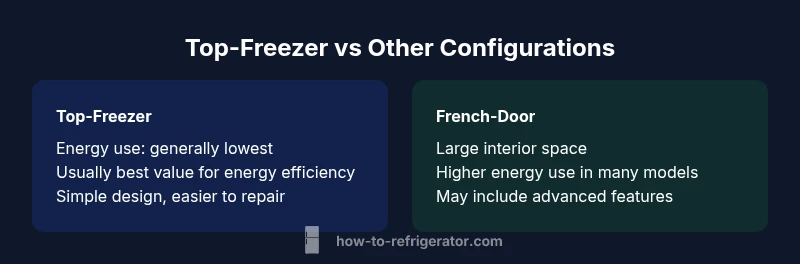
There are several common refrigerator configurations, each with trade-offs between energy use, storage space, and convenience. The traditional top-freezer typically uses less energy due to a simpler design, making it a benchmark for efficiency. Bottom-freezer layouts can improve usability but often come with higher energy demands because the freezer compartment is harder to insulate uniformly. Side-by-side models offer wide shelves and easy access but usually consume more energy due to larger door openings. French-door and other double-door designs emphasize interior space and flexibility but tend to be among the least energy-efficient in standard assortments if the model includes wide doors and expansive glass panels. When evaluating options, use energy labels and a sizing plan to understand how your family’s routine translates into daily energy use.
Common Configurations and Their Efficiency Context
There are several common refrigerator configurations, each with trade-offs between energy use, storage space, and convenience. The traditional top-freezer typically uses less energy due to a simpler design, making it a benchmark for efficiency. Bottom-freezer layouts can improve usability but often come with higher energy demands because the freezer compartment is harder to insulate uniformly. Side-by-side models offer wide shelves and easy access but usually consume more energy due to larger door openings. French-door and other double-door designs emphasize interior space and flexibility but tend to be among the least energy-efficient in standard assortments if the model includes wide doors and expansive glass panels. When evaluating options, use energy labels and a sizing plan to understand how your family’s routine translates into daily energy use.
Top-Freezer: The Benchmark for Efficiency
Top-freezer refrigerators have long been recognized as among the most energy-efficient choices in modern homes. Their simple construction minimizes heat leakage and air exchange with the kitchen environment, which helps reduce energy use over time. For households prioritizing long-term savings and reliability over extra bells and whistles, a top-freezer model is a strong contender. Look for models with solid insulation, a tight gasket, and an efficient compressor. The How To Refrigerator team notes that even within this category, choosing an Energy Star-rated unit and ensuring proper sizing relative to your household can maximize energy savings without sacrificing everyday usability.
Bottom-Freezer: Efficiency with a Modern Twist
Bottom-freezer models place the freezer at the bottom for ergonomic access and can offer excellent energy efficiency when properly sized and sealed. While they may cost more upfront than top-freezer units, many households appreciate the improved daily usability that reduces door openings and improves storage workflow. The efficiency gap between bottom-freezer and top-freezer models depends on insulation quality, door design, and the inclusion of energy-saving features like adaptive defrost or variable-speed compressors. If you routinely store tall items and value a quicker reach to frozen foods, bottom-freezer configurations can be a smart compromise between energy efficiency and practicality.
Side-by-Side: Convenience vs. Efficiency
Side-by-side refrigerators are designed for easy access to both fresh and frozen foods with tall, narrow doors. This design often incurs higher energy use due to larger door openings and increased surface area exposed to warmer room air. For households with frequent door openings or large beverage inventories, the convenience factor matters, but it can come at the cost of efficiency. When selecting a side-by-side, prioritize models with energy-efficient compressors, improved door gaskets, and intelligent defrost controls. How To Refrigerator recommends verifying Energy Star certifications and considering a model with a smaller door area if your aim is to minimize energy consumption while maintaining accessibility.
French-Door and Other Big-Box Models: Are They Efficient?
French-door and other high-capacity designs emphasize interior space and flexible shelving. While they offer unparalleled layout options, they often use more energy due to larger doors and more complex components. If energy efficiency is the primary goal, you may find that a well-sized top-freezer or bottom-freezer model provides better performance per cubic foot of storage. When evaluating a French-door model, look for features that reduce energy waste—tight seals, efficient compressors, and advanced temperature management. The How To Refrigerator team suggests balancing the desire for roomy interiors with a realistic assessment of energy costs and runtime behavior. In many homes, a smaller footprint with efficient insulation can outperform a larger, feature-heavy model in total energy use.
Reading Energy Labels and Real-World Use
Energy labels provide a snapshot of how a refrigerator is expected to perform under standardized test conditions. However, real-world energy use depends on climate, door frequency, setting choices, and occupancy. An important step is to examine the annual energy consumption estimate and compare similar sizes and configurations. The label may also reveal the model’s defrost method and compressor efficiency. How To Refrigerator emphasizes that the most efficient choice is not necessarily the model with the lowest label value, but the one that best aligns with your daily behavior and space constraints. To optimize your decision, map your typical daily usage to the energy label outcomes and choose a model with robust insulation and high-quality seals.
Practical Buying Guide: How to Choose the Most Efficient Model
When shopping, start with a precise size audit: measure your space, account for door clearance, and estimate usable storage. Then compare energy performance across at least two configurations that fit your needs. Prioritize Energy Star-certified models and inspect key components: door seals, insulation thickness, and compressor type. Consider features that save energy during low-demand periods, such as adaptive defrost and humidity-controlled crisper drawers. Budget for long-term costs with a focus on energy efficiency rather than upfront price alone. The How To Refrigerator guidance recommends talking to a salesperson about real-world efficiency, checking warranty terms, and reading independent reviews to corroborate label claims.
Maintenance and Operational Tips to Preserve Efficiency
Maintenance plays a crucial role in sustaining refrigerator energy efficiency. Clean coils, ensure door seals are intact, and keep the area around the unit free from obstructions that impede airflow. Set the thermostat to an appropriate temperature—generally around 3-5°C (37-41°F) for fresh food and -18°C (0°F) for frozen items, adjusting for your climate as needed. Regularly defrost manual-freezer sections if required and keep the interior organized to reduce door openings. How To Refrigerator advocates a simple quarterly check: inspect seals, verify cool airflow, and test the door’s ability to close firmly. Routine care extends component life and keeps energy use consistent.
When Size and Placement Matter for Efficiency
Placement affects efficiency as much as configuration. Avoid placing the fridge next to heat sources like ovens or direct sunlight, which makes the compressor work harder. Leave space around vents and ensure your kitchen has adequate ventilation. If your pantry or kitchen layout forces a larger footprint, consider models that offer improved insulation and seals rather than prioritizing size alone. A well-sized refrigerator placed in a cool, shaded location is more likely to deliver the energy savings you expect. The How To Refrigerator approach emphasizes practical layout planning alongside model selection to maximize efficiency.
Putting It All Together: Which Type Is Most Efficient for You?
The best choice depends on your household size, layout, and energy goals. If energy efficiency is the primary criterion, top-freezer configurations often lead the field due to their uncomplicated construction and strong insulation. However, family size, storage needs, and the desire for convenience can shift the priority toward bottom-freezer, side-by-side, or French-door styles, provided you select Energy Star-rated models and size them appropriately. In the end, the most efficient refrigerator for your home is the one that minimizes energy use while meeting your daily needs. The How To Refrigerator methodology combines label-driven evaluation with real-world usage patterns to guide you toward that optimal balance.
Authoritative Sources and Next Steps
For further validation, consult official guidance from energy agencies and reputable publications. The U.S. Department of Energy outlines energy-saving tips for household appliances, while the EPA Energy Star program provides certification details. Consumer-focused outlets also review practical performance in real homes. By cross-referencing these sources and applying How To Refrigerator’s step-by-step approach, you can confidently select the most efficient refrigerator for your household.
Final Thoughts and Next Steps
Choosing the most efficient refrigerator involves understanding configurations, energy labels, and real-world usage. Use this guide to compare options, evaluate price versus value, and plan for long-term savings. Remember that the most efficient model is not universally the same for every household; it’s the option that best matches your family’s needs while delivering strong energy performance. The How To Refrigerator team encourages readers to test models, read independent reviews, and verify that the chosen unit fits your space and family lifestyle.
Feature Comparison
| Feature | Top-Freezer | Bottom-Freezer | Side-by-Side | French-Door |
|---|---|---|---|---|
| Energy Use | Typically lowest among standard configurations | Moderate energy use when sized appropriately | Higher energy use due to large door openings | Higher energy use due to wide doors and large interior space |
| Energy Star/Label | Commonly available; many models certified | Commonly available; many certified | Commonly available; energy use tends to be higher | Commonly available; certification depends on model |
| Typical Price Range | $500-$1,200 | $600-$1,600 | $1,000-$2,800 | $1,500-$4,000 |
| Best For | Budget-conscious and energy-focused households | Families needing more usable storage with decent efficiency | Homes needing quick access to fresh and frozen items | Large households prioritizing interior space and design |
Strengths
- Lower upfront cost for traditional configurations
- Typically easier to repair due to simpler design
- Strong energy efficiency in top-freezer models
- Good balance of capacity and efficiency for many households
Cons
- Feature density may be lower than high-end models
- Door openings in some configurations increase energy use
- Bottom-freezer and French-door models can be pricier upfront
- Side-by-side often suffers higher energy use due to large doors
Top-freezer often wins on efficiency; other configurations excel in space and convenience
Choose top-freezer if energy efficiency is your top priority. If you need more storage or daily access patterns favor wide doors, consider bottom-freezer, side-by-side, or French-door models, ensuring Energy Star certification and proper sizing.
FAQ
Is a top-freezer refrigerator always more energy-efficient than other configurations?
Generally yes, but the exact efficiency depends on model quality, insulation, and compressor design. Always compare Energy Star ratings and real-world usage for your home.
Yes, top-freezer models are usually the most energy-efficient, but check Energy Star ratings for the specific model you’re considering.
Do energy labels guarantee real-world savings?
Energy labels provide a standardized benchmark, but actual savings depend on climate, usage patterns, and placement. Use the label as a starting point, then assess how your daily habits affect energy use.
Energy labels help you compare models, but real savings depend on how you use the fridge day to day.
What size refrigerator do I need for a small family?
For small households, a compact or standard-size unit that fits the space and provides essential shelves is often best. Avoid oversized units that run unnecessarily long.
Pick a size that fits your space and daily needs—bigger isn't always better for a small family.
How can I maximize efficiency after purchase?
Keep the coils clean, seal doors tightly, and avoid placing the fridge next to heat sources. Set a moderate internal temperature and organize items to reduce door openings.
Clean coils, tight seals, and mindful loading can significantly boost efficiency.
Are smart refrigerators more energy-efficient than traditional ones?
Smart features can improve efficiency by optimizing cooling cycles, but they also draw standby power. Compare models with and without smart features and choose based on how you use them.
Smart features can help save energy, but verify the overall efficiency with the model’s ratings.
Top Takeaways
- Prioritize Energy Star ratings when comparing models
- Size the refrigerator to your household to reduce energy waste
- Consider placement to minimize heat sources and improve efficiency
- Balance space, features, and efficiency for best results