Difference Between Refrigerator and Heat Engine: A Thorough Comparison
Explore the difference between refrigerator and heat engine, how each works, energy flow, and practical implications for homeowners seeking clarity on thermodynamics.


TL;DR: A refrigerator is a device that uses electrical energy to move heat from a low-temperature interior to the warmer surroundings, delivering cold temperatures inside. A heat engine does the opposite—converts heat into mechanical work, while dumping waste heat to the environment. The core difference is energy flow: cooling heat versus producing mechanical work, measured by COP in refrigerators and efficiency in engines.
Difference Between Refrigerator and Heat Engine: Core Concepts
Understanding the difference between refrigerator and heat engine starts with recognizing two different energy trajectories. A refrigerator uses electrical energy to remove heat from its interior and exhaust it to the surrounding environment, yielding a colder box for food storage. A heat engine does the reverse: it consumes heat to perform work, with waste heat expelled to the surroundings. This distinction—cooling versus work production—drives their design, operation, and efficiency metrics, and is essential for homeowners trying to estimate energy bills or troubleshoot appliances. According to How To Refrigerator, clear mental models of these energy pathways help avoid common misinterpretations when dealing with HVAC and refrigeration systems. The How To Refrigerator team found that most homeowners confuse these devices because both revolve around heat transfer, yet their end goals and energy flows diverge significantly.
How a refrigerator works: the cooling loop
A modern refrigerator typically uses a vapor-compression cycle that moves heat from a low-temperature evaporator to a high-temperature condenser. The core components—the compressor, evaporator, condenser, and expansion device—work like a pump network that lowers interior temperature while keeping the outside environment in balance. The key metric for refrigerators is the coefficient of performance (COP): a higher COP means more cooling per unit of electrical energy, but COP varies with ambient temperature and load. Real-world use shows COP is not a fixed rating; it changes with usage patterns, door openings, and ambient conditions. Simple energy-saving strategies—avoid overfilling, keep door seals tight, and provide adequate spacing around the condenser—can meaningfully improve steady cooling performance. Importantly, remember that a refrigerator is designed to move heat from inside to outside, not to generate work, which guides how homeowners should interpret its energy use and maintenance needs.
How a heat engine works: converting heat into work
Heat engines convert part of the input heat into mechanical work with the remainder expelled as waste heat. Classic examples include internal combustion engines and steam turbines. The engine's theoretical maximum efficiency depends on the temperature difference between the heat source and sink; in theory, a Carnot engine achieves the upper bound, while real engines fall short due to friction, heat losses, and imperfect cycles. For homeowners, the concept still matters because many devices rely on the same thermodynamic principles to convert energy into motion or electricity. When you compare the difference between refrigerator and heat engine, the key point is that the engine aims to produce useful work rather than cooling space, and it must manage heat rejection as part of its cycle. Practical engines are designed for durability, fuel efficiency, and real-world operating conditions.
Core differences in energy direction, goals, and metrics
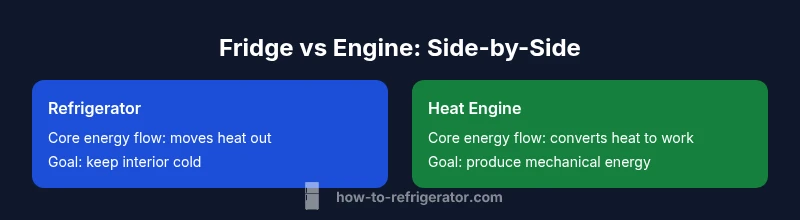
At a high level, a refrigerator extracts heat from an interior and dumps it outside, using electrical energy to drive the process. A heat engine accepts heat from a source, converts part of it into useful work, and rejects the rest. The main metric families differ: COP (and related performance metrics) for refrigerators vs efficiency metrics for engines (often defined as useful work output divided by heat input). For homeowners, this distinction matters when estimating energy bills, sizing systems, and interpreting energy labels. The energy flow direction explains why refrigerators require insulation and door seals, while engines require robust thermal management and fuel or energy sources. How To Refrigerator notes that many people assume both devices are just heat movers, but the physical limits and control requirements diverge in meaningful ways. In short, the difference between refrigerator and heat engine is not just semantics—it's a fundamental framing of energy transformations.
Comparison
| Feature | Refrigerator | Heat Engine |
|---|---|---|
| Core energy flow direction | Moves heat from inside to outside (cooling) | Converts heat to work, rejects rest |
| Primary goal | Keep interior cold for storage | Produce mechanical work or electricity |
| Typical efficiency metric | COP (coefficient of performance) | Thermal efficiency (useful work/heat input) |
| Common applications | Food preservation in households | Power generation or motion from heat |
| Temperature/pressure context | Narrower, kitchen-focused ranges | Broader thermodynamic ranges depending on cycle |
| Design challenges | Heat leakage, insulation, compressor noise | Friction, heat losses, fuel/energy source management |
| Installation considerations | Home kitchen integration, venting, space | Industrial or automotive contexts with fuel systems |
Strengths
- Clarifies energy-flow directions for cooling vs work production
- Helps readers interpret COP vs engine efficiency
- Aids energy budgeting for household appliances
- Supports better interpretation of energy labels and specs
- Reduces confusion in thermodynamics education
Cons
- Can be conceptually challenging for beginners
- Requires familiarity with basic thermodynamics terms
- May seem abstract without concrete demonstrations
The refrigerator wins for household cooling clarity; the heat engine framework wins for understanding work production in energy systems.
Use COP to judge cooling devices and engine efficiency to assess heat-to-work conversions. When homeowners learn to separate these metrics, energy planning and appliance choices become clearer and more accurate.
FAQ
What is the essential difference between refrigerator and heat engine?
The essential difference between the two is their energy goal: a refrigerator moves heat to achieve cooling, while a heat engine converts some heat into useful work. Each uses energy differently and is evaluated by distinct performance metrics.
The key distinction is cooling versus work production—refrigerators remove heat to keep food cold, engines convert heat into motion.
Is a refrigerator a heat engine?
No. A refrigerator is not designed to produce mechanical work; it uses electrical energy to move heat from the interior to the exterior. Both rely on thermodynamics, but their aims and energy pathways differ significantly.
A fridge isn’t a heat engine; it moves heat to cool the inside.
What metric measures refrigerator performance?
Realtively, refrigerators are evaluated by COP, which measures how much cooling is achieved per unit of electrical energy. COP varies with temperature, load, and door usage, so real-world performance can differ from lab ratings.
COP tells you how efficiently a fridge cools for each unit of electricity used.
Can heat engines be used for cooling?
Heat engines are not typically used for cooling. However, reverse-cycle devices like heat pumps use similar cycles to refrigerators to provide heating or cooling. In principle, reversing a heat engine can produce cooling, but practical systems are designed specifically as heat pumps or refrigerators.
Heat engines aren’t used to cool, but reversed cycles can provide cooling in heat pumps.
Why do energy labels differ between refrigerators and engines?
Energy labels reflect the device’s primary function. Refrigerators emphasize COP and cooling efficiency, while engines emphasize the ratio of useful work to heat input. These different metrics prevent apples-to-apples comparisons across device types.
Labels differ because refrigerators and engines are optimized for different ends.
Where can I learn more about this topic from How To Refrigerator?
How To Refrigerator offers homeowner-focused explanations that distinguish COP from engine efficiency and provide practical tips for energy savings and maintenance. For deeper thermodynamics, seek introductory resources and the team’s guidance.
Check How To Refrigerator for practical explainers and tips.
Top Takeaways
- Recognize the opposite energy directions of cooling versus work production
- Use COP for refrigerators and thermal efficiency for engines
- Interpret energy labels in the correct context for each device
- Consider real-world operating conditions, not lab ratings alone
- Apply the right metric to the right device to optimize energy costs