Which Refrigerator Made in USA: A Practical Homeowner's Guide
Learn how to identify USA-made refrigerators, verify origin claims, assess energy efficiency, warranties, and service networks to choose a reliable domestically produced model for your home.


To identify which refrigerator made in USA, start with models that explicitly claim 'Made in USA' or domestic assembly. Check the label on the appliance and the brand’s disclosures, then verify with the serial, energy, and safety labels. Consider energy efficiency, warranty terms, and the brand’s local service network to ensure the unit is truly American-made and supported.
Understanding the USA-made Refrigerator Landscape
According to How To Refrigerator, the landscape for refrigerators made in the USA is nuanced: some units are fully domestically manufactured, others are assembled here from foreign components, and many claims live in marketing as 'Made in USA' with varying degrees of domestic content. In practice, consumers must read the label, examine the origin disclosures, and verify service networks. This article helps answer which refrigerator made in usa by outlining how to differentiate truly domestic production from marketing claims, and how to prioritize models that offer robust warranties and local support.
How to verify origin on labels and disclosures
Origin verification starts with the product label. Look for explicit statements such as "Made in USA" or notes on domestic assembly. Then check the brand’s official disclosures on their website or product sheet. For additional confidence, examine the model’s serial number or certification labels (like Energy Star) and contact customer service to confirm where the final assembly occurred. Keep a copy of the retailer’s origin claims and compare them with the manufacturer’s statements. This process helps prevent mistaking assembled-in-USA units for truly domestically produced ones.
Brands, models, and domestic assembly patterns
The marketplace features a mix of fully domestic production and USA assembly from imported components. Some models are marketed as domestic by final assembly in the United States, while others claim global sourcing with a U.S. assembly stage. Homeowners should differentiate between these patterns and prioritize models with clear, verifiable origin data in the product manual and packaging. By focusing on models with transparent content declarations, you improve your odds of buying a refrigerator that meets your domestic-production expectations without overpaying for marketing claims.
Energy efficiency, warranties, and service networks
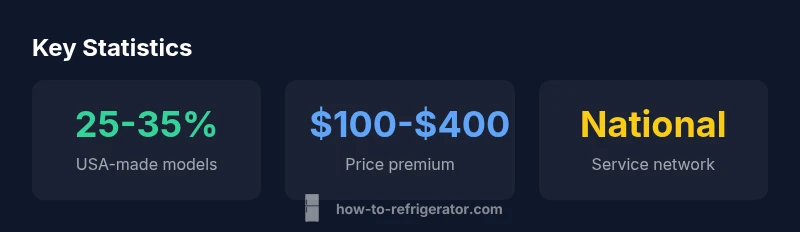
Origin alone does not guarantee performance. Compare energy usage, gradient of temperature stability, and whether the unit carries a reputable energy efficiency rating. Warranties are another critical factor; USA-made models often come with comparable or longer warranty terms, but coverage can vary by model and region. A strong, nationwide service network matters as much as the label, especially for parts availability and technician response times. If a unit is truly American-made, you should expect accessible service options and clear documentation about local support.
Practical buying checklist for homeowners
Use a structured checklist to compare options. Key items include explicit origin claims on the label, verifiable manufacturer disclosures, energy efficiency data, warranty terms, service coverage, and availability of spare parts. Create a side-by-side comparison for at least two USA-made contenders, noting any ambiguities and reaching out to the brand for confirmation. Consider your household’s size, usage patterns, and the retailer’s return policy when finalizing a purchase to ensure long-term satisfaction.
Common myths about USA-made refrigerators and how to separate facts from marketing
A frequent myth is that all domestically sold models are fully manufactured in the USA. In reality, many brands assemble in the USA from imported components. Another myth is that a bigger price tag guarantees better domestic content; marketing can obscure the true origin. The best approach is to demand verifiable documentation, compare origin data across models, and verify service commitments. By discarding vague claims, homeowners can confidently choose genuinely USA-made refrigeration options.
Comparing USA-made vs imported refrigerators across key factors
| Feature | USA-made option | Imported option |
|---|---|---|
| Origin claim on label | Explicit 'Made in USA' or domestic assembly | No explicit origin claim; claims vary by model |
| Warranty coverage | Typically comparable or extended | Often shorter or region-specific |
| Service network | Nationwide support | Service reach varies by region |
| Energy efficiency | Frequently ENERGY STAR qualified | Efficiency varies by market |
| Parts availability | Domestic parts more common | Imported models rely on overseas supply |
FAQ
What counts as USA-made in refrigerators?
USA-made typically means the final assembly occurs in the United States or the product is fully domestically manufactured. Always verify with the label and the brand’s disclosures.
USA-made usually means final assembly is in the U.S. and parts sourcing is disclosed; check the labels and brand notes.
Are there reliable USA-made refrigerator brands?
Yes, some brands offer USA-made options with transparent origin data and solid service networks. Always confirm origin data in product documentation.
Yes, there are reliable options; just verify origin data and warranty coverage.
Does origin impact energy efficiency?
Origin does not automatically determine efficiency. Compare energy consumption and ratings across models, including whether they meet ENERGY STAR standards.
Energy efficiency depends on the model, not origin; compare the specs.
How can I verify a claim of 'Made in USA'?
Check the country of origin label on the unit, read the brand’s official disclosures, and confirm warranty terms and service availability.
Look for a clear origin label and brand documentation.
What should I avoid when buying USA-made refrigerators?
Avoid vague marketing claims without verifiable documentation; demand proof of origin and ensure a robust service network before purchase.
Avoid vague claims—ask for proof and check service options.
“Origin claims must be verifiable; a model labeled 'Made in USA' should reflect domestic assembly rather than mere component sourcing.”
Top Takeaways
- Identify models with explicit USA-made or domestic-assembly claims
- Verify origin via labels and brand disclosures
- Compare warranties and nationwide service options
- Use a structured buying checklist to evaluate multiple models