Thermador Refrigerator vs Sub Zero: A Side-by-Side Comparison
Compare Thermador and Sub-Zero refrigerators across performance, build, features, price, and ownership. A How To Refrigerator guide to help homeowners decide which premium brand fits their kitchen and budget.


When choosing between premium lines, Sub-Zero generally offers stronger durability, service availability, and long-term reliability, while Thermador emphasizes design flexibility, panel customization, and integrated features. The best pick depends on your kitchen goals and budget, with ownership costs and warranties playing a key role in the decision. See our detailed comparison chart for specifics.
Overview and Brand Context
When homeowners compare premium refrigerators, two names often top the list: Thermador and Sub-Zero. In the realm of high-end kitchen appliances, the phrase thermador refrigerator vs sub zero frequently appears in buying guides and review sites, reflecting a real consumer crossroad. According to How To Refrigerator, these brands define the upper tier in American engineering, with distinct philosophies: Thermador leaning into design-forward integration and customizable panels, Sub-Zero prioritizing rugged durability, exacting temperature control, and a nationwide service network. For a homeowner planning a kitchen remodel or upgrading their built-in refrigeration, understanding the core differences helps set expectations about maintenance, ownership costs, and long-term satisfaction. This article presents a rigorous comparison built for homeowners troubleshooting appliance issues, emphasizing practical decision factors, not marketing slogans. We will explore performance, build quality, features, price bands (described qualitatively), and service realities so you can decide which brand aligns with your priorities and budget. Our goal is to translate technical specs into actionable steps you can apply when choosing between these two leaders.
What Sets These Brands Apart
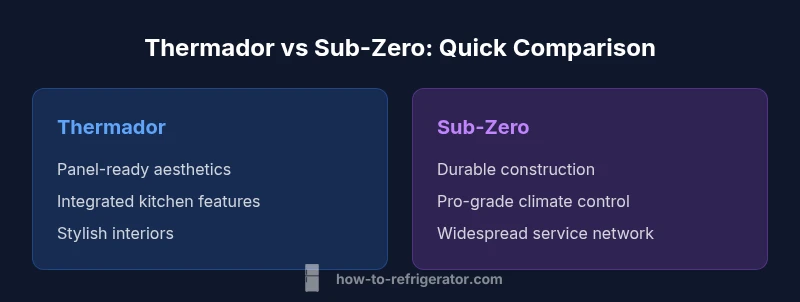
The core divergence between Thermador and Sub-Zero rests on philosophy and target customer. Thermador tends to emphasize customizable design options, panel-ready aesthetics, and integration with other kitchen systems. This appeals to homeowners who value a seamless look and feature-rich interiors (cold pantry modes, advanced filtration, and flexible shelving). Sub-Zero, by contrast, centers on durability, precise climate control, and a robust service network. Many owners rely on Sub-Zero for long-term reliability, faster access to service technicians, and proven compressor technology. Both brands use high-grade stainless steel, selective insulation, and premium seals, but the engineering priorities differ: Thermador often chooses aesthetic and modularity; Sub-Zero insists on rugged performance and serviceability. From a troubleshooting perspective, the resilience of Sub-Zero often translates into fewer urgent repairs in the first decade, whereas Thermador repairs may hinge on panel customization or integration with kitchen cabinetry. In short: if your priority is showroom design and interior flexibility, Thermador is strong; if you want lasting cooling stability and service coverage, Sub-Zero has the edge.
Performance and Temperature Consistency
Performance centers on how well a refrigerator stabilizes temperature and humidity across zones, handles defrost cycles, and preserves perishables. Sub-Zero systems are renowned for precise climate control with multiple independent zones in many models, which helps mitigate temperature swings even when doors are opened frequently. Thermador units also perform well, especially in configurations that support dual evaporators and advanced filtration, though they may emphasize integrated features and cabinetry harmony more than absolute zone independence. In practical terms, expect Sub-Zero to feel steadier under heavy use or open-concept living spaces, while Thermador can excel when you need a bold design statement paired with strong cooling. For homeowners troubleshooting, note where temperature inconsistencies appear—if one zone runs consistently warmer, it may indicate sensor or seal issues, not necessarily a brand-wide flaw.
Build Quality, Materials, and Design
Both brands use premium materials, but their priorities differ. Sub-Zero emphasizes rugged construction, robust seals, and precision manufacturing that sustains performance over many years. The result is a reputation for longevity and dependable service access. Thermador prioritizes design language, panel-ready aesthetics, and seamless integration with cabinetry. The cabinet architecture often features flush installation with custom panels, making it a focal point in contemporary kitchens. For the DIY-minded homeowner, installation nuances matter: Thermador units may require more detailed cabinetry alignment, while Sub-Zero units may demand a more traditional fit and professional installation to preserve service coverage.
Features, Storage, and Smart Capabilities
Thermador tends to offer feature-rich interiors with flexible shelving, specialty storage options, and advanced filtration that appeals to home cooks who want convenience in sight. Sub-Zero emphasizes internal climate control sophistication, humidity management, and consistent preservation that supports long-term freshness. In terms of technology, both brands offer smart capabilities, but the level of integration with home networks and other appliances varies by model. For homeowners who value a connected kitchen, verify compatibility with existing smart home ecosystems and verify software update policies. In practice, the best choice reflects how you use storage—whether you prioritize meat retention, produce freshness, or adjustable shelves for large platters.
Price, Warranty, and Ownership Costs
Prices for premium built-in refrigerators from Thermador and Sub-Zero sit at the higher end of the market, reflecting materials, craftsmanship, and service expectations. Model variations and panel options can significantly affect sticker price, and installation costs can add to the total. Warranty terms are a critical part of ownership; Sub-Zero’s warranty and service network often provide broad coverage and rapid response, which can lower long-term maintenance headaches. Thermador warranties tend to emphasize coverage for interior features and cabinetry integration, highlighting the brand’s design emphasis. For homeowners, the practical takeaway is to weigh upfront price against anticipated maintenance, parts availability, and the value of a showroom-ready kitchen.
Maintenance, Service Networks, and Repairability
Repairability aligns with service accessibility. Sub-Zero has a well-established service network with broad parts availability, which tends to translate into quicker, more predictable service experiences in many regions. Thermador’s service footprint is strong as well, but coverage can vary by dealer and cabinetry installation. When troubleshooting, check whether your area has nearby technicians certified for either brand, and verify whether your warranty requires authorized service to maintain coverage. Regular maintenance—cleaning coils where accessible, ensuring door seals are intact, and replacing water filters—helps both brands perform at peak efficiency and reduces the likelihood of urgent repairs.
Decision Framework: Which Is Best for You?
If your decision hinges on kitchen aesthetics and panel customization, Thermador is a strong fit. If you prize long-term durability and a broad service network, Sub-Zero tends to excel. Consider your renovation timeline, budget, and whether you value resale appeal or consistent performance across multiple zones. Finally, contact local dealers to confirm model availability, warranty terms, and installation requirements before making a commitment. This framework helps homeowners translate complex specs into practical, real-world choices.
Comparison
| Feature | Thermador | Sub-Zero |
|---|---|---|
| Cooling System/Temperature Control | Advanced, design-integrated controls | Pro-grade stabilization with multiple zones |
| Build and Materials | Panel-ready aesthetics, cabinetry harmony | Rugged construction, premium seals |
| Storage and Interior Flexibility | Modular shelves, customizable interiors | Flexible shelving with climate zones |
| Smart Features | Smart integration varies by model | Strong professional-grade connectivity |
| Warranty and Service Network | Warranty varies by model; dealer support strong | Extensive service network; widespread parts |
| Price Range (Qualitative) | High upfront with design emphasis | Very high upfront with service-centric value |
Strengths
- High-end aesthetics and design flexibility
- Strong service networks and parts availability
- Premium materials and long-term reliability
- Potentially higher resale value for premium kitchens
Cons
- Higher upfront cost and ongoing maintenance
- Limited model variety compared to mainstream brands
- Complex customization may complicate installation
- Repair times can be longer due to specialized technicians
Sub-Zero edges Thermador on durability and service; Thermador leads in design flexibility and integrated features.
If you prioritize long-term reliability and service access, Sub-Zero is a strong candidate. If kitchen aesthetics and panel customization matter most, Thermador stands out. The How To Refrigerator team recommends aligning your pick with renovation goals and budget.
FAQ
Which brand tends to be more reliable in the long term, Thermador or Sub-Zero?
Both brands are premium and known for quality, but Sub-Zero is often favored for long-term durability and service coverage. Thermador can excel with design-centric reliability if installed correctly and maintained regularly.
Sub-Zero is often preferred for long-term durability and a nationwide service network; Thermador shines when cabinetry integration and design matter most.
Do both brands offer built-in panel-ready models?
Yes, both Thermador and Sub-Zero offer panel-ready options that blend with cabinetry. Availability varies by model and region, so check with local dealers for current configurations.
Both brands offer panel-ready options; confirm with your dealer for your kitchen layout.
Is repair cost higher for Thermador or Sub-Zero?
Repair costs depend on model and coverage. Sub-Zero’s network often reduces repair time due to readily available parts, while Thermador may vary by dealer and custom cabinetry requirements.
Repair costs depend on model and warranty; Sub-Zero generally benefits from a broad service network.
Which brand holds better resale value?
Both brands retain value well in premium kitchens, with Sub-Zero often earning a slight edge on durability-related resale due to its long-standing reputation.
Both hold value well; Sub-Zero may edge out slightly on durability in resale.
Are ice makers and water dispensers comparable between the two?
Both brands offer high-quality ice maker options, but configurations differ. Thermador focuses on integrated systems; Sub-Zero emphasizes consistent ice quality and reliability.
Ice makers and water dispensers exist in both lines; compare model specifics for features you want.
How should I decide between built-in vs freestanding with these brands?
Both brands primarily offer built-in, panel-ready models for premium kitchens. If you need a freestanding option, verify which models fit your space and ensure proper ventilation and service access.
These brands lean premium; built-in configurations are most common. Check fit and service access.
Top Takeaways
- Compare design flexibility vs durability upfront
- Factor in service networks and warranty terms
- Budget for upfront cost and long-term ownership
- Check compatibility with existing kitchen systems
- Choose Thermador for aesthetics; choose Sub-Zero for reliability