Viking Refrigerator vs Sub-Zero: An Analytical Comparison
A detailed, analytical comparison of Viking and Sub-Zero refrigerators, covering performance, design, energy use, warranties, and maintenance to help homeowners decide which brand fits their kitchen and budget.


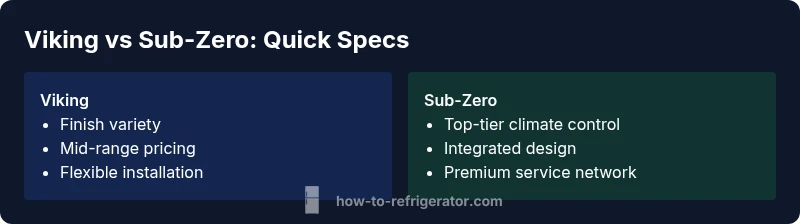
In the viking refrigerator vs sub zero comparison, Sub-Zero generally emphasizes temperature stability, humidity control, and durability, while Viking offers broad finish options and mid-range pricing with strong service networks. For most households seeking lasting performance, Sub-Zero tends to be the safer bet, while Viking suits buyers who prioritize design variety and value without sacrificing quality.
Viking vs Sub-Zero: The premium refrigerator landscape
In the high-end kitchen, two brands consistently rise to the top of homeowner discussions: Viking and Sub-Zero. The question viking refrigerator vs sub zero is not merely about aesthetics; it often centers on how each brand handles core cooling performance, reliability, and lifetime cost. According to How To Refrigerator, Sub-Zero tends to emphasize temperature stability, air sealing, and long-term durability, while Viking leans into design variety, panel-ready options, and mid-range pricing that appeals to style-conscious buyers. This block sets the stage for a deeper, evidence-based comparison that goes beyond glossy finishes and into real-world performance and ownership experience. By examining design philosophy, performance metrics, and service considerations, homeowners can make a more informed choice that aligns with kitchen workflow and budget constraints.
Design philosophy and target customers
Viking refrigerators are distinguished by broad aesthetic options—from bold panel finishes to vibrant exterior colors—that appeal to homeowners who want their appliances to be a design statement as much as a cooling workhorse. The How To Refrigerator team notes that Viking models often seat comfortably in mid-to-upper price bands, offering generous feature sets without the premium pricing of the top-tier integrals. Sub-Zero, meanwhile, concentrates on built-in integration, discreet panels, and a reputation for quiet operation and stable climate control. The design approach matters because built-in installations demand precise dimensions and cabinetry coordination, whereas freestanding or semi-integrated models offer more margin for error in installation. For a homeowner weighing viking refrigerator vs sub zero, the decision frequently hinges on whether you prioritize kitchen design continuity and resale-friendly finishes or the most seamless, controlled cooling environment.
Performance: temperature control, humidity, and food freshness
Temperature consistency and humidity management are the heart of any premium refrigerator, and Sub-Zero has built a reputation for rigorous climate control. Viking models frequently offer robust cooling performance as well, but the emphasis may vary by line and model year. How To Refrigerator analysis shows that Sub-Zero units tend to maintain tighter tolerances across door openings and fluctuating loads, which helps preserve perishables longer in practice. Viking tends to excel when paired with larger overall kitchen systems and when panel customization aligns with cabinetry; however, the real-world impact on freshness is closely tied to installation quality and door seal integrity. In short, if your priority is ultra-stable temperatures with broad model choices, Sub-Zero often leads; if you want design flexibility and mid-range pricing, Viking remains highly competitive.
Build quality, reliability, and service network
Durability and serviceability are critical in a long-term household investment. Sub-Zero’s build quality is consistently praised in professional reviews, with reinforced hinges, quality compressors, and a long-standing service network that supports longer lifespans. Viking’s builds are strong as well, particularly in consumer-demanded finishes and panel-ready configurations that integrate with many kitchen styles. The trade-off often centers on service responsiveness and parts availability in certain regions. Homeowners should consider not only the initial warranty but also the availability of authorized technicians and the ease of obtaining replacement panels or components in their market. Overall, Sub-Zero tends to have broader service depth; Viking offers excellent local coverage in many markets but can vary by region.
Features and smart controls: ice makers, water dispensers, and connectivity
Both brands offer feature-rich options, including ice makers, water dispensers, and programmable storage features. Sub-Zero’s feature set is frequently oriented toward professional-grade reliability, with options for dual refrigeration zones and highly configurable humidity controls in many models. Viking emphasizes generous interior layouts, quick-access doors, and a wide range of panel choices that appeal to homeowners seeking seamless kitchen aesthetics. Smart connectivity varies by model year and region; always verify software update policies and compatibility with your home network before purchase. In the viking refrigerator vs sub zero decision, consider which feature bundle aligns with your daily routines and cleaning preferences.
Energy efficiency and environmental considerations
Energy use is a meaningful ongoing cost. Sub-Zero products generally perform well on energy efficiency benchmarks across their premium lines, particularly in models designed for built-in installations with optimized airflow. Viking’s energy performance also remains competitive, but efficiency can vary more noticeably by model class and configuration—especially in wider cabinet widths or dual-zone layouts. When evaluating energy efficiency, prioritize model-level ENERGY STAR status where available, door seal quality, and the inverter technology used in compressors. Over a 10-year horizon, small differences in efficiency can compound into meaningful savings, so factor this alongside upfront costs and expected usage patterns.
Warranty, service, and installation considerations
Warranty terms for premium brands are a deciding factor for many households. Sub-Zero offers strong warranty packages across its commercial and residential lines, with longer coverage on certain components and an emphasis on professional installation. Viking warranties tend to be competitive and can be favorable for mid-range models, but regional service availability and parts supply can influence the real-world experience. Installation considerations matter: Sub-Zero is often installed as a built-in unit with precise cabinetry alignment, whereas Viking provides flexible installation options for both built-in and freestanding configurations. For homeowners evaluating viking refrigerator vs sub zero, plan an installation window that includes cabinetry measurement, electrical supply, and ventilation requirements to avoid performance or warranty issues.
Real-world scenarios: when to choose Viking or Sub-Zero
If you are designing a kitchen where panel continuity and a wide finish palette are essential for resale value or personal taste, Viking can be the better fit, offering strong aesthetics with reliable cooling. For households prioritizing longevity, climate stability, and a discreet, integrated look, Sub-Zero is typically preferable. In multi-zone kitchens or professional-grade settings, Sub-Zero’s proven track record for temperature precision often translates into lower food waste and a smoother user experience. Consider your cooking cadence, entertaining frequency, and how your family accesses the fridge daily when weighing the two brands.
Maintenance tips and common pitfalls
To maximize performance and longevity, perform regular door seal inspections, clean condenser coils per manufacturer guidelines, and schedule professional service at the first sign of irregular noises or temperature fluctuations. Avoid overstuffing the shelves and ensure proper airflow around the compressor bay. For panel-integrated units, keep the cabinetry finish free of moisture and ensure proper alignment to prevent door mis-sealing. In the viking refrigerator vs sub zero decision, proactive maintenance reduces the risk of costly repairs and helps safeguard your investment over time. Always reference the user manual for model-specific care instructions and adhere to recommended service intervals.
Comparison
| Feature | Viking Refrigerator | Sub-Zero Refrigerator |
|---|---|---|
| Temperature Control | Very good to excellent (model-dependent) | Excellent with tight tolerances across models |
| Humidity Control | Good to very good depending on line | Top-tier humidity management in many built-in models |
| Energy Efficiency | Varies by model; generally strong in mid-range lines | Consistently strong; many models ENERGY STAR listed |
| Ice Maker/Dispenser | Model-dependent; wide variation in availability | Widely featured in premium models; reliable ice systems |
| Design/Finish Options | Broad panel finishes and colors; flexible styling | Panel-ready, integrated design with premium panels |
| Warranty & Service | Good coverage; regional variation in service speed | Strong nationwide service network; warranty depth varies by model |
| Price Range | Mid-to-upper mid-range depending on line | Premium to ultra-premium; higher upfront costs |
| Best For | Design-forward kitchens seeking value and style | Integrated kitchens prioritizing climate control and longevity |
Strengths
- Strong design customization and panel options
- Competitive mid-range pricing for their class
- Solid reliability with accessible service networks
- Broad availability of models for different kitchen styles
- Good resale appeal in well-integrated homes
Cons
- Variable regional service availability for some models
- Lower-end Viking lines may have more model-to-model variation
- Higher upfront cost in some configurations compared to entry-level premium brands
- Warranties can be model-specific and require careful review
Sub-Zero is the stronger choice for guaranteed climate control and built-in integration; Viking is the better pick when design flexibility and mid-range value drive the decision
Choose Sub-Zero if you prioritize precise temperature/humidity control and seamless cabinet integration. Choose Viking if you want more finish options and a compelling mid-range price with strong local support.
FAQ
What is the main difference in performance between Viking and Sub-Zero?
Sub-Zero generally offers more consistent temperature control and humidity management across models. Viking delivers solid cooling with more emphasis on design options, which can influence airflow and door seal dynamics depending on configuration. Your kitchen layout and insulation quality will partly determine perceived performance.
Sub-Zero tends to win on climate stability, while Viking shines in design flexibility; consider your kitchen setup and usage to choose.
Are Viking refrigerators as reliable as Sub-Zero?
Both brands have strong reputations; Sub-Zero has a longer track record in commercial and residential settings with a comprehensive service network. Viking reliability is solid but can vary by model year and region. Regular maintenance and professional installation are key for both brands.
Both brands are reliable; Sub-Zero has a broader service footprint, while Viking offers dependable performance with good regional support.
Do they offer built-in vs freestanding options?
Sub-Zero is widely recognized for built-in, seamless integration with cabinetry and panel-ready options. Viking provides both built-in and freestanding configurations, giving more flexibility for designers and homeowners who want a showpiece with kitchen cohesion.
Yes—both offer built-in and freestanding options; Sub-Zero leans toward integrated designs, Viking toward flexible layouts.
Which is better for energy efficiency?
Sub-Zero models typically emphasize energy efficiency across premium lines, with many ENERGY STAR listings. Viking efficiency varies by model class; some lines are highly efficient, while others align with mid-range performance. Check ENERGY STAR per model.
Sub-Zero often leads in energy efficiency, but check each model’s rating before buying.
What about warranties and service?
Sub-Zero generally offers strong warranty packages with nationwide service support. Viking warranties are competitive but can depend on the specific model and region. Always review warranty terms and required service networks before purchase.
Sub-Zero usually has robust warranty options and a broad service network; verify terms for your model.
Is resale value affected by Viking vs Sub-Zero?
Sub-Zero’s brand prestige and integrated design often contribute to higher resale value in premium kitchens. Viking remains desirable for its design versatility; resale impact depends on kitchen context, brand perception in your market, and overall kitchen condition.
Sub-Zero often adds more to resale value due to prestige; Viking can also perform well if the kitchen is cohesive and well-maintained.
Top Takeaways
- Prioritize climate control for longevity of perishables
- Choose Sub-Zero for built-in design and guaranteed performance
- Opt for Viking when you want more panel finishes and mid-range value
- Verify installation requirements early to protect warranty terms
- Consider total ownership cost, not just upfront price