Refrigerator vs Deep Freezer: A Practical Side-by-Side Guide
Compare refrigerators and deep freezers to decide which best fits your home. Learn use-cases, energy, space, and buying tips from How To Refrigerator.


Refrigerator vs deep freezer: refrigerators handle daily perishables and drinks, while a deep freezer secures long-term bulk storage. The choice depends on your shopping habits, meal planning, and available space. For most homes, the refrigerator serves daily needs, and a separate deep freezer supports bulk storage that reduces trips to the store.
Understanding the Core Difference: Refrigerator vs Deep Freezer
A refrigerator and a deep freezer are both essential for food storage, but they serve distinct roles in a modern kitchen. This section explains the core difference between a standard refrigerator and a dedicated deep freezer, and why the choice matters for everyday meals and long-term stock. At its core, the refrigerator is optimized for short-term, frequently accessed items like milk, produce, and ready meals, while a deep freezer is designed for long-term preservation of bulk items, seasonal purchases, and items you don’t plan to use for months. According to How To Refrigerator, the distinction isn't only about temperature; it's about intended use, energy strategy, and how you shop. Understanding these roles helps homeowners avoid overbuying perishables or underutilizing storage space. In this guide, we walk through practical considerations, space constraints, and how to align your purchase with your cooking habits.
- Practical framing: Think about your grocery pattern. If you routinely buy fresh produce in small quantities, a refrigerator makes sense. If you stock up on meats, frozen meals, or seasonal items, a deep freezer provides more predictable long-term storage.
- Design implications: The layout of your kitchen, pantry depth, and door swing impact what size unit fits. Consider whether you need a freestanding model, a built-in configuration, or an upright versus chest freezer, and how that choice affects accessibility and airflow around the appliance.
Temperature, Storage, and Energy: How They Differ
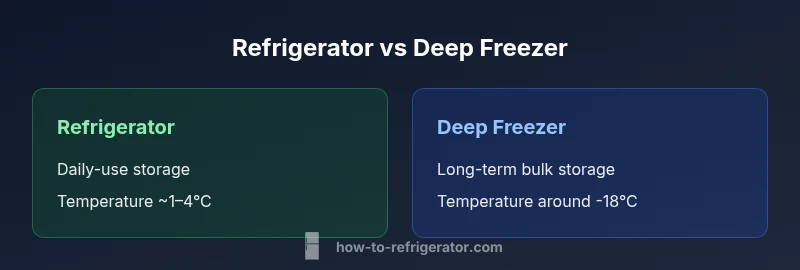
Temperature control is the most obvious difference between a refrigerator and a deep freezer, yet energy implications matter too. Refrigerators typically maintain modest cool temperatures suitable for fresh foods, dairy, and beverages, often around 1–4°C (34–39°F). Deep freezers operate at much colder settings, commonly around -18°C (0°F) or lower, to preserve quality over months or even years. These temperature differences shape how you organize items: frequently used foods stay within easy reach in the fridge, while long-term stock is tucked away deeper inside. Energy use depends on usage patterns, door openings, insulation, and the efficiency of the model. Modern frost-free refrigerators are designed to minimize cycling, but deep freezers can be surprisingly efficient when well maintained and properly loaded. How To Refrigerator notes that a freezer with good door seals and proper defrost cycles preserves energy and reduces waste. The practical takeaway is to optimize both storage type by aligning product turnover with energy goals: keep daily perishables in the fridge and reserve the freezer for items you don’t expect to use for weeks or months. If you have space constraints, consider smart zoning, like a compact second fridge for beverages or a chest freezer in a garage, ensuring proper ventilation and safe location away from heat sources.
Use-Case Scenarios: Everyday Cooking vs Bulk Storage
In day-to-day life, most households rely on the refrigerator for quick meals, snacks, and dining rituals. A milk-capable shelf, a crisper for produce, and a dairy drawer reflect habits that favor easy access and rapid turnover. By contrast, the deep freezer is where bulk purchases, seasonal stock, and long-term staples reside. A family buying meat on sale and freezing portions, or teams stocking up on frozen vegetables for the year, benefits from a dedicated freezer. Real-world patterns—how often you shop, how you plan meals, and how you entertain—drive whether you need both appliances or can get by with one versatile unit. How To Refrigerator emphasizes analyzing your calendar and grocery cycle to forecast capacity needs, then matching the appliance to those needs rather than defaulting to an assumed size. You’ll also want to consider whether a chest freezer or an upright freezer best suits your space, accessibility preferences, and energy profile.
- Scenario A: a busy family that shops weekly and cooks fresh meals will maximize daily fridge use and rely on occasional freezer portions.
- Scenario B: a couple that bulk buys several times a season can leverage a deep freezer to stretch savings and reduce shopping trips.
Space, Placement, and Installation Considerations
Choosing between a refrigerator and a deep freezer is also a matter of space and layout. Measure available floor space, door clearance, and the radius required for door swings. Upright models typically occupy less floor space but may require deeper alcoves, while chest freezers offer more usable storage but demand extra room around the unit for airflow and ventilation. In kitchens with limited width, a compact refrigerator combined with a separate chest freezer may be a practical solution, especially if you have a garage or utility area where a larger freezer can live. When installing, ensure proper ventilation, level placement, and away from heat sources such as ovens or direct sunlight. If you plan to place a freezer in a garage or unheated space, confirm minimum operating temperatures and insulation to prevent performance loss during winter or summer extremes. Finally, consider energy-star-rated models to optimize long-term operating costs while maintaining capacity.
Defrosting, Frost-Free Technology, and Maintenance
Maintenance requirements vary significantly between refrigerators and deep freezers. Frost-free or auto-defrost features reduce manual maintenance by periodically removing frost buildup, which saves time and improves efficiency. However, frost-free systems can add cost and slightly increase energy consumption in some cases. Manual-defrost freezers often require periodic defrost cycles, which demand a short downtime but can be more economical in the long run on select models. A frost-free freezer also helps prevent ice blockages in the defrost drain and keeps shelves organized. Regular checks of door seals, gaskets, and insulation minimize energy loss from leaks. Clear the condenser coils when accessible, keep the unit away from heat sources, and ensure level placement for even cooling. How To Refrigerator recommends documenting maintenance intervals and inspecting seals seasonally to minimize energy waste and extend appliance life.
Budgeting, Costs, and Value Over Time
Budgeting for a refrigerator vs a deep freezer involves weighing upfront cost against long-term operating expenses and capacity. In general, refrigerators are available in a wide range of prices with varying features that affect upfront cost, such as crisper drawers, water dispensers, and smart connectivity. Deep freezers tend to have a broader capacity range and can be more expensive upfront, especially for larger chest models or frost-free deep freezers. Value over time depends on how well you match capacity to your needs, the efficiency of the model, and the frequency of use. A larger freezer can lower overall grocery waste and reduce shopping trips, delivering cost savings over months or years. Look for energy-efficient compressors, quality insulation, and reliable warranties. If you anticipate frequent reorganization or feature-demanding configurations, consider premium units that balance space, performance, and energy use.
Energy Efficiency Tips for Both Appliances
Energy efficiency hinges on correct sizing, proper loading, and mindful operation. Keep doors closed, avoid overstuffing, and group items for quick access to minimize prolonged door openings. For refrigerators, keep the temperature set around the manufacturer’s recommendation to prevent overcooling, which wastes energy. For freezers, a well-organized interior reduces the time the door stays open while you locate items. Consider models with frost-free technology, LED lighting, and variable-speed compressors that optimize energy use based on load and ambient temperature. Regular maintenance, including cleaning coils and checking door seals, further improves efficiency and can extend the life of both appliances. How To Refrigerator also suggests reviewing your household storage patterns at least annually, then adjusting the appliance configuration to avoid energy waste and improve accessibility.
Buying Guide: What to Look for in a Refrigerator or Deep Freezer
When shopping, evaluate capacity in terms of usable space rather than exterior dimensions. Look for adjustable shelves, versatile door bins, and crisper drawers that help organize produce and dairy. For deep freezers, prioritize interior layout flexibility, temperature stability, and defrost options. Chest freezers typically offer more storage space per cubic foot but require more floor area, while upright freezers provide easier access and better organization with shelves. Energy efficiency, warranty length, and after-sales service are critical factors. Finally, read reviews that reflect real-world usage and consider how the unit will fit into your kitchen workflow and meal planning routine. How To Refrigerator recommends making a short list of must-have features based on your routines, then testing a few models to compare ergonomics and accessibility.
Common Myths and Practical Decisions
Myth: You don’t need a freezer if you shop every few days. Reality: a freezer enables bulk buys and seasonal storage, reducing trips and spoilage. Myth: All frost-free freezers are energy-hungry. Reality: modern frost-free technology can be energy-efficient when paired with proper loading and maintenance. Myth: A bigger refrigerator is always better. Reality: The best size matches your family’s consumption; oversized units waste energy and space. Practical decision: start with a needs assessment—count your weekly meals, typical groceries, and whether you buy in bulk. Then, compare models based on energy performance, layout, and durability to select the configuration that minimizes waste and maximizes accessibility.
Comparison
| Feature | Refrigerator | Deep Freezer |
|---|---|---|
| Primary Use | Perishable fresh-food storage and daily access | Long-term frozen storage for bulk and seasonal items |
| Temperature Range (typical) | 1–4°C (34–39°F) for refrigerators | -18°C (0°F) or lower for deep freezers |
| Energy Efficiency | Generally optimized for daily use and quick access | Efficiency depends on model; can be very efficient with proper loading |
| Best For | Everyday meals, dairy, produce, and beverages | Bulk buys, seasonal stock, and long-term preservation |
| Common Maintenance | Frost-free options reduce manual defrosting | Some deep freezers require periodic defrost or emptying |
| Size/Footprint | Typically smaller footprint for standard homes | Require more space and ventilation, larger footprint |
| Cost/Value (relative) | Moderate upfront cost depending on capacity | Higher upfront cost but value grows with volume and storage stability |
Strengths
- Clear pairing: refrigerators excel at day-to-day fresh-food storage
- Deep freezers enable long-term storage and bulk buying
- Flexible placement options with proper ventilation
- Energy-efficient modern models can reduce operating costs
- Frost-free options reduce maintenance for the freezer section
Cons
- Refrigerators can be less cost-effective for long-term storage
- Deep freezers require more space and proper layout
- Defrosting (manual) can be time-consuming in older models
- Frequent opening can cause temperature fluctuations if not organized
A dedicated freezer is essential for long-term bulk storage, while a refrigerator handles daily perishables; most households benefit from owning both if space and budget permit.
Choose a refrigerator for everyday use and a deep freezer for bulk and long-term storage. If space or budget is limited, start with one unit that best fits your most frequent storage needs and add a second appliance later as planed.
FAQ
What is the main difference between a refrigerator and a deep freezer?
The refrigerator prioritizes short-term storage of fresh foods and beverages at mild cool temperatures, while a deep freezer focuses on long-term preservation at much colder temperatures. They complement each other when used together in a home.
The fridge is for today’s groceries; the freezer is for long-term stock.
Can I substitute a deep freezer for a fridge?
A deep freezer cannot replace a fridge for daily perishables, dairy, and produce because it lacks quick access and the appropriate temperatures for fresh foods. It is excellent for bulk storage and long-term preservation, not for everyday use.
A freezer isn’t a substitute for a fridge; use it for bulk storage and long-term items.
Do deep freezers consume more energy than refrigerators?
Energy use depends on model, capacity, and usage. Freezers can be efficient when properly loaded and maintained, but large or inefficient models may consume more energy. Focus on energy ratings and appropriate sizing.
Energy use varies; pick an efficient model and use it wisely.
What features should I prioritize when buying?
Prioritize appropriate capacity, energy efficiency, reliable temperature control, and door seal quality. For freezers, consider interior layout and defrost options. For refrigerators, examine shelving adjustability and crisper performance.
Look for capacity, efficiency, and a good layout on both types.
Is frost-free technology worth the extra cost?
Frost-free can reduce maintenance and improve reliability, but it may come with a higher upfront price. If you want less manual defrosting and more consistent performance, it’s worth considering.
Frost-free helps, especially if you hate defrosting.
How should I organize items in a freezer to maximize space?
Group similar items, label portions, and use clear bins to maximize visibility. Place frequently used items at the top and reserve deep storage for bulk packs. Regularly purge expired items to optimize space.
Keep like items together and label everything for quick access.
Top Takeaways
- Match appliance to your storage needs, not just size
- Plan space and ventilation before buying
- Balance daily access with long-term preservation
- Look for energy efficiency and reliable warranties
- Use a structured buying guide to avoid common myths