Office Refrigerator Guide: Choose, Install & Use
Learn how to pick, install, and maintain a refrigerator for office use. Practical tips on size, placement, energy efficiency, noise, and setup to keep drinks, snacks, and lunches fresh while boosting productivity.


This guide helps you choose, install, and use a refrigerator for office needs. You’ll learn how to size the unit, pick energy-efficient options, place it for safety and accessibility, and set up organization and maintenance routines that reduce waste and support productivity.
The Case for a Refrigerator for Office
In many workplaces, a dedicated refrigerator helps keep beverages, perishable snacks, and team meals fresh, while reducing the trips to a shared kitchen. A purpose-built unit offers predictable temperature control, space for organization, and better hygiene than relying on a generic kitchen fridge. For small teams and home offices that host frequent meetings, a compact office fridge can cut waste and improve morale. According to How To Refrigerator, an office-ready refrigerator should be sized for your crew, energy-efficient, and easy to clean. It should also fit into the workspace layout without blocking pathways or emergency routes. Before you start shopping, measure the available footprint, check the door clearance, and note nearby outlets. If you share the space with a microwave or coffee station, plan for ventilation and cable management to prevent overheating. Finally, confirm the unit can run continuously with minimal noise so it won’t disrupt concentration or calls. With these considerations in mind, you’ll choose a model that supports productivity and reduces food waste.
Key Buying Considerations for an Office Refrigerator
Choosing the right refrigerator for office use means balancing size, energy usage, and convenience. Start with capacity: estimate daily usage, the number of employees who access it, and the types of items you’ll store. A compact under-counter model fits tight break rooms, while a tall unit provides more shelves and door bins for beverages. Check energy efficiency ratings such as the Energy Star label and compare annual operating costs, keeping in mind that a slightly larger unit can be more efficient per quart stored if used properly. Noise matters in an open-plan workspace; look for compressors designed for low vibration and quiet operation. Temperature control should allow a stable range between 35–40 degrees Fahrenheit (2–4 degrees Celsius); avoid models with broad swings. Finally, inspect interior features like adjustable shelves, spill-proof drawers, and a humidity-controlled crisper to keep items fresh. How To Refrigerator emphasizes choosing models with reliable door seals and simple maintenance routines for office environments.
Size, Layout, and Placement in an Office
Placement decisions affect accessibility, safety, and energy use. Place the fridge away from heat sources such as ovens or direct sunlight and near a power outlet with a dedicated circuit if possible. Ensure there’s at least 3 inches of clearance on the sides for ventilation and 8–12 inches above for airflow. In shared spaces, maintain a clear path for carts or chairs and avoid blocking emergency exits. Inside, organize commonly used items near the door for quick access and consider labeled shelves or bins to minimize daily rummaging. If space is tight, consider a countertop or under-counter model with a compact footprint. Height alignment with the surrounding counters makes loading and unloading easier for users of different heights and helps prevent overreach injuries. The How To Refrigerator team suggests visual checks for door alignment and gasket integrity during setup.
Energy Efficiency, Noise, and Reliability
Beyond initial cost, energy efficiency saves money over the refrigerator’s life. Look for a compact model with an Energy Star rating and a properly sealed door gasket. Noise levels are a practical concern in open offices; read product reviews that mention real-world noise and vibrations during startup and steady operation. Reliability comes from a robust compressor, quality condenser coils, and easy-to-clean interiors. Consider a model with a warranty that covers at least one year and responsive customer support. In office contexts, having a reliable defrost system (manual or automatic) prevents frost buildup that can reduce capacity and airflow. How To Refrigerator recommends prioritizing models with durable interiors and simple maintenance that won’t disrupt daily work.
Features That Save Time and Reduce Waste
Smart interior layouts save time when grabbing snacks or lunches between meetings. Look for adjustable shelves, wide-door storage, and removable bins that allow flexible organization. A built-in thermometer helps staff verify temperatures without opening the door. Some office fridges include crisper drawers with humidity control, separate beverage pockets, or small freezer compartments for ice packs. For a busy workplace, features like self-closing doors and level feet reduce door misalignment, while a compact size fits tight break areas. Organization accessories such as labeled bins, stackable containers, and a simple labeling system cut down on food waste and confusion during busy days. Remember that simplicity often beats complexity in a shared office environment.
Maintenance and Simple Fixes for Office Fridges
Maintenance is the quiet workhorse of an office fridge. Schedule regular wipe-downs of shelves and door gaskets to prevent stains and odors. Clean condenser coils if accessible (usually behind the grille) to maintain efficient cooling. Check door seals monthly and replace worn gaskets to prevent cold air leaks. Keep the interior dry to avoid mold growth; wipe spills promptly and use sealed containers for liquids. If the fridge starts making unusual noises or you notice temperature fluctuations, consult the warranty and consider a service call. A simple maintenance routine extends the life of the appliance and reduces disruption during critical work periods.
Common Pitfalls to Avoid and Quick Setup Tips
Avoid overloading shelves; heavy items can deform shelves and impede airflow. Don’t rely on a fridge that’s too small for your team’s needs, or you’ll see frequent restocking and temperature swings. Avoid placing the unit in a high-traffic doorway; constant opening accelerates temperature drift and energy use. Ensure the unit is level and stable; skewed positioning can damage doors and seals. Use clear labeling and a basic inventory list so employees know what belongs in the fridge and how to prevent cross-contamination. As a practical tip, set an initial temperature around 37–38°F (3–3°C) and verify with a thermometer after 24 hours to allow the unit to settle. The How To Refrigerator team highlights the importance of a thoughtful setup that minimizes surprises.
Quick Start Setup Checklist
- Measure footprint and doorway clearance; confirm placement works with doors open.
- Choose a model with energy efficiency, acceptable noise, and the right capacity.
- Prepare the space: dedicated outlet, surge protection, and cord management.
- Level the fridge and secure anti-tip hardware if needed.
- Plug in and run for 24 hours with a thermometer inside to verify stable temperature.
- Organize shelves and label items for quick access.
- Establish a simple maintenance routine and restock plan to minimize waste.
Tools & Materials
- Office refrigerator (compact or under-counter)(Select size to fit available space and expected daily usage)
- Dedicated electrical outlet (GFCI if required in your area)(Avoid shared circuits for critical staff areas)
- Surge protector power strip or built-in outlet(Use with appropriate cord length)
- Level and anti-tip hardware(Stabilizes the unit on uneven floors)
- Measuring tape(For footprint and clearance checks)
- Thermometer (fridge-safe)(Monitor internal temperature accurately)
- Interior organizing bins or labeled shelves(To keep items sorted and reduce waste)
- Maintenance kit (soft cloth, mild cleaner)(Regular cleaning prevents odor buildup)
Steps
Estimated time: 1.5-2 hours
- 1
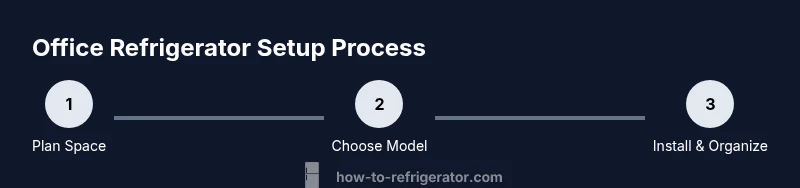
Plan your space and measurements
Measure the intended footprint, doorway clearance, and nearby outlets. Verify there’s room for ventilation and for the door to open fully without obstruction. Record these dimensions to compare against model specs.
Tip: Use a simple floor plan sketch and double-check door swing direction. - 2
Select a model with appropriate capacity and efficiency
Choose a refrigerator that matches daily usage and fits the workspace. Prioritize Energy Star-rated units and read user reviews for real-world performance and noise levels. Ensure the interior layout supports your typical items.
Tip: If in doubt, pick a slightly larger model with adjustable shelves for flexibility. - 3
Prepare the installation area
Clear the space, ensure the outlet is accessible, and lay down a small mat or protective surface for movement and spills. Check that the floor is level and clean before moving the unit into place.
Tip: Use a furniture dolly or help from a teammate to avoid injury. - 4
Position, level, and secure the fridge
Slide the fridge into place, leave ventilation space, and use a level to verify evenness. Adjust feet as needed to prevent rocking. If available, install anti-tip hardware for safety in busy offices with kids or foot traffic.
Tip: Test door alignment after leveling to prevent leakage or mis-seating of the gasket. - 5
Power up and verify temperature stability
Plug in the unit, set to 37–38°F (3–3°C), and allow it to run for 24 hours while monitoring with a fridge thermometer. Check for abnormal noises or heat buildup from the rear vents.
Tip: Avoid drawer overstuffing during the first 24 hours to let the system stabilize. - 6
Organize interior and label items
Arrange beverages, snacks, and lunch items on shelves and in bins that make frequent items accessible. Use clear containers and label expiration dates to minimize waste. Keep a small inventory list on the door for quick restocking.
Tip: Put the most-used items at eye level for faster access. - 7
Establish a simple maintenance routine
Schedule weekly wipe-downs and monthly checks of seals and coils. Record temp readings and address any deviation promptly. Keep a repair contact or warranty info accessible.
Tip: Set a calendar reminder to prevent neglect and ensure consistent performance.
FAQ
What size fridge do most offices need?
Ideal size depends on team size and usage. Estimate daily beverages and meals, then choose a unit that fits the footprint without crowding the room. A slightly larger model with adjustable shelves often provides the best balance of capacity and efficiency.
Choose a size based on your daily usage; a larger unit with adjustable shelves often balances capacity and efficiency.
Should I install a dedicated circuit for the office fridge?
A dedicated circuit is recommended in busy offices to prevent tripping and ensure stable operation. If a dedicated circuit isn’t possible, use a high-quality surge protector and avoid sharing the outlet with high-draw devices.
A dedicated circuit is best, but if not possible, use a surge-protected outlet and avoid other high-draw devices nearby.
How can I reduce noise from an under-counter fridge?
Choose models designed for quiet operation and ensure proper ventilation. Level the unit, secure any loose panels, and place it away from high-traffic areas to minimize perceived noise.
Pick a quiet model, level it, and position away from main work zones for less disturbance.
What maintenance steps are essential for an office fridge?
Regularly clean shelves and gaskets, check the door seal for leaks, and vacuum or wipe condenser coils if accessible. Keep the interior dry and monitor temperatures with a thermometer.
Clean shelves and seals weekly, check temperature, and inspect coils regularly.
Can an office fridge have a freezer compartment?
Yes, some office fridges include a small freezer compartment. If you need frozen items, ensure the freezer is appropriately insulated and does not compromise overall capacity for refrigerated items.
Some models include a small freezer; ensure it won’t limit fridge space or efficiency.
What organization tips help reduce waste?
Use labeled bins and clear containers, keep an inventory list on the door, and store items by category (drinks, snacks, lunches) for quick restocking and reduced spoilage.
Label shelves, use clear containers, and keep a simple inventory for quick restocking.
Watch Video
Top Takeaways
- Know your space and pick a fridge that fits.
- Prioritize energy efficiency and quiet operation.
- Organize interior to save time and reduce waste.
- Maintain a simple routine for reliability.