Office Small Refrigerator: Practical Guide for Workspaces
Learn to pick, place, and maintain a compact office small refrigerator that fits tight spaces, keeps drinks cold, reduces noise, and saves energy in break rooms and deskside setups.


This guide shows homeowners how to choose, place, and maintain an office small refrigerator that fits under a counter or on a shelf, keeps drinks cool, minimizes noise, and saves energy for a busy workspace. We cover size, energy use, noise, maintenance, safety, and placement tips for desks, break rooms, or small offices.
Why an office small refrigerator matters
In a modern workspace, convenience and efficiency go hand in hand with smart temperature control. An office small refrigerator is more than a snack box; it’s a compact cold storage solution that reduces trips to a shared break room, keeps beverages and perishables fresh, and helps maintain hygienic work habits. For desk-bound employees, a compact fridge can hold drinks, yogurt, and lunch leftovers without stealing valuable counter space. It also minimizes the number of open coolers creeping into common areas.
When selecting an appliance for an office, the main considerations are footprint, energy use, noise level, and durability. The right small fridge fits under counters or on a short cabinet, staying out of the main traffic flow while still being easy to access. The How To Refrigerator team emphasizes balancing capacity with footprint so you don’t overpay for unused space or fight to squeeze the unit into a tight corner. A quiet compressor and sturdy shelves prevent distractions during meetings or focused work.
This article guides homeowners through choosing, placing, and maintaining an office small refrigerator that integrates with your layout and workflow. You’ll learn how to measure space, compare models, optimize layout, and perform routine care that keeps the appliance safe, clean, and efficient. With planning, you’ll enjoy reliable cold storage without clutter or noise.
Size, layout, and placement considerations
The first step is understanding your available footprint. Measure height, width, and depth, and account for door swing and ventilation clearance. A compact office refrigerator commonly ranges from 1.0 to 4.0 cubic feet, with larger models offering more shelves for several users. For shared desks or small break rooms, a slightly bigger option may reduce the number of trips to the kitchen. Always check the interior height and shelf spacing to ensure tall bottles and lunch containers fit.
Orientation matters: vertical models save floor space, while under-counter or built-in styles can blend with cabinetry. If you plan to stash taller bottles in the door, confirm door clearance and ease of access. Power access should be stable and away from water sources; a dedicated outlet helps avoid tripping circuits from other devices. If outlets are scarce, consider a model with a timer or energy-saving mode to minimize consumption when the office is closed.
Accessibility is crucial in a busy workspace. Place the fridge where frequent users won’t block hallways, and consider two smaller units placed in different corners for fast reach. In narrow spaces, slimline designs with adjustable feet can level the appliance on an uneven floor. With precise measurements, you’ll pick a unit that fits neatly without creating clutter.
Energy efficiency and noise in small fridges
For office environments, energy efficiency and quiet operation are top priorities. Look for models with automatic defrost, efficient compressors, and good insulation. An energy-efficient fridge reduces running costs and helps maintain comfortable ambient temperatures in a shared area. Compare Energy Star labels or other credible efficiency ratings, and check the annual energy consumption in kWh.
Noise is another common concern. The compressor and fan should stay inaudible at normal desk distances. Read user reviews about perceived noise and vibration, especially on startup. If the fridge hums or rattles during busy hours, you may need to place it away from high-traffic zones or choose a model with a vibration-damping base. Some compact fridges feature anti-slip feet and foam panels to reduce resonance.
Also, consider the door seal quality. A tight gasket prevents cold air from escaping, which reduces energy use and helps your drinks stay consistently cold. Some models offer reversible doors, which can simplify placement in tight spaces. In general, prioritize insulated doors, efficient compressors, and well-supported shelves to minimize noise and energy waste.
Choosing features that matter in an office setting
Look for adjustable shelves, door bins of varying sizes, and flexible interior layouts to accommodate different containers. Frost-free or auto-defrost saves maintenance time; if you live in a climate with frequent temperature swings, frost-free helps prevent ice build-up. A compact freezer compartment is optional for frozen meals. A reversible door increases placement flexibility in tight spaces. Interior lighting can help you locate items quickly in dim rooms. Some units include built-in thermostats with a quick-access digital display, which can simplify temperature control when multiple people use the fridge.
If you want extra safety, choose a model with a recessed power cord and a clean cord management system to prevent tripping. For offices with kids or visitors, consider a model with a child lock on the control panel. Finally, check energy rating and warranty length; longer warranties are often worth a small upfront cost.
Placement ideas for desks, break rooms, and shared spaces
Under-counter placement near workstations reduces trips to the kitchen—ideal for high-traffic offices. A wall-mounted or freestanding unit between two desks can keep beverages within reach while avoiding a congested corridor. For break rooms, place a larger model under a counter with a small food prep area, including a sink and power outlets. If space is extremely tight, consider stacking two smaller units side-by-side, ensuring adequate clearance for air circulation.
When planning placement, consider airflow behind and around the unit to prevent overheating. Avoid direct sunlight or heat-producing appliances nearby, which can tax the compressor. If you must place the fridge in a high-traffic zone, install a lightweight boundary or small mat to protect flooring and reduce vibration transfer.
Basic wiring, safety, and plug considerations
Always plug the fridge into a grounded outlet; avoid extension cords and power strips that could overheat. Use a dedicated circuit if possible, especially in busy offices with multiple appliances. Check the outlet type; most compact fridges use standard 120V household outlets; In commercial spaces, you may have 208-240V outlets; consult a qualified electrician if the space uses a nonstandard supply. Keep the area around the fridge dry and free of liquids in case of spills. Place the fridge on a level surface to prevent strains on the door seal and ensure proper drainage if there is a defrost drain.
Maintenance routines to extend life
Set a simple routine: wipe spills immediately with mild soap; clean shelves monthly; vacuum or wipe condenser coils every 6-12 months if accessible. Inspect the door gasket monthly for cracks or tears; replace if needed to maintain a tight seal. Clean the interior every couple of months and rotate stored items so the oldest items are used first. If the unit has a frost-free function, ensure it is working; otherwise defrost when frost accumulates beyond 1/4 inch.
Troubleshooting common issues
Not cooling: Check that the unit is plugged in and the temperature control is set correctly; verify ventilation around the unit. If the fridge runs constantly or cycles quickly, consider checking the door seal or moving away from heat sources. Leaking water: confirm the drain is clear and the pan underneath is dry; wipe spills and ensure the unit is level. Excessive noise: reposition away from high-traffic zones or add anti-vibration pads. Frost build-up: check door seal and keep the door closed; if frost persists, the defrost system may be failing.
What to do before you buy: a quick planning checklist
Before purchasing, plan your space, user needs, and storage items. Determine required capacity in cubic feet based on expected bottles, lunch containers, and shared usage. Check energy ratings and noise level, and decide on features such as adjustable shelves, door bins, frost-free operation, reversible doors, and a compact footprint. Confirm outlet availability and ventilation clearance; mark the best location and measure clearance. Set a budget and compare several models with similar specs.
Tools & Materials
- Phillips screwdriver(for mounting shelves or adjusting feet if needed)
- Tape measure(to verify clearance and door swing)
- Level(to ensure fridge sits evenly and seals work properly)
- Block/Trash bag for spills( handy during setup and cleaning)
- Power strip with surge protection(use only if dedicated outlet is unavailable (prefer a dedicated outlet))
- Cable ties(for cable management behind the unit)
- Outlet tester(to verify circuit health if outlets feel unstable)
Steps
Estimated time: 20-30 minutes
- 1
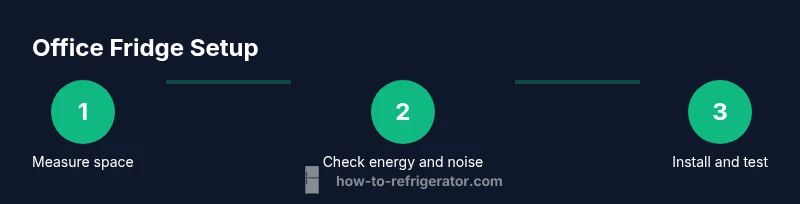
Measure space and determine capacity
Use a measuring tape to capture height, width, and depth where the fridge will sit. Check door swing clearance and ventilation space around the back and sides. Based on those measurements, select a model with interior volume that fits your needs and leaves room for airflow.
Tip: Pro tip: aim for at least 2 inches of air around the unit for heat dissipation. - 2
Evaluate energy use and noise
Compare energy ratings and expected annual energy consumption. Read reviews specifically about noise in real office environments, not just showroom noise levels. Choose a model with low dB ratings and good insulation.
Tip: Pro tip: look for automatic defrost to reduce maintenance and prevent frost buildup. - 3
Choose model and confirm dimensions
Narrow down to a couple of sizes, then verify exact exterior and interior dimensions, including shelf heights and door bin options. Ensure the model’s width fits the planned space and that the interior layout supports your typical items.
Tip: Pro tip: prefer adjustable shelves and reversible doors for flexible placement. - 4
Prepare space and position the unit
Clear the area, vacuum dust, and place the fridge on a level surface. If you’re placing under a counter, ensure there’s adequate clearance for cooling and access. Plug into a grounded outlet with no risk of water exposure.
Tip: Pro tip: use a level to confirm the unit isn’t tilted; a tilted fridge wastes energy and seals may loosen. - 5
Load items and set temperature
Start with organized shelves and zones for drinks, dairy, and snacks. Set the thermostat to a mid-range setting and adjust after 24 hours as needed. Keep raw foods separate from ready-to-eat items.
Tip: Pro tip: label shelves with date or item to track freshness. - 6
Establish a maintenance routine
Create a simple calendar for monthly cleaning of shelves and interior, plus biannual checks of the door seal and coils. Document any issues and track energy usage for the first few weeks.
Tip: Pro tip: document a quick checklist near the fridge for easy reference.
FAQ
What size fridge do I need for an office?
Size depends on the number of users and items stored. For a small team, 2-4 cubic feet may be enough; larger teams may require 4-6 cubic feet or more. Always measure your space and item volume before choosing.
Choose a size based on your team and the items you store, after taking precise measurements.
Is a frost-free compact fridge worth it?
Auto-defrost reduces maintenance by preventing ice buildup, which helps with consistent cooling and reduces manual defrosting. If you don’t want to service it often, frost-free is worth considering.
Yes, frost-free can save time and keep cooling consistent.
Can I place a mini fridge under my desk?
Yes, if there’s enough clearance, ventilation, and a stable surface. Ensure the unit isn’t blocking legroom or airflow and that a power outlet is accessible.
Yes, as long as you have space and proper ventilation.
Do I need a dedicated outlet for an office fridge?
A dedicated outlet minimizes interference with other equipment and reduces tripping hazards. If a dedicated outlet isn’t available, use a grounded outlet and avoid daisy-chaining devices.
Ideally yes, but a safe grounded outlet is acceptable if dedicated outlets aren’t available.
How often should I clean the interior of a small fridge?
Plan a monthly interior wipe-down and shelf cleaning to prevent odors and residue buildup. Deep clean every few months if you notice spills or stains.
Clean monthly, and do a deeper clean as needed.
Can an office fridge be noisy in a shared space?
Some models emit a hum or vibration, especially when starting up. If noise is disruptive, choose a model with better insulation and place it away from common workspaces.
If it’s loud, pick a quieter model and position it away from desks.
Watch Video
Top Takeaways
- Choose the right size to balance capacity and footprint
- Prioritize energy efficiency and quiet operation
- Plan placement for accessibility and airflow
- Use adjustable shelves and a reversible door for flexibility
- Maintain a simple cleaning and inspection routine