How to Choose a Refrigerator: A Homeowner's Guide
A practical, step-by-step guide for homeowners to pick the right fridge—space, budget, energy efficiency, features, and installation considerations.


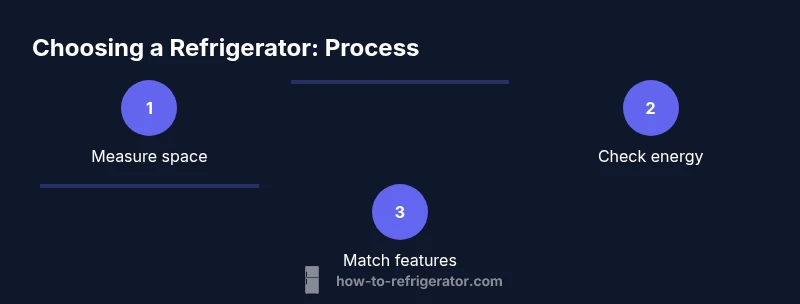
Goal: choose a refrigerator that fits your space, budget, and family needs. This guide covers space planning, energy efficiency, type and features, and how to compare warranties and delivery. By following these steps, you’ll pick a reliable fridge that sustains your daily routine and reduces utility costs. Whether you’re upgrading from an older model or shopping for a first apartment, this process keeps comparisons straightforward and free of buyer's remorse.
Understanding space, usage, and household dynamics
Before you start comparing models, map out how your kitchen and household actually behave. Measure the available space, account for door swing, ventilation clearance, and how you move around the kitchen during peak meal prep. Consider your household size, cooking habits, and grocery load. Is your household primarily two people who buy groceries every week, or do you stock up for a larger family? Do you rely on a lot of frozen meals, or do you prefer fresh produce with a lean pantry? According to How To Refrigerator, starting with space and usage gives you a sane frame for the rest of the decision. If you know your daily routines, you can choose a fridge that supports them rather than forcing your kitchen to adapt to a model.
Also think about noise and placement: will the fridge sit near a living space or a bedroom, where a noisy compressor could be disruptive? Consider energy type compatibility with your home electrical setup and any local rebates you may access. Document measured space, door clearance, and any obstructions. This foundation will guide every later comparison, from size to energy efficiency and features.
Understanding space, usage, and household dynamics
Before you start comparing models, map out how your kitchen and household actually behave. Measure the available space, account for door swing, ventilation clearance, and how you move around the kitchen during peak meal prep. Consider your household size, cooking habits, and grocery load. Is your household primarily two people who buy groceries every week, or do you stock up for a larger family? Do you rely on a lot of frozen meals, or do you prefer fresh produce with a lean pantry? According to How To Refrigerator, starting with space and usage gives you a sane frame for the rest of the decision. If you know your daily routines, you can choose a fridge that supports them rather than forcing your kitchen to adapt to a model.
Also think about noise and placement: will the fridge sit near a living space or a bedroom, where a noisy compressor could be disruptive? Consider energy type compatibility with your home electrical setup and any local rebates you may access. Document measured space, door clearance, and any obstructions. This foundation will guide every later comparison, from size to energy efficiency and features.
Understanding space, usage, and household dynamics
Tools & Materials
- Measuring tape(To measure doorway width, space, and appliance footprint)
- Notebook or digital note app(Record dimensions, constraints, and budget)
- Pen or pencil(For quick sketches and notes)
- Calculator or budgeting app(Estimate total cost of ownership and energy costs)
- Smartphone or tablet with internet(Research models, reviews, energy guides)
- Measuring helper (optional)(Assist in capturing hard-to-reach measurements)
- Masking tape or painter's tape(Mark space before moving fridge)
Steps
Estimated time: 2-4 hours
- 1
Measure the available space
Begin by recording the width, height, and depth of the space where the refrigerator will live. Include adequate clearance for doors to swing and for ventilation at the back and sides. Check path width from the doorway to the installation site to ensure the unit will fit through hallways or stairs. Re-check measurements twice to avoid surprises during delivery.
Tip: Measure three times; confirm door swing with the installation crew before ordering. - 2
Assess your family’s needs
Estimate how much refrigerated and frozen storage your household requires based on family size, shopping habits, and meal plans. Consider whether you value extra freezer space for bulk purchases or more fresh-refrigerator space for produce and drinks. This helps determine capacity and configuration.
Tip: List non-negotiable features (ice maker, humidity-controlled drawers, adjustable shelves) to compare later. - 3
Choose a fridge type that fits your workflow
Select a configuration that aligns with how you cook and organize: top-freezer for a budget-friendly, reliable option; bottom-freezer for frequent fridge access; French door or side-by-side for wider shelves and flexible storage. Consider door-opening space and accessibility for all household members.
Tip: If you open the fridge in a tight kitchen, a French-door or bottom-freezer can improve access and reduce energy loss. - 4
Check energy efficiency and capacity
Look at the energy guide and the Energy Star label to compare expected annual consumption. Higher efficiency often correlates with lower running costs, especially in households with long daily usage. Compare interior layouts and divider systems to maximize usable space inside the same external footprint.
Tip: Always compare the energy consumption per cubic foot rather than total consumption alone. - 5
Evaluate features and reliability
Identify features that genuinely improve daily life: adjustable shelves, humidity-controlled drawers, door alarms, and water/ice options. Weigh reliability and service history for each feature; some features add nuisance maintenance, while others deliver real convenience.
Tip: If you don’t use ice or water, consider models without external water connections to reduce potential leaks. - 6
Estimate budget and total cost of ownership
Set a realistic budget that includes delivery, installation, and any required upgrades to space or electrical outlets. Remember to factor in energy costs over time. categorize models into budget, mid-range, and premium tiers to narrow the field quickly.
Tip: Use a simple worksheet to compare sticker price, delivery, and annual energy costs over 5–7 years. - 7
Plan installation and delivery
Confirm delivery windows, check elevator or doorway constraints, and assess the route from the truck to the kitchen. Ensure there is a dedicated outlet and appropriate clearance for ventilation. Prepare to disconnect and move the old unit safely if needed.
Tip: Ask about haul-away options for the old fridge and verify warranty transfer requirements for installers. - 8
Read warranties and service options
Review the length and scope of warranty coverage, including parts, labor, and the sealed system. Consider optional extended plans for major components or frequent service areas. Clarify what constitutes normal wear and what requires professional service.
Tip: Document serial numbers and keep warranty information readily accessible. - 9
Make your decision and verify measurements
Narrow to two or three models that satisfy space, budget, and feature needs. Re-measure both the installation and the current doorways to ensure smooth delivery. Confirm with the retailer about return policies if a model doesn’t fit after delivery.
Tip: Place a final order only after you’ve double-checked dimensions and door clearance.
FAQ
What is the most energy-efficient refrigerator type?
Energy efficiency depends on model and usage. Look for Energy Star certification and a compressor designed for efficiency. Among common configurations, newer top-freezer and some compact designs can offer favorable operating costs when well insulated.
Energy efficiency varies by model and use; check Energy Star labels and compare configurations to find a more affordable option.
How can I tell if a fridge will fit my kitchen?
Measure the height, width, and depth of the space, and account for door clearance and ventilation. Also verify the path from the doorway to the installation site, including any tight turns or stairs.
Measure every dimension and the delivery path to avoid delivery problems.
Are water dispensers and ice makers worth it?
If you frequently use water or ice, features are convenient; otherwise, they add cost and potential maintenance. You can choose models that offer these features or skip them entirely.
If you use water or ice often, go for it; otherwise consider a model without these features.
What warranty coverage should I expect?
Warranties vary, but many models include at least a one-year parts and labor coverage. Some plans extend protection for the sealed system or key components. Always read the terms and keep your receipt.
Most fridges come with at least a one-year warranty; extended plans are optional.
Is it better to buy new or used?
New models offer current efficiency, reliability, and full warranty. Used units can save upfront cost but risk hidden issues; inspect seals, interior condition, and compressor health.
New is safer for efficiency and warranty; used requires careful inspection.
Do I need a water line for installation?
Not always. Some fridges require a water line for ice/water features; others don’t. If you don’t want to install a line, choose a model without external water connections.
Only if you plan to use ice or water from the door.
Watch Video
Top Takeaways
- Measure space precisely and confirm door swing.
- Prioritize energy efficiency and reliable warranties.
- Choose a fridge type that matches your kitchen workflow.
- Budget for delivery, installation, and ongoing energy costs.
- Check warranties and maintenance needs before buying.