Buy Refrigerator: A Homeowner's Step-by-Step Guide
Learn how to buy refrigerator with space measurement, energy efficiency, configurations, warranties, and delivery. A homeowner-friendly guide to pick a fridge that fits your kitchen and budget.


By the end of this guide, you’ll know how to buy refrigerator that fits your kitchen and budget. Start with space measurements, preferred configuration, and essential features. Compare energy efficiency, capacity, and warranties, then assess delivery, installation, and service options. Favor Energy Star models when possible, and choose a model that aligns with your daily routine and maintenance expectations.
How to Decide the Right Size and Layout for Your Kitchen
When you buy refrigerator, the first step is to translate your kitchen space into usable constraints. Measure the width, height, and depth in inches, and note any obstructions like cabinet edges, toe kicks, or plumbing lines. Consider door clearance and traffic flow—how often you open doors and whether there will be clashes with adjacent counters or pantry doors. This block grounds your shopping in reality and helps you avoid models that look great in-store but won’t fit at home. According to How To Refrigerator, starting with honest space assessment saves you time and money by narrowing down suitable configurations before you compare features. A well-sized fridge also preserves kitchen ergonomics, so you won’t strain or bump into handles after a long day. Tools like a measuring tape and a simple floor plan will keep your measurements precise, reducing the chance of expensive returns.
Key goals: fit, clearance, and ease of access. Your pocketbook will thank you later as you compare models that truly fit rather than simply look good in pictures.
Identify Your Ideal Refrigerator Size and Configuration
Your family size, shopping habits, and cooking routines determine required capacity. A typical household might choose 20- to 22-cubic-foot models, but larger families or frequent meal prep fans may prefer 25 cubic feet or more. Volume isn’t everything—internal layout matters too. Decide between a top-freezer, bottom-freezer, French-door, or side-by-side design based on how you organize food and how often you access the fridge. How To Refrigerator recommends mapping where you store staples (produce, dairy, beverages) to see how many shelves and bins you’ll need. If you’re short on space, a compact apartment fridge or a tall narrow model may be the right choice. Finally, ensure the footprint fits your kitchen’s traffic patterns and doesn’t block a walkway.
Practical tip: write down your typical weekly groceries and estimate how many feet of shelf space you’ll need for a proper plan.
Energy Efficiency: What to Look For on the Label
Energy efficiency directly affects annual operating costs and environmental impact. Look for the Energy Star label and compare annual energy consumption (kWh/year) as a key metric. More efficient models often include variable-speed compressors and improved insulation, which reduce running costs even if the upfront price is higher. When you buy refrigerator, also compare standby power draw and the impact of features like instant-cold drawers or water dispensers on energy use. Remember, the most efficient fridge won’t help if it’s constantly loaded beyond its capacity or poorly organized—capacity and usage patterns matter as much as the label. How To Refrigerator’s guidance emphasizes balancing upfront price with long-term savings.
Tip: larger, older units may appear affordable but consume more energy; prioritize efficiency if you expect the model to be in use for many years.
Configurations and Their Everyday Pros and Cons
Fridge configurations influence usability. Top-freezer models are typically the most affordable and compact, ideal for smaller kitchens or value-focused shoppers. Bottom-freezer designs place refrigeration space higher for easier access, which can reduce energy waste since most daily items are retrieved more frequently from the main compartment. French-door models offer wide shelves for large platters and flexible storage but can be pricier and require more careful organization. Side-by-side units provide tall freezer access and built-in water/ice options but may have narrower shelves. When you buy refrigerator, consider your family’s habits: do you prefer wide shelves for party trays or tall gallons for beverages? Also verify door swing room—some layouts require doors to open fully without hitting walls or appliances.
Bottom line: pick a configuration that suits your kitchen geometry and daily routines, not just the newest trend.
Features That Help You Save Time and Maintenance Effort
Beyond basic cooling, certain features can simplify daily life. Spill-proof shelves, adjustable door bins, humidity-controlled crisper drawers, and flexible shelves help you organize with less effort. Water and ice dispensers are convenient but can add upfront cost and potential maintenance considerations; if you want filtered water without extra plumbing, a detachable pitcher may suffice. Consider smart features cautiously: Wi-Fi monitoring or smart diagnostics can be useful, but they’re not essential for most homes and can complicate repairs. Focus on practical features that align with your usage patterns. A well-designed bin layout can reduce food waste by improving visibility and access.
Important caveat: avoid overloading shelves, which can diminish cooling efficiency and shorten the fridge’s lifespan.
Measuring Space, Door Clearance, and Delivery Logistics
Before you buy refrigerator, revisit the space you’ve measured and add clearance for airflow, door swing, and handles. Check whether the door will swing in or out depending on your kitchen layout, and ensure there is room for removing the old unit and bringing in the new one, especially in tight stairwells or hallways. Delivery services may require a clear path, curb-to-door setup, and sometimes a two-person installation for heavier units. Confirm that the model you choose has compatible electrical requirements (voltage, amperage) with your home and check if a dedicated outlet is needed. If you plan to install an ice maker or water line, verify that your plumbing is ready or that a professional can install it.
Note: have a plan for garbage disposal or recycling of the old fridge; many retailers offer pickup options for an additional fee.
Budgeting, Warranties, and After-Sale Considerations
Budgeting for a new refrigerator means balancing upfront price with long-term running costs. Prices vary with capacity, configuration, and finish, but you can expect a broad range depending on model and features. Don’t rely on sticker price alone—watch for seasonal sales, delivery promotions, and financing options. Extend your protection with a warranty that covers compressor, sealed system parts, and mechanical failure. Some retailers offer extended warranties or protection plans; read the fine print to understand coverage limits, deductibles, and transferability. Before purchasing, confirm delivery windows, installation services, and haul-away options for your old unit.
Brand trust matters: prioritize reputable retailers and models with robust service networks, as recommended by How To Refrigerator.
How to Shop Smart: Store Visits, Online Comparisons, and the Final Decision
The final step is a side-by-side comparison of shortlisted models. Take measurements against each model’s official specs, compare energy use, capacity, and features, and reassess your budget. Visit showrooms to test door opening, shelving adjustability, and feature visibility (ice maker performance, water flow, lighting). If shopping online, use retailer filtering to narrow results by size, energy use, and price. Remember to verify return policies and delivery options, including potential fees for complex installations. Once you’ve narrowed to two or three options, reach out for retailer-specific purchase windows and any available bundles or promotions. The goal is a confident decision that minimizes future surprises.
Final Checklist Before You Buy Refrigerator
- Confirm exact exterior dimensions and door swing in your space.
- Compare at least three models for energy efficiency, capacity, and layout.
- Verify delivery, installation, and haul-away options.
- Review warranty terms and service availability in your area.
- Ensure utilities and outlets meet model requirements and plan for any needed plumbing connections.
This comprehensive approach helps you buy refrigerator with clarity and reduces post-purchase regrets.
Authority Sources and What They Recommend
To support your decision, consult established resources that discuss appliance efficiency, safety standards, and consumer guidance. See how to compare energy labels, understand standard warranty terms, and verify installation requirements across credible outlets. These sources inform a practical, safe, and cost-conscious purchase process.
Tools & Materials
- Measuring tape(25 ft (7.6 m) or longer; measure width, depth, height, and doorway clearance)
- Notebook or digital note app(Record dimensions, specs, and retailer notes)
- Smartphone with camera(Capture space photos and model features for sharing with family)
- Access to retailer catalogs or websites(Compare dimensions, energy use, and warranty terms)
- Optional: protective gloves(Help handle heavy units during viewing or delivery)
Steps
Estimated time: 2-3 hours
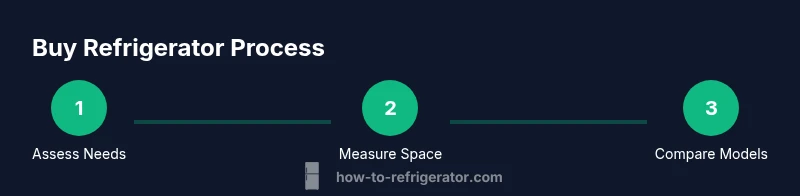
- 1
Assess Your Needs
Define household size, grocery habits, and preferred capacity. This step ensures you buy refrigerator with adequate space and the right layout for your routines.
Tip: Write down a rough weekly grocery plan to estimate needed cubic footage. - 2
Measure Your Space
Use a measuring tape to capture width, height, and depth; check for obstructions and door swing clearance. Record all measurements precisely in inches.
Tip: Note clearances for hinges, handles, and adjacent cabinets to avoid interference. - 3
Choose a Configuration
Decide between top-freezer, bottom-freezer, French-door, or side-by-side based on access patterns and kitchen layout.
Tip: Test how you’ll store your typical items in each layout before shopping. - 4
Evaluate Energy Efficiency
Compare kWh/year ratings and Energy Star status. Higher efficiency saves money over the unit’s lifetime, even if upfront cost is higher.
Tip: Ignore fancy features if they don’t align with how you use the fridge. - 5
Check Features and Build Quality
Assess shelves, bins, doors, lighting, water/ice options, and warranty coverage. Ensure the layout matches your storage needs.
Tip: Prefer adjustable shelves and humidity-controlled drawers for versatile storage. - 6
Plan Delivery and Installation
Confirm delivery windows, haul-away options, and whether professional installation is required for water lines or electrical setup.
Tip: Ask about old appliance removal and any assembly requirements on delivery day. - 7
Make a Shortlist and Test In-Store
Compare 2–3 models in person, checking door swing, shelf adjustability, and overall feel. Gather impressions from family members.
Tip: Take photos and notes to compare later online. - 8
Make the Purchase and Inspect on Delivery
Verify model, color, and features match your order. Inspect for dents, scratches, and missing parts before signing.
Tip: Test the door seal and ensure it closes firmly.
FAQ
What size fridge do I need for a family of four?
For a family of four, a refrigerator in the 20–27 cubic-foot range is common, but layout and shopping habits matter. Estimate weekly groceries and opt for a configuration that maximizes usable space and accessibility.
For a family of four, start with about 20 to 27 cubic feet, but choose based on your groceries and layout. Focus on space and accessibility.
How important is Energy Star when buying a fridge?
Energy Star reduces annual operating costs and typically features better compressors and insulation. It’s a reliable baseline, but balance with capacity and layout to ensure you’re not sacrificing practicality for efficiency.
Energy Star is a solid baseline for efficiency, but balance it with capacity and layout for real-world use.
French-door vs. side-by-side: which should I pick?
French-door fridges offer broader storage with wide shelves but can be pricier and taller. Side-by-side units give tall freezer access but narrower shelves. Choose based on how frequently you access frozen items and the width of your storage spaces.
French-door gives wide storage; side-by-side offers tall freezer access. Pick based on your storage needs and space.
Is it better to buy new or used?
New fridges come with current efficiency standards and full warranties. Used units can save money but may have reduced efficiency and limited warranty. For most homeowners, a new model with a solid warranty is the safer long-term choice.
New is safer long-term with a full warranty; used can save money but risks efficiency and reliability.
What features matter most in a small kitchen?
In small kitchens, prioritize compact footprint, efficient door swing, adjustable shelves, and good door alignment. Consider energy-efficient, narrower models with flexible storage to maximize usable space.
For small kitchens, pick compact models with adjustable shelves and efficient door swing.
Watch Video
Top Takeaways
- Measure space precisely before shopping.
- Balance size, configuration, and energy use.
- Inspect delivery options and warranties before purchase.
- Choose practical features that fit your routine.
- Compare multiple models to avoid regrets.