How Much Does a Refrigerator Cost? A 2026 Guide
Explore the true cost of refrigerators in 2026, from upfront prices to installation and energy usage. Learn how to compare models, factor in total ownership, and save with practical tips from How To Refrigerator.


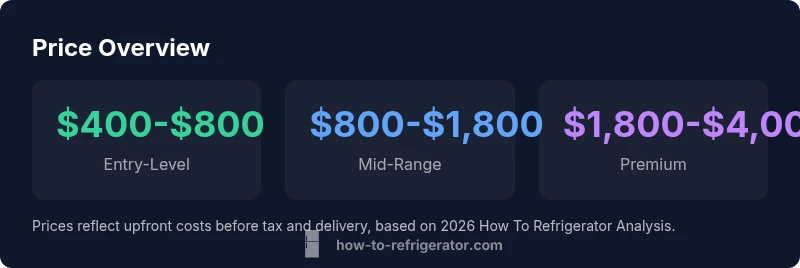
Refrigerator prices vary widely: entry-level models start around $400–$800, mid-range around $800–$1,800, and premium smart models can exceed $2,000 to $4,000. Delivery, installation, and ongoing energy costs add to the total. The How To Refrigerator team provides a clear framework to budget for upfront costs plus operating expenses.
Price landscape in 2026: upfront cost vs total ownership
According to How To Refrigerator Team analysis, understanding how much a refrigerator costs requires looking beyond the sticker price. The upfront price captures the purchase, taxes, and basic delivery, but the total cost of ownership includes energy use, maintenance, and potential service plans over several years. In 2026, homeowners should expect to budget for both categories, especially for larger families or households that prioritize energy efficiency. Regional price differences, retailer promotions, and seasonal sales can shift the middle of the price spectrum by hundreds of dollars. When planning a purchase, start with a price envelope that accommodates both your ideal features and reasonable energy usage, then adjust for installation and accessories. The goal is to map the total cost of ownership rather than chase the lowest upfront price alone.
Forming a realistic budget means separating what you want today from what you’ll pay over time. If you measure price against durability, warranty length, and estimated energy costs, you’ll see why a slightly higher upfront cost can be cheaper over a 5- to 10-year horizon. How To Refrigerator’s methodology favors total-cost thinking: compare model families by upfront price, annual energy use, expected maintenance, and resale value. This approach helps homeowners avoid sticker-price regrets and select a fridge that fits both kitchen space and lifestyle needs.
What drives the price: upfront and ongoing costs
Price is a function of size, layout, and technology, but ongoing operating costs matter as much as the purchase price. Key drivers include the cabinet volume (larger models cost more), door configuration (single-door vs. French doors or side-by-side), and energy efficiency ratings (ENERGY STAR or equivalent). Features like built-in ice makers, water dispensers, smart controls, and interior materials can push the price higher. Labor for installation, removal of an old unit, and extended warranties add to the initial outlay. Regional demand and supply chain conditions influence both availability and price volatility. The How To Refrigerator team notes that buyers who prioritize energy efficiency typically spend more upfront but save on electricity bills over time, offsetting part of the higher cost.
Price ranges by refrigerator type and size
Below is a practical guide to frame expectations. Entry-level and compact units suit apartments and smaller kitchens but offer limited capacity. Standard sizes provide a balance of cost and capacity, while premium configurations include French doors, side-by-side layouts, or all-smart features that maximize convenience and food management. Keep in mind that regional taxes, delivery fees, and the cost of upgrading electrical circuits can alter final prices. The 2026 analysis from How To Refrigerator shows that most households fall into the mid-range category for typical family use, while luxury configurations serve special needs such as larger households or premium design goals. Compare models within each category to find the best fit for both budget and kitchen layout.
Hidden costs to factor in before buying
In addition to the listed price, there are several costs homeowners frequently overlook. Delivery and removal of the old unit can add up, especially if stairs or special handling is required. A water line hookup for ice makers or water dispensers may incur installation charges. Some models require new electrical circuits or upgraded outlets. Extended warranties or maintenance plans add to the annual cost but can reduce the risk of surprise repairs. Finally, expect energy costs to reflect the unit’s efficiency in kilowatt-hours per year. A more efficient refrigerator may cost more upfront, but it can save money over the appliance’s lifetime.
How to save on refrigerator costs: practical, real-world tips
Start with a needs-based checklist: measure doorways, determine surge protection requirements, and decide which features are essential. Shop during major sales events and consider retailer promotions to reduce upfront costs. Compare energy ratings and potential tax credits or rebates available in your area. If feasible, set up price alerts and compare delivery charges. Consider refurbs or open-box items from reputable dealers if warranties and return policies are solid. Finally, plan installation in advance to avoid last-minute fees and ensure your kitchen space is prepared for a smooth, affordable setup.
Buying considerations for apartments, small kitchens, and larger homes
Apartment dwellers face space constraints and building access restrictions. In small kitchens, compact European or counter-depth models may be the best fit, even if they have slightly higher unit prices per cubic foot. For larger homes, prioritize a model with ample storage and energy efficiency. For households with high ice and water usage, consider models with reliable filtration and water-line connections. Understanding your living situation helps refine price expectations and ensures you choose a refrigerator that aligns with both space and lifestyle needs.
Price ranges by refrigerator type and size (typical ranges; regional variations apply)
| Model Type | Typical Price Range | Notes |
|---|---|---|
| Entry-level / compact | $400-$800 | Best for apartments or small kitchens |
| Standard / mid-range | $800-$1,400 | Good balance of cost and capacity |
| French door / side-by-side | $1,500-$3,500 | High-end features and style |
| Smart/Premium | $1,800-$4,000+ | Advanced connectivity and efficiency |
FAQ
What is the average refrigerator cost in 2026?
Prices vary widely by size and features. Entry-level units start around $400–$800, mid-range models typically cost $800–$1,800, and premium configurations can exceed $2,000. Your final price depends on capacity, doors, and smart features. Remember to factor delivery and installation into the total.
Prices vary by size and features. Entry-level units start around four to eight hundred dollars, mid-range around eight hundred to eighteen hundred, and premium beyond two thousand dollars.
Do energy-efficient models cost more upfront?
Yes, energy-efficient refrigerators often have a higher upfront price due to better insulation, compressors, and electronics. However, they typically save on annual energy costs, which can offset the higher upfront price over a few years depending on usage and local electricity rates.
Energy-efficient fridges usually cost a bit more up front but save on energy bills over time.
Are refurbished refrigerators a good deal?
Refurbished units can be cheaper, but they carry more risk of shorter remaining lifespan. If you pursue this option, ensure a solid warranty, verify compressor life, and buy from reputable refurbishers with clear return policies.
Refurbished fridges can save money, but check warranty and condition carefully.
How can I reduce delivery and installation costs?
Look for retailers offering free or bundled installation. If you’re comfortable moving an old fridge yourself, that can reduce costs. Confirm whether haul-away services are included and whether any required electrical or plumbing work is already accounted for in the price.
Shop for free installation offers and verify removal options to cut costs.
What costs should I plan for besides upfront price?
Ongoing energy costs, potential maintenance, filter replacements, and water-line connections are common. Also factor in warranty coverage and the possibility of future parts or service needs.
Don’t forget energy, maintenance, and potential service costs over time.
How long does installation typically take?
Most residential installations take a few hours, depending on space layout and any required plumbing or electrical work. If new outlets or water lines are needed, schedule additional time.
Most installs take a few hours; extra time if plumbing or outlets are needed.
“Total cost of ownership matters more than the upfront sticker price when selecting a refrigerator.”
Top Takeaways
- Compare total cost, not sticker price
- Prioritize energy efficiency to cut long-term costs
- Account for delivery, installation, and removal fees
- Watch for promotions and seasonal sales to save
- Measure kitchen space before buying