How Much Does a New Refrigerator Cost in 2026? A Practical Guide
Discover the true cost of a new refrigerator in 2026, with price ranges by model type, hidden fees, energy costs, and practical shopping tips to maximize value.


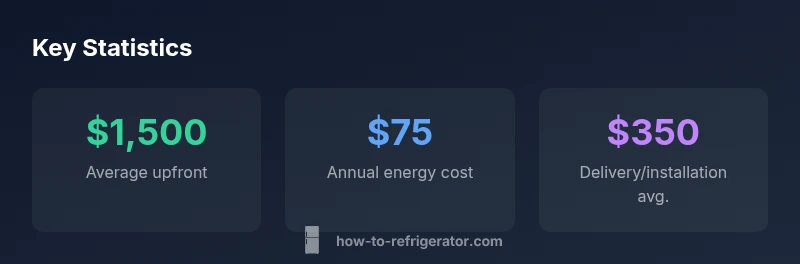
Prices for a new refrigerator vary widely because of size, configuration, and features. Budget units can run about $400-$700, standard models $600-$1,200, and premium French-door or counter-depth units often $1,900-$4,000. Delivery, installation, and warranties add roughly $50-$200 or more, and total ownership costs include energy use and maintenance over time.
What Determines the Cost of a New Refrigerator
Prices hinge on capacity (measured in cubic feet or liters), configuration (top-freezer, bottom-freezer, side-by-side, French-door), door finish, and energy efficiency. Roomy models with flexible shelving, smart features, and specialty lighting tend to cost more up front but may save energy or improve daily use. In 2026, buyers should expect a broad range: basic units in the hundreds, mid-range models in the low thousands, and premium, feature-rich refrigerators that push into several thousands. The How To Refrigerator team notes that total ownership cost also depends on installation, delivery policies, and warranty coverage. When budgeting, consider your kitchen space, preferred layout, and how often you replace a unit; a larger, more feature-rich model carries additional upfront and ongoing costs.
Price Ranges by Refrigerator Type
- Budget/Compact: roughly $400-$700, small footprint, adequate for apartments or secondary kitchens. Pros: low upfront cost, simple maintenance. Cons: limited capacity, fewer features.
- Standard Top-Freezer / Bottom-Freezer: around $600-$1,200; reliable, familiar layouts; Pros: value and durability; Cons: older designs, limited energy efficiency options.
- French-Door / Counter-Depth: typically $1,900-$4,000; high storage flexibility, modern aesthetics; Pros: energy efficiency options, adjustable shelves; Cons: higher price and potential repair costs.
- Side-by-Side / Smart Models: $1,400-$3,500; built-in conveniences and connectivity; Pros: quick access, larger ice/water solutions; Cons: can be less energy-efficient in some configurations.
Hidden Costs to Plan For
- Delivery and installation: $50-$150 or more, depending on locale and stairs or complex setups.
- Removal of old appliance: often $0-$100; some retailers offer discounted or free haul-away.
- Extended warranties and service plans: typically 5-15% of purchase price.
- Energy costs: depending on usage and efficiency rating, annual costs may vary by model; ENERGY STAR certified units tend to run cheaper over time.
- Accessories: ice-makers, water filters, and smart home integration can add ongoing costs.
Budgeting Across Ownership: Purchase Price vs. Energy Costs
Price is only part of the equation. A higher upfront cost may be offset by lower energy consumption, while a cheap model could incur higher maintenance. For 10-year ownership, consider both the initial price and expected energy use. Energy-efficient models often recover their premium over several years through reduced electricity bills. Always check the estimated annual energy cost on the Energy Guide label and compare it across models.
Delivery, Installation, and Warranties
Delivery policies vary; confirm whether haul-away options are included, and whether professional installation is required for refrigerators with water lines or ice makers. Warranties typically cover parts and labor for a certain period; extended warranties add cost but may provide long-term peace of mind. Read the fine print: some components like ice makers and water filters may have separate warranties or replacement schedules.
Tips to Get the Best Value
- Compare models with similar capacities and features to ensure an apples-to-apples comparison.
- Look for ENERGY STAR or other certifications, as these often correlate with lower running costs.
- Watch sales cycles: major retailers frequently discount models during holiday weekends or end-of-quarter promotions.
- Consider refurbished or scratch-and-dent units from reputable sellers to save money without sacrificing reliability, but verify warranty coverage.
- Use delivery and installation credits to offset upfront costs by bundling purchases with accessories or extended warranties.
Financing and Promotion Cycles
Many retailers offer financing with low or zero-interest plans for qualified buyers. If you don't need immediate replacement, wait for promotional periods in spring or fall when retailer prices are lower. Stock levels and model year changes can cause price fluctuations. Always confirm price-matching policies and check coupons or store-specific rebates from manufacturers.
Longevity and Total Cost of Ownership
Refrigerators typically last 10-15 years, depending on usage and maintenance. The cost of ownership includes not only purchase price but also energy use, potential repairs, and the cost of parts like shelves, door seals, and water filters. Regular maintenance—clean coils, replace door seals, and ensure proper ventilation—can extend life and reduce total cost. In 2026, choosing an energy-efficient model with good reliability reduces long-term expenses and improves home comfort.
Price ranges by common refrigerator types
| Model Type | Typical Price Range | Key Pros | Key Cons |
|---|---|---|---|
| Budget/Compact | 400-700 | Small footprint; low upfront cost | Limited capacity; basic features |
| Standard Top/Btm-Freezer | 600-1200 | Reliable; good value | Fewer modern features; not the most energy-efficient |
| French-Door/Counter-Depth | 1900-4000 | Flexible storage; modern design | Higher price; potential service costs |
FAQ
What is the typical price range for a new refrigerator in 2026?
Prices span from budget models around $400-$700 to premium units up to $4,000. The exact amount depends on size, configuration, and features. Delivery and installation can add to the total.
Prices range from a few hundred to several thousand dollars depending on size and features, with delivery and installation adding to the total.
Do energy-efficient refrigerators cost more upfront?
Yes, energy-efficient models usually cost more initially, but ENERGY STAR rated units save on electricity over time.
Energy-efficient fridges cost more at purchase but save on energy costs over time.
Are refurbished or scratch-and-dent models a good idea?
Refurbished or scratch-and-dent units can save money, but ensure warranty coverage and inspect condition. They may not have the latest features.
Refurbished can save money, but check warranty and condition.
Is delivery included in the price?
Delivery may be included or offered as an add-on; confirm before purchase and factor in installation if needed.
Delivery is sometimes included; ask about installation before buying.
How long do refrigerators typically last?
Most fridges last 10-15 years with proper maintenance; energy efficiency and brand reliability affect longevity.
Most fridges last about a decade or more with good care.
“The true cost of ownership for a refrigerator goes beyond the sticker price; energy efficiency and maintenance play a large role in 10-year total costs.”
Top Takeaways
- Estimate your needs before shopping.
- Understand price ranges by model type.
- Factor delivery, installation, and energy costs.
- Shop during promotions and compare warranties.
- Prioritize energy efficiency to lower long-term costs.