How to Buy a Fridge: A Homeowner's Guide to Smart Refrigerator Shopping
A comprehensive, step-by-step guide to buying a fridge that fits your space, budget, and energy goals. Learn sizing, energy efficiency, delivery, and warranties for smart refrigerator shopping in 2026.


To buy fridge, start with a space assessment, set a budget, and decide on essential features (size, layout, energy rating). Measure the opening and door clearance, then compare models by capacity, shelves, and energy efficiency. Check delivery, installation, and warranty terms to prevent surprises and coordinate with your home's electrical outlet and water line requirements.
Why buying fridge wisely saves money and reduces waste
Purchasing a fridge is a long-term decision. It affects your energy bill, food preservation, and daily convenience for years. According to How To Refrigerator, the most common misstep is choosing a model that doesn't fit your space or usage pattern. The How To Refrigerator team found that many households buy larger or more feature-heavy units than necessary, inflating upfront cost and ongoing energy use. To avoid this, start with a clear brief: list must-have dimensions, energy targets, and how you actually store groceries. Consider layout preferences (top freezer vs bottom freezer, door swing) and the frequency you open the fridge. A thoughtful approach helps you buy fridge with confidence and reduces regret after the purchase. In practice, begin by measuring the space, listing essential features, and estimating your monthly energy costs based on model ratings. This preparation makes side-by-side comparisons faster and more meaningful.
Key decision factors: size, layout, energy, and features
When you’re ready to buy fridge, the first questions are about size and layout. Capacity is measured in cubic feet; but usable space depends on shelves and bins. A family of four typically uses a mid-size to large footprint, but the right choice balances storage with energy efficiency. Consider the configuration: top-freezer, bottom-freezer, side-by-side, or French-door. Each layout has pros and cons for accessibility, temperature stability, and grocery flow. Energy efficiency labels matter: a higher-efficiency model may cost more upfront, but saves over time. Features like adjustable shelves, crisper bins, door alarms, and humidity controls improve everyday usability. Finally, size up the electronics and smart features to see if you actually use them. In the end, your decision should align with your kitchen layout, budget, and how often you cook. For many homes, a well-chosen mid-size fridge delivers reliable performance without unnecessary extras.
Energy efficiency and standards to know
Energy efficiency isn't fashionable; it's money in your pocket. In the United States, Energy Star ratings provide a reliable baseline for comparing annual energy use. When you buy fridge, check the Energy Guide label; it estimates annual energy consumption in kilowatt-hours and projected operating costs. The higher the efficiency, the more you save on monthly bills, especially if you keep the fridge full and avoid overheating. In addition to the label, examine standby power, compressor type, and insulation quality. Some newer models use inverter compressors and variable-speed fans that minimize energy usage during peak hours. Understanding energy standards helps you estimate total cost of ownership and avoid sticker shock after a few years. If you regularly shop online, filter results by energy rating to narrow your options quickly.
Sizing your space: dimensions and clearance
A common pitfall is buying a fridge that doesn’t fit the doorway or measured space. Start by measuring the width, height, and depth of the opening, including trim or molding. Leave at least 1-2 inches of clearance on the sides for ventilation and door swing. Don’t forget the depth and space behind the unit for cords, plumbing, and airflow. If you’re installing into a tight corner, also measure diagonal clearance to ensure doors swing open without hitting walls or cabinets. When you’re comparing models, write down the footprint and confirm it matches your measured space. If a fridge is within tenths of an inch, consider removing cabinet doors or slightly adjusting the cabinetry to gain the needed clearance. This step is essential for smooth delivery and long-term reliability.
Models and configurations: top-freezer, bottom-freezer, side-by-side, French door
Refrigerator configurations impact usability and energy patterns. Top-freezer models are typically budget-friendly and compact, but you may trade convenience for storage. Bottom-freezer models place the cold section lower, which some homeowners find easier to reach. Side-by-side units provide easy access to fresh and frozen sections but can limit wide items on shelves. French-door fridges combine wide fresh-food access with a roomy freezer but often come with higher price tags and taller dimensions. When you’re evaluating, consider door swing clearance, shelf adjustability, and interior lighting. Also check whether the fridge has humidity-controlled crisper drawers and a dedicated meat/deli bin. For petites kitchens, consider 24- to 28-inch widths; for larger spaces, 30- to 36-inch widths may be appropriate. Factor in the energy use and price delta across configurations to decide what delivers the best value for your space.
Budgeting, delivery, and warranties
Budgeting is more than sticker price; total cost of ownership includes delivery, installation, energy, and maintenance. Start with a price range that fits your budget, then earmark funds for delivery and possible removal of your old fridge. When you buy fridge, confirm delivery windows, whether haul-away is available, and if removal of old ice-maker lines is required. Installation may involve leveling feet and adjusting doors; ensure the model supports your electrical outlet and, if needed, a water line. Warranties vary; some units come with manufacturer coverage for parts and labor, others require extended plans. Compare warranty duration and what it covers, plus whether local service is available in your area. If you plan to purchase online, check delivery fees and return policies. For many shoppers, negotiating with retailers on price and delivery terms can save a substantial amount. The How To Refrigerator team recommends focusing on total cost of ownership rather than upfront sticker price to avoid later regrets.
Tools & Materials
- Measuring tape(at least 96 inches long for wide openings)
- Graph paper or digital space planner(helps map the exact opening)
- Notebook or smartphone to record measurements(log width, height, depth, and clearance)
- Pencil and pen(for quick sketches)
- String or painter's tape(tests clearance without moving fixtures)
- Budget calculator or app(estimate total cost of ownership)
Steps
Estimated time: 60-90 minutes
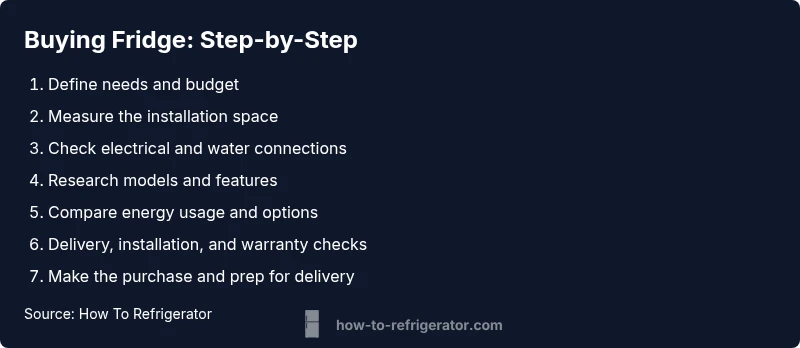
- 1
Define needs and set a budget
Clarify your must-haves (size, configuration, energy rating) and identify a realistic budget. Consider family size, typical grocery load, and how often you host meals. Decide if you value energy efficiency over added features, and set a price ceiling to guide your shopping.
Tip: Write down your top three must-haves and your maximum acceptable price. - 2
Measure the installation space
Measure width, height, and depth of the opening, including trim. Add at least 1-2 inches for ventilation and door swing. Check doorway width and path to the kitchen so the unit can be moved without obstruction.
Tip: Measure twice, then recheck with the model’s footprint in mind. - 3
Check electrical and water connections
Verify that there is a compatible electrical outlet nearby and, if you need an ice maker, a water line in the correct location. Note any special requirements like dedicated circuits or voltage. Ensure floor and cabinets support the unit’s weight.
Tip: If unsure, consult a licensed electrician before purchase. - 4
Research models and features
Browse models that fit your space and budget. Compare capacities, shelf configurations, energy usage, and warranty terms. Use side-by-side comparisons to identify the best value and avoid overbuying features you won't use.
Tip: Create a short list of 3-4 candidates with clear pros/cons. - 5
Compare energy usage and purchase options
Study Energy Guide labels and estimate yearly operating costs. Check delivery, installation, and haul-away options; compare retailer quotes. Consider sales cycles and extended warranties for long-term protection.
Tip: Calculate annual energy cost at your local electricity rate. - 6
Assess delivery, installation, and warranties
Ask about delivery windows, timing, and whether doors and panels will need removal for installation. Verify warranty coverage and service availability in your area. Clarify who handles repairs and whether there’s a service fee.
Tip: Confirm who disconnects/reconnects water lines if applicable. - 7
Make the purchase and prepare for delivery
Choose the model and finalize the order. Prepare the space by removing obstructing items and clearing the path for delivery. Confirm timing and arrange for disposal of your old fridge if needed.
Tip: Schedule delivery during a period with flexible hours to ensure access.
FAQ
What size fridge do I need for a family of four?
For a family of four, a mid-size to large fridge in the 20–25 cubic foot range often works well, depending on groceries and dining habits. Assess your weekly food load and storage needs, then verify that the chosen model fits your space.
For a family of four, aim for a mid-size to large fridge, typically around twenty to twenty-five cubic feet, based on your groceries and space.
Is energy efficiency worth the upfront cost?
Energy-efficient models usually cost more upfront but save money over time through lower operating costs. If you run your fridge many hours daily, the investment pays off in monthly energy savings and reduced environmental impact.
Yes. Energy efficiency saves money over time, especially if the fridge runs many hours daily.
How long does delivery and installation take?
Delivery and installation typically take a few hours, depending on scheduling and any required preparation. Ask for a window and have the old unit ready for haul-away if offered.
Delivery and installation usually take a few hours; check the scheduled window when you order.
Should I buy a fridge with a water dispenser?
A water dispenser adds convenience but can increase upfront cost and maintenance. Consider whether you use filtered water daily and whether space and plumbing permit it.
Water dispensers add convenience but cost more and require maintenance; decide based on your daily routine.
What is the best fridge configuration for small kitchens?
In small kitchens, consider counter-depth models or narrow widths (24–28 inches). Top-freezer or bottom-freezer configurations can save space, while French-door models offer wider shelves when space allows.
For small kitchens, look at counter-depth or narrow fridges; top- or bottom-freezer layouts save space.
Watch Video
Top Takeaways
- Define space, budget, and must-haves before shopping.
- Measure space precisely for safe fit.
- Compare energy usage to estimate total cost.
- Plan delivery, installation, and warranties upfront.