How to Get Rid of an Old Refrigerator Near Me: A Practical Guide
Learn safe, legal ways to dispose of an old refrigerator near you. Explore recycling, donation, and haul-away options, plus preparation steps and tips for choosing the right service.


Goal: Get rid of an old refrigerator near you in a safe, legal, and responsible way. You’ll learn your disposal options (haul-away, licensed recycling, donation, or resale), what information providers require, and how to prepare the unit for removal. By the end you’ll know how to compare quotes, avoid scams, and complete the process with minimal hassle.
Why disposing near you matters
When you search for how to get rid of an old refrigerator near me, disposal becomes a local, actionable task. Improper disposal can harm the environment and expose residents to hazardous refrigerants and oils. The How To Refrigerator team found that choosing a licensed, local option reduces illegal dumping and ensures the appliance is recycled or reused responsibly. By coordinating with a nearby recycling center, charity, or licensed hauler, you support your community and comply with local regulations. Proximity matters for scheduling, minimizing transport emissions, and ensuring follow-up documentation. Understanding the local framework helps you predict timelines, costs, and the likelihood of charitable pickup or resale. This section highlights why working with nearby, reputable providers matters for outcomes and peace of mind.
Common disposal options and how they work
There are several paths to take when disposing of an old refrigerator near you. Each option has distinct steps, eligibility criteria, and environmental impacts.
- Licensed recycling facilities: Centers that recover refrigerants, metals, and plastics, ensuring compliance with environmental regulations. They issue receipts and certificates of recycling for your records.
- Donation: If the fridge still cools, consider donating to a local charity or thrift store. Donors may receive a tax receipt, and the recipient will arrange pickup or drop-off.
- Haul-away services: Private companies offer curbside pickup for a fee. They handle loading, transport, and often the recycling process. Confirm what happens to the appliance after removal.
- Manufacturer take-back programs: Some brands offer take-back or recycling through approved partners. Verify coverage in your area and any associated costs.
- Local municipal programs: A handful of towns provide bulk pickup or drop-off events. These programs are usually cost-effective but may have size or weight limits.
Understanding these options helps you choose the best fit for your fridge’s condition, budget, and timeline.
How to assess local options: recycling centers, haulers, and charities
To decide which path makes sense, start by identifying three to five nearby options. Check licensing and certification with your state or city environmental agency, review their disposal practices, and request written quotes. Look for programs that provide refrigerant recovery certificates and receipts for recycling, which you can keep for records. Contact the organizations to confirm access hours, required preparation, and whether they offer haul-away or drop-off. If a fridge is still functional, ask about donation partners and whether they can arrange pickup. Compare not just price, but also convenience, timing, and environmental outcomes. Some programs will bundle disposal with decontamination or gas recovery; others rely on third-party transport. Finally, verify that the option you choose adheres to local proximity requirements to minimize transport emissions and community disruption.
How to prepare the fridge for removal
Preparation reduces the risk of damage and ensures a smooth pickup. Start by unplugging the unit and letting it defrost if necessary to prevent leaks—do not plug back in once unplugged. Clear a safe path from the fridge to the entrance, removing obstacles and securing carpeting or floor surfaces with protection. If your fridge includes a water line, shut it off at the valve and disconnect tubing, following manufacturer instructions or the hauler's guidance. Remove doors or install a safety barrier to prevent injuries during transport, especially in homes with children or pets. Take photos of the unit and wiring for documentation and the pickup crew’s reference. Finally, gather any labels, model numbers, and documents the recycler or charity may request for records.
Negotiating and selecting a service: questions to ask
Ask direct questions to confirm credentials and service scope. Do they provide an EPA-compliant refrigerant recovery certificate? Is pickup included in the price or billed separately? What are their estimated timelines and what happens if the appointment is delayed? Do they offer donation or resale assistance if the fridge still works? What documentation will you receive after disposal? How will they handle hazardous materials and oils?
Collect several quotes and compare the included services, restrictions, and guarantees. Request a written contract or service level agreement, along with a contact person for day-of service. If you encounter aggressive sales tactics, step back and reassess options. When possible, book a window rather than a fixed time, and confirm access and parking at the pickup location.
What happens after disposal: records, recycling outcomes, and tips
After disposal, you should receive a disposal receipt or certificate of recycling. These records help you verify compliance with local laws and track your environmental impact. Recyclers recover materials from the appliance, such as copper, steel, and plastics; refrigerants are removed and processed by licensed facilities. When you donate or sell a fridge that still works, the recipient part may arrange pickup and provide a tax receipt. For DIY or self-haul scenarios, keep copies of the drop-off confirmation and photos of the unit for your records. Finally, consider keeping a small folder with the disposal documentation for your home records in case you sell or relocate the home in the future.
When to consider DIY removal vs professional service
DIY removal can be tempting for small projects, but fridges are heavy and contain refrigerants and oils that require proper handling. If you lack proper equipment, space, or knowledge, hiring a licensed hauler or recycler reduces risk and ensures compliance. Professional services often include handling, transport, and recycling certificates, which makes the process faster and safer. Consider your location, the fridge’s condition, and the closest authorized facilities when deciding between DIY and professional support.
Final checklist before pickup
- Confirm the pickup time and location with the provider.
- Ensure doors are off or secured and the path is clear.
- Take photos of the empty unit and the installed connections for records.
- Ask for a written receipt or recycling certificate.
- Keep the contact details of the transporter in case of issues or delays.
- Review any disposal instructions for the next location (landlord, HOA) to avoid penalties.
Tools & Materials
- Moving dolly or appliance dolly(Heavy fridge; use straps; ensure weight rating fits your unit)
- Safety gloves(Sturdy grip, protect hands during lifting)
- Screwdrivers or basic toolbox(To disconnect any removable hardware if needed)
- Protective blankets or plywood(Prevent floor and door frame damage during move)
- Flashlight(Use in dim entryways or basements)
- Old towels or absorbent material(Catch residual liquids from defrosted units)
Steps
Estimated time: 2-4 hours
- 1
Identify disposal options and schedule
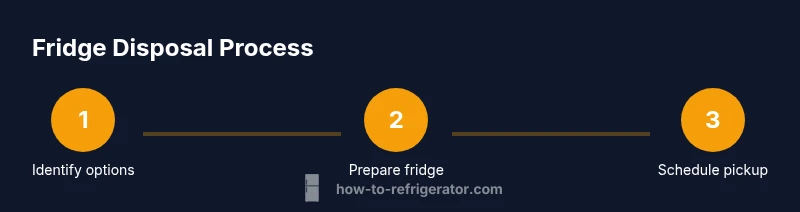
Review nearby licensed recyclers, donation partners, and haul-away services. Contact at least three options to compare availability and timelines. Confirm whether pickup or drop-off is required and note any access restrictions.
Tip: Ask for a written estimate and estimated pickup window to avoid surprises. - 2
Prepare the fridge and area
Unplug the unit and unplug any water line valves if present. Empty the interior, defrost if needed, and clear a path from the fridge to the entry. Remove doors if instructed or safe to do so.
Tip: Have a partner assist; protect floors with blankets or cardboard. - 3
Move and secure for transport
Slide the fridge onto a dolly, secure with straps, and carefully maneuver through doors and hallways. Keep the unit upright to protect refrigerant systems.
Tip: Take a practice move through the widest doorway first to confirm clearance. - 4
Coordinate pickup and documentation
Meet the pickup crew or drop-off location; verify their ID and disposal certificate. Obtain a receipt or certificate of recycling for your records.
Tip: Insist on a written receipt and ask for a contact for post-disposal questions. - 5
Confirm post-disposal records
Review the documentation to ensure refrigerant recovery and material recycling are recorded. Store copies with your home records.
Tip: Keep digital photos as backup in case the original paper is lost. - 6
Follow up if issues arise
If pickup is delayed or the unit is not disposed as promised, contact the provider with your receipts and appointment details. Seek a resolution or alternative options.
Tip: Document all communications for reference.
FAQ
What disposal options are available for an old refrigerator near me?
Options include licensed recycling facilities, charity donation programs, or professional haul-away services. Your choice depends on fridge condition, local programs, and cost. Always verify licensing.
You have options like recycling, donation, or haul-away; verify licenses.
Do I need to remove the doors?
Removing doors is a common safety measure to prevent injuries, especially for children and pets, and some programs require it.
Yes, removing doors is safer and often required.
How can I verify a recycler is licensed?
Check state or local environmental agency listings, ask for certification or receipts, and read reviews.
Check with your state environmental agency and ask for proof.
Are there costs involved, and how can I compare quotes?
There are fees; obtain multiple quotes and compare services and what's included.
Get several quotes and compare what is included.
Can I donate or sell my old fridge?
If the fridge works, donatons or resale are viable; otherwise focus on recycling.
Yes, if it still works you can donate or sell; otherwise recycle.
Watch Video
Top Takeaways
- Identify licensed disposal options near you
- Prepare the fridge safely before removal
- Compare quotes and confirm what’s included
- Request and keep disposal documentation
- Choose local recycling or donation when possible