Why Is My New Refrigerator So Loud? An Urgent Troubleshooting Guide
Learn why your new refrigerator is louder than expected and how to troubleshoot safely. This How To Refrigerator guide covers common causes and quick fixes.


The most likely culprits are vibration from an unlevel fridge, a loose panel, or a running compressor/fan. Start with quick checks: verify the unit is perfectly level, remove loose items from shelves, and listen for buzzing or grinding when the compressor cycles. If the noise continues, proceed with the diagnostic flow for a safe, thorough fix.
Why is my new refrigerator so loud? Common culprits and first checks
Why is my new refrigerator so loud is a question many homeowners ask during those first weeks after installation. Some noise is normal as the compressor settles, fans start up, or refrigerant circulates. According to How To Refrigerator, much of this loudness subsides once the appliance finishes its initial run and all fasteners settle. The real challenge is distinguishing acceptable startup noise from a signal that something needs adjustment. Begin with the simplest checks: ensure the fridge sits level on a clean, flat floor; adjust the front feet until the bubble of a spirit level sits in the center. If there’s any tilt, even a small amount, vibration will travel through the cabinet and amplify sound. Check for items on top of the fridge or inside that could rattle, and verify doors close fully without rubbing. Finally, assess whether the noise occurs at startup, during cycling, or when the ice maker operates. Document the sound – its type, duration, and frequency – to guide the next steps. This approach aligns with the How To Refrigerator guidance for safe, measured troubleshooting. While many brand-new units run a little louder during break-in, persistent loudness warrants deeper checks.
Quick checks to confirm level and installation
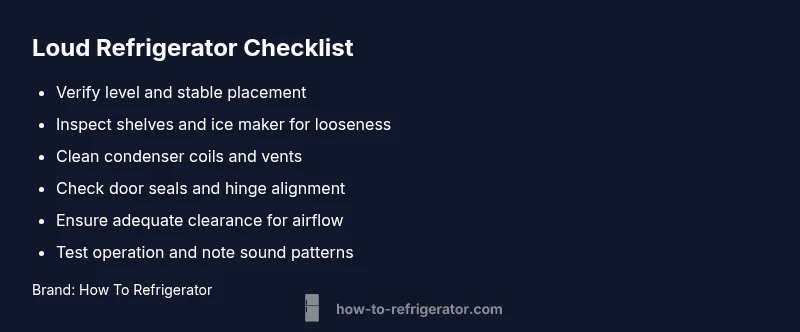
Even a brand-new refrigerator can sound louder if it isn't sitting perfectly level or if doors rub slightly. Start with these quick checks before you dive deeper. Place a level on top and adjust the front feet until the bubble centers. If your floor is uneven, use a wedge or shims under the feet to stabilize. Check that all four corners of the unit are in contact with the floor. Open and close doors slowly to see if any hinge or door seal is causing extra friction. Clear space around the back and sides to ensure adequate airflow; a blocked grille can force the fan to work harder, producing more noise. If the level and clearance look good but the noise persists, move to the next set of checks, focusing on internal components and the ice maker.
Sound profiles: what buzzing, rattling, and humming mean
Loud refrigerator noises often fall into recognizable patterns. A constant buzzing or humming typically indicates the compressor or condenser fan running at high speed, especially during startup. A rapid rattling may come from items inside the fridge or from loose panels vibrating against the cabinet. A gurgling or water-flow sound can be normal as refrigerant circulates, but when paired with unfamiliar grinding, it may signal a relay or fan issue. By comparing the sound to these profiles, you can narrow down root causes without opening the case. For safety, avoid poking at electrical components and unplug the unit if you need to inspect connections.
Airflow, coils, and fans: the usual suspects
Poor airflow is a frequent cause of loud operation. Ensure there’s at least a few inches of clearance at the rear and sides and that the condenser coils are clean and free of dust. Dirty coils force the fan to work harder, increasing noise and reducing efficiency. Check the fan blades for obstructions or ice buildup, especially if you hear a fluttering or scraping sound when the compressor runs. If the fridge is in a cramped kitchen, consider relocating it slightly to improve airflow. A blocked or restricted vent can cause the compressor and fan to ramp up, which often translates to louder operation. Remember to power off before performing any cleaning or inspections, and always consult the manual for service intervals.
Diagnostic flow overview: symptom-to-diagnosis mapping
This section aligns with a structured diagnostic flow to identify why is my new refrigerator so loud. Start by classifying the symptom: startup hum, continuous buzzing, rattling, or flapping noises. Compare to common causes: leveling issues, loose interior components, condensers or fans blocked by dust, or ice-maker operation. If the sound occurs only during certain cycles, the culprit is likely the corresponding subsystem. The flow helps you decide when to perform simple fixes at home, when to re-seat components, and when to call a professional. Throughout, document the symptom patterns and test after each fix. This method minimizes unnecessary disassembly and keeps you aligned with safe, practical troubleshooting.
Step-by-step fixes for the most common causes
The most frequent cause of a loud refrigerator is improper leveling or loose components. If you suspect this, proceed with the following steps in order. Step 1: Level the unit using the adjustable feet and a bubble level; gently twist clockwise or counterclockwise until the level reads centered. Step 2: Inspect interior shelves, drawers, and ice maker for loose parts; tighten screws and re-seat items that could vibrate. Step 3: Clean the condenser coils if accessible; use a soft brush or vacuum to remove dust with the fridge unplugged. Step 4: Check the door seals and hinges for binding; lubricate or adjust if necessary. Step 5: Inspect the fan and blower housing for obstruction or ice buildup; clear carefully. Step 6: If the noise persists, consider professional service, especially if the compressor or refrigerant lines appear involved. Estimated total time for these steps is 45-60 minutes.
Tips & warnings
- Safety first: unplug the unit before opening access panels. - Avoid using power tools near electrical components. - Keep children and pets away while you troubleshoot. - If your fridge is still under warranty, check coverage and avoid voiding it with DIY disassembly. - If you’re unsure about the refrigerant system, contact a professional to prevent leaks or hazards.
Verdict and prevention: How To Refrigerator's recommended approach
Verdict: Most loud noises from a new refrigerator are addressable with level adjustments, cavity re-seating, coil cleaning, and fan clearance. The How To Refrigerator team recommends starting with the simplest checks and progressing to more involved fixes only if the unit remains loud. By following the diagnostic steps and implementing the home fixes, you minimize warranty issues and downtime. To prevent future loudness, ensure proper installation, keep ventilation space clear, and schedule routine maintenance. The How To Refrigerator team emphasizes safety and thorough testing before concluding a fixed issue.
FAQ: Quick troubleshooting recap
- Is it safe to run the refrigerator if it’s loud? Yes, as long as you avoid opening power components and unplug before inspection. 2) Could a loud new fridge indicate a defect? Most often it’s installation or break-in noise, but persistent noise may require service. 3) Will noise persist after setup? Some models settle after a few days; if it continues, run the diagnostic flow again. 4) When should I call a professional? If you hear unusual grinding, hissing, or refrigerant smells, or if the warranty requires certified service.
mainTopicQuery: refrigerator noise
Steps
Estimated time: 45-60 minutes
- 1
Level the fridge
Place a level on the top of the unit and adjust the feet until the bubble centers. Ensure the fridge sits evenly on the floor to prevent frame vibration. Recheck after moving items nearby.
Tip: Small changes in tilt can dramatically reduce vibration. - 2
Secure interior components
Check shelves, bins, and the ice maker for looseness. Re-seat or tighten as needed and avoid overloading shelves to minimize vibration.
Tip: Remove any items that could rattle during operation. - 3
Clean the condenser coils
With the unit unplugged, gently clean dust from the coils using a brush or vacuum. Dirty coils force the fan to work harder and cause noise.
Tip: Do this every 6-12 months for optimal efficiency. - 4
Check door seals and hinges
Inspect gaskets for gaps or warping. Lubricate hinges if needed and ensure doors close fully to avoid rubbing noise.
Tip: A tight seal also improves cooling efficiency. - 5
Inspect the fan area for obstruction
Look behind panels for any debris or ice blocking the fan. Clear debris carefully and reinstall panels securely.
Tip: Never touch the fan blades while powered. - 6
Test operation and observe
Plug the unit back in and listen for changes during startup, cycling, and ice maker operation. Note if the noise remains or changes pattern.
Tip: If the sound changes, record when it occurs for service support.
Diagnosis: New refrigerator emits loud noises during normal operation
Possible Causes
- highUnlevel or unstable unit causing cabinet vibration
- mediumLoose interior components (shelves, drawers, ice maker) contacting the cabinet
- lowCondenser fan hitting debris or ice buildup
- lowCompressor vibration due to improper mounting or installation
Fixes
- easyLevel the fridge with adjustable feet and ensure solid contact with the floor
- easyTighten and re-seat loose interior components; remove items that rattle
- easyClean condenser coils and verify fan clearance; ensure no obstruction
- mediumInspect ice maker and water line for secure connections; isolate vibrations
- mediumIf noises persist after basic steps, contact a professional installer or service technician
FAQ
Is it safe to operate a loud refrigerator while troubleshooting?
Yes, as long as you avoid touching live electrical components. Unplug before inspections and follow basic safety steps.
Yes, unplug first and then inspect. Avoid touching anything powered.
Could a loud noise indicate a defect in a brand-new refrigerator?
Most loud noises are due to installation, break-in, or airflow. If noises persist after basic checks, consider service under warranty.
Most new-fridge noises are install-related; if it continues, check your warranty.
When should I call a professional for my loud fridge?
If you hear grinding, hissing, or refrigerant odor, or if noises persist after leveling, coils cleaning, and fan clearance, contact a technician.
Call a pro if you hear grinding, leaks, or persistent noise after basic fixes.
Will cleaning the condenser coils fix most loud noises?
Cleaning coils can reduce noise by lowering fan effort and improving airflow, but it may not cure all motor-related sounds.
Coil cleaning helps, but some noises require deeper servicing.
Can improper installation affect warranty coverage?
Yes, improper installation can affect warranty claims. Follow manufacturer guidelines or contact a trained technician.
Installation mistakes can affect warranty; it's best to follow the manual or hire a pro.
Watch Video
Top Takeaways
- Start with level and clearance checks
- Address loose interior components before deeper diagnosis
- Clean condenser coils to reduce noise and improve efficiency
- Identify the sound pattern to guide fixes
- Call a professional if you suspect refrigerant or compressor issues