Why Is My Refrigerator So Loud? A Homeowner's Troubleshooting Guide
Learn practical, safe steps to diagnose and fix loud refrigerator noises. From fans to coils, discover quick fixes and when to call a pro for compressor or refrigerant issues.


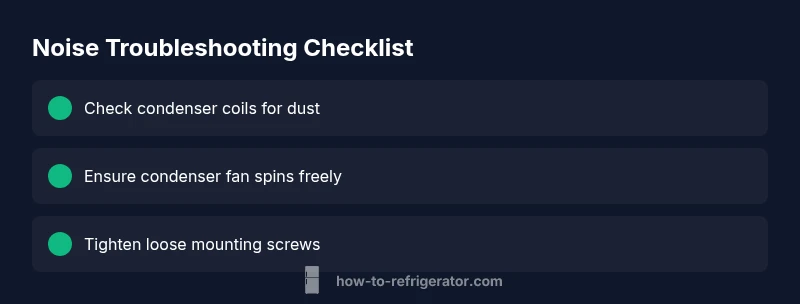
A buzzing or humming from the condenser fan or evaporator motor is the most common cause. Unplug the fridge, clean the condenser coils, and make sure the fan blades spin freely. If the noise persists, the fan or motor bearing may need replacement. A rattling sound often points to loose parts, which should be tightened if safe.
Common Causes of Loud Refrigerator Noise
If you're wondering, why is my refrigerator so loud, the answer usually involves a few moving parts that work harder than they should. The most common culprits are the condenser fan, evaporator fan, and the compressor, often amplified by dust, wear, or loose mounting. The condenser fan is located at the back or bottom of the fridge and can become noisy when dust builds up or when the blades rub against debris. Cleaning the coils and ensuring the fan spins smoothly can reduce the sound dramatically. The evaporator fan, hidden in the freezer, can howl, rattle, or grind if ice forms around the blade or if the motor bearings are worn. In older models, the compressor may emit a steady buzz or hum as it starts and stops; if the sound is unusually loud, it might indicate mounting issues or insufficient airflow. Additionally, vibrations from loose shelves, ice maker components, or the condenser cover can transfer energy into the cabinet, making the unit seem louder than necessary. Addressing these sources often resolves the problem without expensive repairs.
Quick Diagnostic Checks You Can Do Today
Before calling for help, run through a few simple checks. First, unplug the refrigerator for safety and inspect the back or bottom for dust buildup on the condenser coils; a can of compressed air works well, or a soft brush. Reconnect and listen: if the noise returns, it’s likely from a fan or mounting issue rather than the compressor. Next, open the freezer and see if ice buildup around the evaporator fan is causing obstruction; if so, defrost and monitor. Ensure the fridge is level; an uneven base can translate vibrations into sound. Finally, remove any loose items from shelves and tighten screws on panels, doors, and the drip pan. If you own an ice maker, check the ice maker arm and bin for proper engagement, as a rattling ice maker can imitate other noises. These checks cover the most common causes of loud refrigeration and will guide you to the right next step.
When to Worry About the Compressor vs. the Fan
Not every loud noise means a disaster, but it helps to distinguish the source. A high-pitched whine or consistent hum that changes with the compressor cycle often points to the compressor or its mounts. If you hear a rhythmic buzzing that coincides with door openings or frosty buildup, the condenser fan or evaporator fan is the likely culprit. A loud rattle when the motor starts could indicate loose mounting screws or a loose fan blade. If you notice a burning smell, overheating, or oil-like leaks, stop using the appliance and contact a technician immediately, as those signs can indicate refrigerant or motor faults. By staying mindful of when and where the noise occurs, you can narrow down the cause and avoid unnecessary parts replacement.
Step-by-Step: Fixing a Faulty Condenser Fan
This section outlines a safe approach to addressing a noisy condenser fan. It’s a common fix that homeowners can perform with basic tools and careful handling. First, unplug the unit and pull it away from the wall to access the rear or bottom panel. Remove the panel, locate the condenser fan, and inspect the blades for damage or debris. Clean the blades and housing, then check that the fan is mounted securely and that there is no play in the motor shaft. If parts show wear, order a replacement blade or motor assembly and install according to the manufacturer’s guidelines. Reassemble, plug in, and test by gently encouraging the fan to spin with a slow hand motion—do not force it. If you hear grinding, scraping, or the fan still rubs against housing, stop and consult a professional. Maintain a clean environment around the coils and fan to prevent future buildup.
Safety First: Warnings and Preventive Tips
Working on a refrigerator involves electricity and refrigerant systems; always prioritize safety. Always unplug before touching electrical components, and never run the unit with access panels removed for an extended period. Wear eye protection when cleaning coils or accessing ferrous parts, and avoid using metal tools that could nick refrigerant lines. If your area has high humidity or if you’re not confident with electrical tasks, seek professional service. Regularly check that the condenser coils are free of dust, tighten door hinges and screws, and keep the area around the fridge clear to minimize vibration transfer.
Maintenance Routine to Prevent Noise
A little regular maintenance goes a long way toward quiet operation. Schedule a coil-cleaning every 6 to 12 months, depending on dust in your home. Keep the fridge level with adjustable feet, and ensure the front grille or toe-kick is clear so airflow isn’t obstructed. Periodically lubricate humming parts if specified by the manufacturer, and replace the door seals when they show signs of wear to prevent extra cycling that can amplify noise. Maintain a stable environment around the fridge, avoid overloading, and ensure that you’re not installing the unit on a soft surface like carpet, which can increase vibration. A small amount of routine care can prevent many common noise problems.
What to Do If Noise Persists: When to Call a Pro
If, after performing the checks and fixes above, your refrigerator remains loud, it’s wise to call a professional. Persistent noise might indicate issues with the compressor, sealed refrigerant circuit, or a failing motor beyond simple replacement. A licensed technician can perform leak tests, measure refrigerant pressures, and verify that the condenser fan, evaporator fan, and mounts are in good condition. Document the noise patterns, when the noise occurs, and any related symptoms such as ice buildup or warm air to help the technician diagnose quickly. While DIY fixes can help with some noises, avoid protracted attempts on critical components, and prioritize safety. A pro evaluation can prevent further damage and extend the life of your appliance.
Steps
Estimated time: 60-90 minutes
- 1
Power down safely and gather tools
Unplug the fridge, move it away from the wall, and assemble basic tools (screwdriver, flashlight, soft brush). Safety first: never touch live electrical parts.
Tip: Label screws to simplify reassembly. - 2
Locate noise source
Listen along the back panel and inside the freezer to identify whether the condenser fan or evaporator fan is the primary culprit.
Tip: Use a flashlight to inspect quietly at the fan blades. - 3
Clean and inspect condenser coils
Remove dust with a brush or compressed air; check for bent fins and ensure coils aren’t obstructed by debris.
Tip: Clean from the outside in to avoid recontamination. - 4
Check fan blades and mounting
Look for loose screws, bent blades, or rubbing against the housing; tighten or replace as needed.
Tip: Turn the fan by hand gently to feel for resistance. - 5
Reassemble and test
Put the panel back, plug in, and listen for improvements while the unit cycles.
Tip: Run a quick check after 15 minutes of operation. - 6
Know when to call a pro
If the noise persists or you hear burning smells or hissing, stop and contact a licensed technician.
Tip: Preserve manufacturer warranty if still active.
Diagnosis: Loud refrigerator noise during operation
Possible Causes
- highCondenser fan bearing wear or misalignment
- mediumEvaporator fan hitting ice or frost
- lowCompressor vibration or loose mounting
Fixes
- easyUnplug and inspect the condenser fan; clean debris; tighten mounting screws
- easyDefrost evaporator area if ice is present and ensure fan spins freely
- mediumRealign or replace fan blade/motor mount if needed
FAQ
What is the most common cause of a loud refrigerator?
Condenser or evaporator fans are typically the main culprits, sometimes combined with dust on coils.
The most common cause is the condenser or evaporator fan, often with dusty coils.
Can a dirty condenser coil make a fridge louder?
Yes. Dust on coils makes the fan work harder and can increase noise.
Dusty coils often lead to louder operation because the fan strains to cool.
Is it safe to fix a loud fridge myself?
Many fixes like cleaning coils or inspecting the fan are safe if you unplug first; avoid refrigerant work.
Basic fixes are okay if you unplug first; avoid refrigerant handling.
Why does my fridge make a buzzing sound only when it cycles?
That usually means the compressor or a fan is starting or stopping; check mounting and airflow.
A buzzing during cycling often points to the motor or fan starting up.
When should I call a pro for a loud fridge?
If you notice burning smells, refrigerant issues, or the noise persists after basic checks.
Call a pro if you smell burning or the noise keeps returning.
How often should I clean the coils?
Clean coils every 6-12 months, more often in dusty environments.
Clean coils every 6-12 months depending on dust levels.
Watch Video
Top Takeaways
- Identify the noise source before part replacement
- Clean coils to reduce noise and improve efficiency
- Secure all mounting screws to reduce vibration
- Defrost evaporator area if ice blocks fan
- Call a pro for compressor or sealed-system issues