Where Are Refrigerator Coils Located? A Homeowner Guide
Learn where refrigerator coils are located, how to access them safely, and maintenance steps to improve efficiency and extend the life of your fridge.


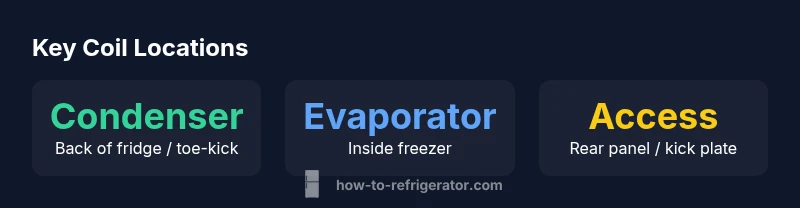
Coils in most homes are either behind a rear grille at the back of the fridge or under the toe-kick, forming the condenser that dissipates heat from the refrigerant. Knowing exactly where they are helps you inspect for dust, vibration, or damage. Because coil access varies by model, consult your owner’s manual for your specific location. For many models, you’ll locate the condenser coils first; evaporator coils are usually tucked inside the freezer. If you’re unsure, contact the How To Refrigerator team for model-specific guidance. where are refrigerator coils
Where are refrigerator coils located and why it matters
Knowing where the coils reside is foundational to diagnosing cooling issues and planning routine maintenance. Homeowners often ask, where are refrigerator coils located, and the answer varies by design. In most standard residential models, condenser coils sit either behind a rear grille at the back of the unit or beneath the bottom toe-kick, forming the external heat exchanger. Evaporator coils, by contrast, live inside the freezer compartment and are part of the internal cooling loop. The condenser coils dissipate heat from the refrigerant, while evaporator coils absorb heat from the interior. Together, they keep temperatures stable and food safe. The exact layout depends on the model, so always check the user manual or model diagram for your specific unit.
,## Condenser coils: location and purpose Condenser coils are the workhorses that release heat from the refrigerant to the surrounding air. In most home refrigerators, these coils are visible behind a rear grille or tucked under a toe-kick panel. Because they are on the outside of the refrigeration system, they are exposed to dust, pet dander, and household debris. Keeping condenser coils clean helps maintain airflow, lowers compressor load, and can improve energy efficiency. If you can’t see them, your model may have a hidden or integrated condenser; consult the manual to confirm access points.
Evaporator coils: inside the freezer and air loop
Evaporator coils are part of the interior cold air loop and are usually located behind the freezer’s rear wall or inside the ceiling area of the freezer compartment. They absorb heat from the refrigerated space, turning liquid refrigerant into a gas and pulling heat out of your food. These coils are typically not user-serviceable in many modern models, and tampering can lead to frost buildup or compressor issues. Understanding this distinction helps you avoid unnecessary disassembly.
How to locate coils on your model
Coil placement varies by brand and model. Start by unplugging the unit for safety. Look for a rear access panel on the back of the fridge or a toe-kick grille at the bottom front. If you have a bottom-drawer design or a French-door unit, access panels may be located in the kick area or behind a dedicated service panel. If the manual is vague, search the model number online or visit the manufacturer’s support site. Always follow model-specific instructions to avoid damaging insulation or wiring.
Accessing coils safely: step-by-step
- Power off the refrigerator and unplug it at the wall. 2) Remove the access panel or toe-kick cover to expose the coils. 3) Use a vacuum with a brush attachment to remove loose dust, then wipe with a dry microfiber cloth. 4) Inspect coil fins for bending; gently straighten with a plastic fin comb if needed. 5) Reattach panels securely and plug the unit back in. If you encounter refrigerant smells, frost buildup, or exposed wiring, stop and consult a pro.
-## Cleaning and maintenance: best practices Regular coil cleaning is a straightforward task that can yield tangible efficiency gains. Use a vacuum with a soft brush to remove dust, followed by a quick wipe with a dry cloth. Avoid using water or abrasive cleaners on coils or wiring. Keep the surrounding area free of clutter so airflow isn’t obstructed. In dusty environments, plan a 6–12 month cleaning cadence and monitor for frost or temperature fluctuations, which can indicate coil issues.
Signs coils need attention
Watch for longer run times, frost on the evaporator, unusual heat around the back of the unit, or warm air blowing from vents. These can signal that coils are Dirty or blocked, reducing efficiency and cooling capacity. If you notice these signs, inspect the coils following the safety steps above and consider professional servicing if the issue persists.
When to call a professional
If you see bent fins, refrigerant smells, frost buildup that won’t clear with normal defrost cycles, or electrical smells, contact a licensed technician. Some access panels may be engineered as non-user-serviceable parts, and tampering can void warranties. Regular maintenance with professional checkups annually can prevent more expensive repairs down the line.
Quick-start coil-maintenance checklist
- Unplug the fridge before any work
- Locate the condenser access point (rear grille or toe-kick)
- Vacuum and brush coils gently
- Inspect fins and straighten if needed
- Reassemble panels and power on
- Note any temperature or frost changes for future reference
Coil Types and Access Points
| Coil Type | Location | Access Point | Notes |
|---|---|---|---|
| Condenser coils | Back of fridge behind rear grille or bottom toe-kick | Rear access panel or bottom grille | Dissipates heat; commonly visible or accessible |
| Evaporator coils | Inside freezer compartment | Internal access panel behind freezer housing | Circulates cooled air; not typically user-serviceable |
FAQ
Do all refrigerators have visible coils?
Most refrigerators have condenser coils behind a rear panel or under the toe-kick. Evaporator coils are typically inside the freezer. Some models hide coils completely, making the maintenance task more model-specific. Always refer to your manual for exact locations.
Most fridges have coils behind a panel or under the toe-kick; evaporator coils live inside the freezer in many models.
Can I clean coils myself?
Yes. Unplug the unit, remove the access panel, and use a vacuum with a brush attachment to remove dust. A soft brush can help loosen stubborn debris. Don’t spray water directly on coils or electrical components.
Yes—unplug first, then vacuum and brush gently.
How often should coils be cleaned?
A common guideline is every 6–12 months, or sooner in dusty or pet-heavy homes. If you notice longer run times or frost buildup, check the coils sooner.
Every 6 to 12 months, or more often if your space is dusty.
What tools do I need?
A vacuum with a brush attachment, a soft brush, microfiber cloth, and a flashlight to inspect fins. Avoid water and metal tools that can bend fins.
A vacuum with a brush and a soft brush will usually do the job.
What if coils look damaged?
If you see bent fins, cracks, or refrigerant signs, stop cleaning and contact a professional. Damaged coils can affect cooling and may require replacement.
If you see damage, call a pro.
“Regular coil maintenance is a simple, high-impact step that homeowners can perform safely with basic tools. Proper cleaning can extend fridge life and improve efficiency.”
Top Takeaways
- Identify coil locations before attempting maintenance
- Unplug the appliance before accessing any panels
- Clean condenser coils regularly to improve airflow
- Consult your model’s manual for model-specific access points