Subzero Built-In Refrigerator: Repair & Maintenance Guide
Diagnose, maintain, and safely repair a Subzero built-in refrigerator with practical steps, tips, and guidance on when to call a pro.


If you own a subzero built in refrigerator, this guide shows you how to diagnose common cooling issues, perform basic maintenance, and safely replace parts. You'll need basic tools and a plan to avoid costly service calls.
What is a Subzero Built-In Refrigerator?
A Subzero built-in refrigerator is designed to fit seamlessly into cabinetry and install as part of a cohesive kitchen layout. Unlike freestanding models, these units emphasize integrated aesthetics and precise climate control, often featuring dual refrigeration zones and advanced air-circulation systems. While the exact configuration can vary by model, homeowners can expect a premium appliance that prioritizes food preservation, humidity management, and consistent temperatures. When you own a subzero built in refrigerator, understanding how the internal compartments interact with the cabinet environment helps you diagnose issues more accurately and plan safe maintenance tasks. The goal is reliable cooling without frequent service interruptions, so you can protect groceries and enjoy a flawless kitchen look. In this guide, you’ll learn practical, homeowner-friendly steps for common problems and routine care that extends the life of your investment.
Common Problems That Affect Subzero Built-In Refrigerators
Subzero built-in refrigerators are highly regarded for their performance, but even premium units encounter issues. Common problems include inconsistent temperatures, frost or condensation buildup, unusual noises from the evaporator fan or compressor, and occasional water leaks around the door seals. Frost in the freezer can indicate a blocked defrost drain or evaporator coil icing, while warm zones may point to airflow restrictions or a failing condenser. Another frequent source of trouble is a gasket failure, which allows warm room air to seep into the cabinet and force the system to work harder. Regular inspections of seals, coils, and airflow paths are essential. This section helps you recognize symptoms early and distinguish between simple fixes you can attempt safely and issues that deserve professional attention.
Safety First: Working With Your Subzero
Safety is the foundation of any DIY refrigerator maintenance. Before you begin, unplug the unit and remove perishable items from the interior. Wear protective gloves to shield your hands from sharp edges, and use non-slip footwear to prevent slips near water. Do not attempt to solder or modify refrigerant lines, as Subzero sealed systems use refrigerants under pressure and require certified technicians. Be mindful of hot components, and never operate a cabinet with missing doors or exposed wiring. If you encounter loud compressor noises, burning smells, or a refrigerant odor, stop work immediately and call a professional. By following basic safety guidelines, you reduce risk and make the repair process smoother.
Diagnostic Checklist for Not Cooling Properly
Start with a systematic checklist to identify the root cause of poor cooling. First, confirm the unit is receiving power and that the outlet is functioning. Check the thermostat setting and ensure doors are sealing properly without gaps. Inspect the door gaskets for wear or compression and test by closing the door on a thin sheet of paper; if you can pull the paper out easily, the gasket may need replacement. Next, examine the condenser coils for dust and debris and clean them carefully. Blocked vents inside the fridge or freezer can impede airflow; ensure shelves, pans, and packaging do not obstruct vents. If temperatures remain outside target ranges after these steps, measure actual temps with a calibrated thermometer and consider checking the defrost drain for clogs. Finally, listen for unusual noises that could indicate a faulty fan or compressor.
Maintenance Tasks You Should Perform Regularly
Preventive care is cheaper than emergency service. Monthly, wipe gaskets with a damp cloth and inspect door seals for cracks. Quarterly, clean exterior surfaces and vacuum the condenser coils if accessible (do not bend fins). Every 6–12 months, replace or reseal door gaskets as needed and verify proper airflow around the rear of the unit. Test internal temperatures with a reliable thermometer, keeping fridge around 37–38°F (3–3°C) and freezer around 0°F (-18°C). If your unit has a defrost drain, flush it with warm water occasionally to prevent blockages. Document maintenance activities so you can track conditions over time and spot patterns early.
Replacing Common Components: Filters, Seals, Fans
Not all repairs require a technician, but some parts must be replaced precisely to maintain performance and warranty eligibility. Replace door gaskets that show visible cracking or deformation to restore airtight seals. If your unit uses a water filter, follow Subzero’s recommended replacement interval and ensure proper seating in the housing. Clean or replace evaporator and condenser fans if they are noisy or unbalanced, and never operate the unit with a visibly bent fan blade. For failures in sealed systems, motors, or refrigerant handling, contact a licensed service professional. Always verify compatibility with your exact Subzero model to avoid compatibility issues or warranty voids.
DIY Repair vs. Professional Service: Making the Right Call
Balancing DIY steps with professional service is essential for Subzero built-in refrigerators. Simple tasks like gasket cleaning, coil dusting, and airflow checks are typically within a homeowner’s skill set. More complex issues—such as compressor faults, evaporator problems, or refrigerant leaks—should be handled by a licensed technician. Before making a service call, gather symptom details, recent maintenance history, model number, and serial information. Clear documentation helps the technician diagnose faster and reduces downtime. If your refrigerator is still under warranty, verify coverage for the issue and preferred service providers to avoid warranty disputes.
Energy Efficiency Tips for Subzero Built-In Refrigerators
Premium features in Subzero units often deliver excellent energy efficiency when used correctly. Keep doors closed as much as possible and minimize door openings during peak usage times. Place the unit away from heat sources, direct sunlight, and ovens or dishwashers to reduce compressor workload. Regularly cleaning condenser coils and maintaining seals improves efficiency and cooling consistency. If you’re upgrading or replacing components, choose parts designed for Subzero compatibility to preserve performance and efficiency. Small changes, like organizing shelves to maximize airflow, can yield noticeable energy savings over time.
Tools & Materials
- Phillips head screwdriver (medium #2)(Used for hinges and covers)
- Flathead screwdriver(Pry points and panel removal)
- Multimeter (AC/DC)(Check electrical connections)
- Vacuum or coil brush(Clean condenser coils)
- Soft microfiber cloths(Wipe gaskets and surfaces)
- Isopropyl alcohol (70%+)(Disinfect seals)
- Defrost drain tubing or turkey baster(Flush defrost drain if clogged)
- Replacement door gaskets (if worn)(Keep as spare in case of cracks)
- Gloves (nitrile)(Protect hands from sharp edges)
Steps
Estimated time: 60-120 minutes
- 1
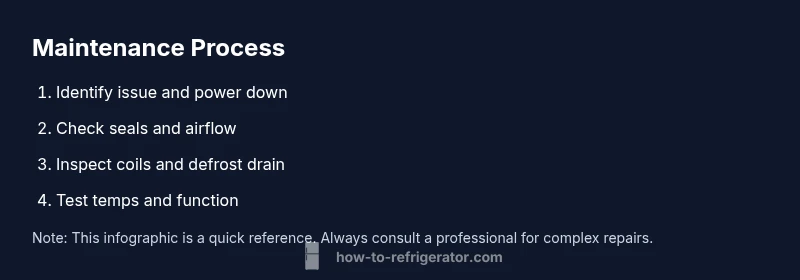
Power down and prep
Unplug the unit and remove perishable items. Clear a clean workspace and protect the flooring. This prevents electrical shock and keeps contents safe while you work.
Tip: Label shelves if you remove items for easy restocking. - 2
Check surfaces and seals
Inspect door gaskets for cracks, tears, or soft spots. Confirm the doors seal by closing gently and applying light pressure around the door frame to feel for air leaks.
Tip: Replace damaged gaskets promptly; a good seal saves energy and reduces frost. - 3
Test temperatures and airflow
Place a thermometer in the fridge at mid-height and in the freezer center. Compare readings after 24 hours. Make sure interior vents are unobstructed by shelves or containers.
Tip: Use a calibrated thermometer for accuracy; rely on more than the built‑in thermometer. - 4
Inspect and clean condenser coils
If accessible, gently vacuum or brush away dust from the condenser coils. Dirty coils force the compressor to work harder and reduce cooling efficiency.
Tip: Never bend cooling fins; use a plastic brush to minimize damage. - 5
Clear the defrost drain and vents
If you notice frost buildup or standing water, flush the defrost drain with warm water and a flexible tube to remove obstructions. Ensure vents inside the unit are open and unblocked.
Tip: Avoid boiling water; use warm water and a gentle push to remove debris. - 6
Evaluate components and decide next steps
If temperatures remain off‑target or you hear unusual noises, recheck connections and consider scheduling a professional for compressor or sealed-system work.
Tip: Document symptoms, when they started, and any recent maintenance for the technician.
FAQ
What distinguishes Sub-Zero built-in refrigerators from standard models?
Sub-Zero built-in refrigerators are designed for integrated cabinetry, with dual refrigeration zones, precise temperature control, and enhanced air handling features that support longer food freshness. Installation and service practices differ from freestanding units and require model-aware maintenance.
Sub‑Zero built‑in models are designed to blend with cabinetry and use dual cooling zones with precise temperature control; service needs differ from standard fridges.
Can I perform basic maintenance myself?
Yes. You can handle gasket cleaning, coil dusting, and airflow checks if you have the right tools and follow safety guidelines. For electrical components or the compressor, contact a professional.
Yes, you can do basic care like cleaning gaskets and coils, but leave electricals and the compressor to a pro.
What should I do if the fridge is not cooling?
First ensure the unit has power and the thermostat is set correctly. Check vents and doors for obstructions, inspect the defrost drain, and verify temperatures with a separate thermometer. If the problem persists, schedule professional service.
Check power and thermostat first, then vents. If it still won’t cool, call a pro.
How often should I schedule professional service?
Aim for annual preventive maintenance and address any persistent issues promptly. Regular service helps protect expensive components in Sub-Zero built-in refrigerators.
Annual maintenance is recommended along with attention to any ongoing issues.
Are Sub-Zero repair parts expensive?
Sub-Zero parts can be premium-priced depending on model and availability. Use a professional for parts and installation to ensure correct fit and warranty compatibility.
Parts can be pricey; professionals ensure proper fit and warranty.
Watch Video
Top Takeaways
- Inspect seals monthly and replace as needed.
- Clean coils regularly to maintain efficiency.
- Distinguish DIY tasks from professional repairs.
- Monitor temperatures to prevent food waste.
- Document maintenance for future service.