Sub Zero Refrigerator Service Guide for Homeowners
Learn how to safely service a Sub Zero refrigerator at home with clear, actionable steps. This expert guide covers routine maintenance, troubleshooting, when to call a pro, and tips to extend appliance life.


Service for Sub Zero refrigerator basics: homeowners can perform safe maintenance and simple troubleshooting. Start by unplugging, cleaning condenser coils, inspecting door seals, and confirming proper airflow. If temperatures stay off, freezing persists, or noises appear, schedule a professional service with an authorized Sub-Zero technician. Who can diagnose refrigerant, compressor, and defrost symptoms using model-specific knowledge.
Why service for Sub Zero refrigerator matters
Maintaining a Sub Zero refrigerator isn't just about keeping things cold; it's about protecting your investment and avoiding costly breakdowns. Sub Zero appliances are built for precision, energy efficiency, and longevity, but their sophisticated systems require regular attention. According to How To Refrigerator, proactive service can extend the life of cooling components, reduce energy waste, and help you catch problems before they escalate. Homeowners who schedule routine maintenance often see fewer emergency calls and more consistent temperatures across compartments. In addition to cleaning and inspections, understanding your model's maintenance needs helps you tailor a plan that fits your kitchen and lifestyle. This guide provides a practical framework you can start today, even if you have never serviced a high-end refrigerator before.
Key takeaways from industry guidance emphasize keeping coils clean, seals intact, and controls correctly set. The How To Refrigerator team highlights that the most successful DIY checks focus on non-refrigerant components and safe power-down procedures. Always verify model-specific instructions in your Sub Zero owner's manual and avoid attempting refrigerant-related work unless you are a licensed technician. By following these principles, you reduce the risk of accidental damage and improve reliability over time.
Top maintenance tasks you can safely perform
Performing regular upkeep at home can prevent many common issues with Sub Zero refrigerators. Start with a simple cleanliness routine that includes cleaning the exterior surfaces and interior shelves, plus gently brushing condenser coils. Keeping coils free from dust improves heat exchange and lowers energy consumption. Inspect door gaskets for cracks or rigidity, and replace them if they fail to create a tight seal. Ensure there is ample clearance around the rear and sides of the unit to promote airflow. A loose, blocked, or crowded fridge can overwork the compressor and shorten its life. For electrical checks, unplug the unit before inspecting wires or panels and consult the owner's manual for cautions. These steps are designed to be noninvasive and safe for homeowners when done correctly.
Routine maintenance also involves verifying temperatures in different zones. Place a thermometer in the fresh food compartment and another in the freezer; compare readings with the manufacturer-recommended ranges. If you notice a consistent deviation, revisit the control settings and confirm there is no obstruction to airflow. Document any anomalies and plan a targeted service call if deviations persist. By keeping a simple log, you’ll have useful information for technicians and can track performance over time.
Diagnosing common Sub Zero issues
Not cooling or uneven temperatures are signals you may need a professional. Start with a basic symptom checklist: not cooling, frost buildup, excessive frost in the freezer, unusual buzzing or thumping sounds, water pooling inside the fridge, or ice maker malfunctions. These indicators can help you triage whether a DIY check is appropriate or a service call is necessary. How To Refrigerator analysis shows that many issues stem from airflow blockages, door seals, or malfunctioning defrost components, rather than a failed compressor. If you observe frost around the evaporator or frost crystals on food, it could indicate a defrost problem or a misread thermostat. For the more complex problems—such as refrigerant concerns or compressor faults—only an authorized technician should intervene.
To stay grounded in reality, use model-specific troubleshooting steps from the Sub Zero owner’s manual and rely on professional guidance for anything beyond basic maintenance. This structured approach helps you avoid unnecessary disassembly while still solving straightforward problems.
When to call a professional and what to expect
Some issues require professional service right away to prevent further damage or safety risks. If your Sub Zero refrigerator shows persistent not-cooling, frost in unusual places, leaking water, or rapid temperature fluctuations despite basic checks, schedule an appointment with an authorized Sub-Zero technician. The technician will typically inspect seals, refrigerant circuitry, defrost systems, and control boards, then provide a clear diagnosis and a written estimate. Expect a careful explanation of parts and labor, plus a recommended repair plan. If your unit is under warranty, verify coverage before any work begins to ensure you don’t void protection.
Before the visit, gather the model number, a list of observed symptoms, any recent changes (new door seals, moved appliances, or power interruptions), and a calendar for coordinating the appointment. Having this information ready streamlines the process and helps the technician arrive prepared. Remember that complex repairs often require factory training and specialized tools, so professional service is the safest path for delicate subsystems such as sealed refrigerant circuits.
How to prepare for a service visit
Preparing for a service visit minimizes downtime and keeps technicians efficient. First, locate the model number and serial number for reference, usually found on the inside wall of the fridge or the model plate. Clear the area around the appliance so technicians can access the back and underside without obstruction; remove items from nearby counters and shelves to prevent accidental damage during work. If the ice maker or water dispenser shows issues, document the symptoms and turn off the water supply only if you can safely do so without tools. Provide the technician with a concise list of observed symptoms and a brief history of any prior maintenance. Having power-off steps documented helps technicians confirm whether the issue is electrical or mechanical. Finally, confirm access to a power source, a nearby outlet, and parking or entry details to avoid delays on the service day.
Maintenance schedule and checklists
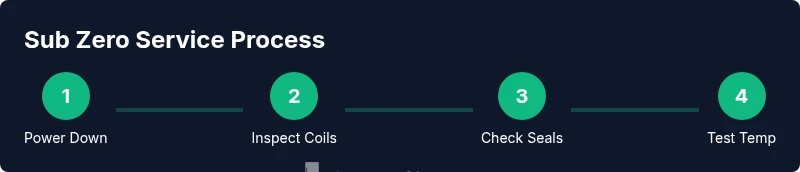
Establishing a regular maintenance cadence keeps Sub Zero refrigerators performing at their best. Create a simple schedule that includes a coil cleaning every 6–12 months depending on usage, gasket inspections every 3–6 months, and a temperature check at least quarterly. If your kitchen experiences high heat, coastal humidity, or heavy dust, increase cleaning frequency accordingly. Use a checklist to verify the steps: unplug safely, inspect seals, clean coils, test airflow, verify temperatures, and record results. A routine log helps you spot trends that precede failures and informs your service visits. This structured approach minimizes downtime and reduces the risk of unexpected breakdowns. By aligning maintenance with the manufacturer’s guidance, you protect your investment and enjoy reliable refrigeration for years to come.
Energy efficiency and common upgrades
Sub Zero refrigerators are designed for efficiency, but performance can drift without regular maintenance. Clean coils regularly to improve heat transfer and reduce energy consumption. Check door seals and gaskets for leaks or warping, as a poor seal forces the compressor to work harder. Consider upgrading to energy-efficient lighting or adding smart thermometers to monitor temperatures more precisely. If you notice consistency issues, especially in the freezer or ice-maker, consult a professional about possible upgrades or service options that preserve energy efficiency. Remember that changing refrigerant or core components should only be handled by qualified technicians under warranty terms and local regulations.
Safety reminders and disconnecting power
Safety is paramount when servicing any high-end appliance. Always unplug the unit from the wall outlet before starting any work, and switch off the dedicated circuit if accessible. Use insulated gloves and safety glasses whenever handling panels or coils. Do not attempt refrigerant handling or stepping into sealed circuitry—these tasks require licensed professionals. Keep children and pets away from the work area, and avoid using metal tools on delicate components. If you must test temperatures or operate components briefly, do so in short, controlled intervals and observe for unusual signs. When in doubt, pause and contact a trained technician.
Tools & Materials
- Sub-Zero owner's manual(Model-specific diagrams and service guidelines)
- Phillips screwdriver(For panel screws)
- Flathead screwdriver(For prying small covers)
- Torx screwdriver (TORX bits)(If your model uses TORX screws)
- Microfiber cloths(Lint-free cleaning and wiping)
- Soft coil cleaning brush(Gentle bristles to avoid coil damage)
- Vacuum with brush attachment(Remove dust from coils safely)
- Safety glasses and insulated gloves(Personal protection during service)
- Towels or absorbent rags(Catch spills and moisture)
- Container for ice/water tray removal(Optional for internal checks)
- Digital thermometer or appliance thermometer(Verify temperature readings)
Steps
Estimated time: 60-90 minutes
- 1
Unplug power
Safely unplug the fridge at the wall outlet. If accessible, switch off the dedicated circuit to ensure there is no power to the appliance during work.
Tip: Wait 60 seconds after unplugging to allow capacitors to discharge. - 2
Access condenser coils
Remove the grille or rear panel according to the owner’s manual to expose coils. Use the screwdriver to remove screws and avoid disturbing internal wiring.
Tip: Take a quick photo of any wiring before disconnecting components. - 3
Clean condenser coils
Gently brush away dust from the coils, then vacuum loose debris. Do not spray water on electrical components or connectors.
Tip: Work from top to bottom to prevent debris from falling into cooled areas. - 4
Inspect door gaskets
Look for cracks, tears, or stiff, deformed gaskets that might let air escape. Test the seal by closing the door on a dollar bill; if the bill slides out easily, the seal may need replacement.
Tip: Replace weatherstripping with parts designed for your model. - 5
Check airflow and vents
Ensure vents inside the fridge are unobstructed by groceries. Confirm the fan spins freely and there are no objects blocking the airflow path.
Tip: Move bulky items away from vents to maintain consistent cooling. - 6
Test temperature controls
Set temperatures to the manufacturer’s recommended ranges and monitor for 2–4 hours. Use a thermometer to verify that the interior temperatures stay within target zones.
Tip: Record readings to compare against future checks. - 7
Inspect defrost drain
Check the defrost drain line for blockages. Clear with a pipe cleaner or warm water, without forcing material that could damage the line.
Tip: Flush gently to avoid creating new clogs. - 8
Run diagnostic cycle
Reassemble the accessible components, plug in the unit, and run a standard diagnostic or normal operating cycle for several hours while listening for unusual noises.
Tip: If you hear grinding or banging, power down and call a pro. - 9
Document and plan next steps
Record actions taken, parts inspected or replaced, and suggested follow-up service timing based on observed performance.
Tip: Keep a service log for easy reference during future visits.
FAQ
How often should I service a Sub Zero refrigerator?
Most owners benefit from a yearly preventative check, with more frequent visits for high-use households or older units. Regular maintenance helps prevent cooling issues and preserves seal integrity.
A yearly check is usually enough for many homes, but increase frequency if you use the fridge heavily.
Is it safe to perform DIY maintenance on Sub Zero appliances?
Basic cleaning and seal inspections are generally safe when the unit is unplugged. Avoid refrigerant work or electrical repairs beyond basic unplugging and surface cleaning.
Yes for simple tasks, but avoid dangerous repairs you’re not trained to handle.
What symptoms mean I should call a pro?
Persistent not cooling, frost buildup in unusual areas, persistent leaks, or odd noises indicate a professional inspection may be needed.
If cooling doesn’t improve after basic checks, contact a certified technician.
Will DIY fixes affect warranty?
DIY repairs can affect warranty coverage. Check Sub-Zero terms and speak with an authorized technician to avoid voiding protections.
DIY fixes can risk your warranty, so verify terms first.
What parts are user-serviceable?
Door gaskets, exterior seals, and coil cleaning are commonly user-serviceable tasks. Avoid sealed refrigerant components and high-voltage areas.
You can handle simple tasks, but leave refrigerant areas to pros.
Watch Video
Top Takeaways
- Unplug before any maintenance.
- Keep condenser coils clean to maximize cooling efficiency.
- Inspect seals regularly to prevent energy loss.
- Call a professional for complex repairs or refrigerant issues.
- Maintain a service log for future reference.