Why Your Refrigerator Sounds Like a Lawn Mower—and How to Fix It
A practical, research-backed guide explaining why refrigerators hum like a lawn mower and how to diagnose, fix, and prevent noisy operation with safe DIY steps and expert tips from How To Refrigerator.


If your refrigerator sounds like a lawn mower, two culprits commonly cause the racket: a failing condenser fan or restricted airflow from dirty vents. This quick comparison highlights two typical scenarios, quick DIY checks, and when to call a pro. For homeowners, identifying the source early can prevent heat buildup and costly repairs.
Why a Refrigerator Sounds Like a Lawn Mower
When a fridge emits a sound reminiscent of a lawn mower, it can be unsettling in a quiet kitchen. According to How To Refrigerator, this type of noise is rarely due to a single mysterious problem; more often, it is the interplay of mechanical components and airflow. The most common culprits fall into two broad categories: moving parts such as the condenser fan and evaporator fan, and airflow or defrost issues that alter the way the refrigerator circulates air.
Mechanical noises typically arise from worn bearings, loose blades, or debris caught in a fan blade. Airflow noises, meanwhile, can come from clogged vents, dirty condenser coils, or a blocked defrost drain that creates pressure changes. Understanding these categories helps you decide which steps to take first, and it aligns with the latest guidance from How To Refrigerator Analysis, 2026, which emphasizes safety and methodical diagnosis.
In practice, the phrase "refrigerator sounds like lawn mower" often leads homeowners to check the back of the unit for condenser fan obstruction or to inspect freezer vents. The goal is to identify the source without triggering unnecessary disassembly or risking refrigerant exposure. By mapping the noise to its likely source, you can implement the least invasive fix first and prevent minor problems from becoming expensive repairs.
According to How To Refrigerator, early diagnosis saves time and money, and following a structured approach reduces the risk of improper fixes. This article uses a two-pronged framework—condenser/fan issues vs airflow/defrost issues—to empower you with practical steps while maintaining safety as a priority.
Common Noise Sources and How They Differ
Two noises frequently mistaken for a lawn mower are the condenser fan hum and evaporator fan rattling. The condenser fan is located behind the grille at the bottom rear of many refrigerators; a blade rubbing on dust or a worn bearing will produce a consistent, loud hum or choppiness. The evaporator fan, inside the freezer compartment, can generate high-pitched whines when its blade is obstructed or its motor is failing.
A compressor that remains active during normal cycles can also imitate lawn mower noise, though it typically accompanies a vibration felt through the cabinet rather than an obvious blade scream. Airflow-related sounds—air rushing through vents, crackling when defrost heaters cycle on, or a gurgling sound after defrost—are more subtle but still disruptive.
Within the scope of this guide, we categorize the main sources as: (A) fan-related sounds (condenser or evaporator), (B) motor/compressor vibrations, (C) airflow and defrost interactions. Recognizing the distinct signatures helps you apply the correct fix and avoid misdiagnosis.
Safe Diagnostics You Can Perform This Weekend
You can perform several safe checks without opening the sealed refrigeration system. First, unplug the unit before touching any components to avoid electric shock. Then locate the condenser area (usually behind the front grille or underneath) and inspect the fan for debris, loose screws, or clogged blades. If you can reach the fan safely, remove debris with a soft brush or vacuum and reseat the blade if loose. Next, clean the condenser coils with a brush or coil vacuum to restore airflow.
Check the interior vents to ensure airflow is not blocked by stored items. If you hear a gurgling or crackling noise after the defrost cycle, inspect the defrost drain for ice buildup or a partial blockage and clear it with warm water or a flexible drain snake if needed. Reconnect power and listen for changes. If the noise persists, note whether it changes with compressor cycling or door openings; these clues guide the next steps.
How To Refrigerator analysis notes that many homeowners can reduce noise through basic maintenance and careful observation, but never neglect safety: avoid poking into sealed components and never handle refrigerant equipment unless properly trained.
When to Call a Pro vs DIY
DIY fixes can resolve many common noises, especially if the problem is a loose fan blade, debris in the condenser area, or a clogged defrost drain. However, some jobs require professional service, such as compressor repair, refrigerant handling, or internal compressor mount work, which can pose safety hazards and legal considerations. If you hear a relentless grinding, see overheating, or detect refrigerant smells, stop work and call a licensed technician. Costs can vary by region and scope, but addressing the issue early can prevent larger expenses later. The How To Refrigerator Team emphasizes safety and professional guidance for sealed-system problems and advises homeowners to prioritize preventing electrical shocks and refrigerant exposure.
Maintenance Habits That Reduce Noise and Extend Life
- Level the refrigerator on a flat surface to prevent vibration transfer.
- Ensure at least 1-2 inches of clearance around the sides and back for adequate airflow.
- Clean condenser coils every 6-12 months to maintain efficient cooling and reduce fan workload.
- Use anti-vibration pads or mats under the appliance if it sits on a hard floor.
- Routinely inspect door seals and gasket integrity to minimize motor effort from temperature fluctuations.
- Periodically defrost and clean the defrost drain to prevent ice buildup and related noises.
Authority and Safety References
For safety and best-practice guidelines, refer to official resources:
- https://www.energy.gov/eere/buildings/articles/keep-your-refrigerator-running-safely
- https://www.energy.gov/energysaver/articles/refrigerators-and-freezers
- https://www.osha.gov/
Quick Troubleshooting Checklist
- Unplug the fridge and inspect the condenser fan for debris. 2) Vacuum or brush coils to improve airflow. 3) Check freezer vents and interior for airflow obstructions. 4) Inspect the defrost drain for ice buildup and clear if needed. 5) Plug back in and listen for changes; note if noise correlates with compressor cycles. 6) If unresolved, schedule service and avoid opening sealed components.
Authority Sources
This section provides external references for safety and efficiency. See the links above for government-guided practices and energy efficiency standards.
Comparison
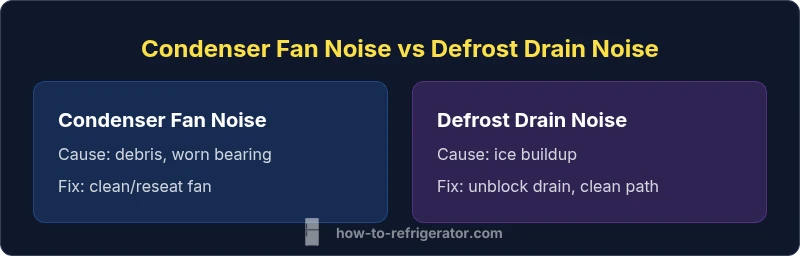
| Feature | Condenser Fan Noise | Defrost/Drain Noise |
|---|---|---|
| Likely Cause | Worn motor bearings or loose blades | Clogged defrost drain / evaporator frost buildup |
| Typical Fix | Replace or secure fan; clean debris | Clear blockage and clean drain; re-seat evaporator cover |
| Common Signs | Rattle, high-pitched hum | Water condensation, gurgling sounds after defrost |
| DIY Feasibility | Medium (requires electrical safety care) | Medium to high (seal, clean drain) |
| Estimated DIY Cost | $50-$300 | $80-$350 |
| Best For | Owners with basic tools and patience | Owners with drain issues and easy access |
Strengths
- Identifies root causes quickly
- Safe, structured DIY steps save service calls
- Increases appliance lifespan with proactive maintenance
- Prevents heat buildup and spoilage risks
Cons
- Some noises require professional inspection
- Risk of electric shock from DIY work on live components
- Not all issues are fixable without replacement
- Warranty considerations for DIY repairs
Address condenser fan and airflow issues first for lawn mower-like noises.
In most cases, the condenser fan and airflow problems are the primary culprits. Start with safe, non-invasive DIY steps to verify these sources, and escalate to professional service if noise persists or if you suspect a sealed-system issue.
FAQ
Why does my refrigerator sound like a lawn mower?
The most common causes are the condenser fan or restricted airflow from dirty vents. A faulty evaporator fan or defrost-related noise can also mimic a lawn mower. Diagnosis involves listening for where the sound originates and checking accessible components safely.
Most fridge noises like a lawn mower come from the condenser fan or airflow issues. Start with those areas and avoid opening sealed parts.
Can a dirty condenser really cause loud noises?
Yes. A dusty or blocked condenser makes the fan work harder, resulting in louder operation or rumbling. Cleaning the coils regularly helps reduce noise and improve efficiency.
Absolutely. Dirty coils make the fan work harder and can grow louder over time.
Is it safe to unplug the fridge to diagnose noises?
Yes, for most basic inspections. Always unplug before touching any internal parts. Do not handle refrigerant or sealed components. If you hear buzzing or see scorch marks, contact a technician immediately.
Yes, unplug first and only touch safe, accessible parts.
When should I call a professional for fridge noises?
Call a professional if you hear persistent grinding, refrigerant smells, or if the noise continues after safe DIY steps. Sealed-system work requires licensed technicians.
If the noise sticks around after safe checks, it’s time to call a pro.
How long do fixes usually take?
Simple DIY steps like cleaning coils or clearing a drain can take 15–60 minutes. More complex parts or refrigerant work require scheduling with a pro, which can vary by technician availability.
Most quick fixes are under an hour; bigger repairs take longer.
What maintenance helps prevent lawn mower noises?
Regular coil cleaning, proper airflow clearance, and monitoring door seals reduce wear on fans and improve cooling efficiency, which lowers noise over time.
Keep the coils clean and airflow clear to prevent noise buildup.
Top Takeaways
- Identify the noise source before disassembly
- Prioritize condenser fan and airflow problems
- Maintain coils and vents to reduce noise
- Use anti-vibration measures to minimize transfer
- Know when to call a professional for sealed-system work