Refrigerator Enclosure: Diagnosis, Repair, and Maintenance
A homeowner-friendly guide to diagnosing and repairing the refrigerator enclosure, with step-by-step instructions, tools, safety tips, and maintenance practices to keep your fridge efficient and reliable.


The refrigerator enclosure describes the cabinet, doors, hinges, seals, and insulation that enclose the cold space. When it leaks heat, you’ll see frost, warmer food, and higher energy use. This guide helps homeowners identify enclosure symptoms and apply safe, practical fixes—starting with door seals, alignment, and gasket replacement. Maintaining the enclosure improves cooling consistency and reduces wasted energy. How To Refrigerator emphasizes treating enclosure care as routine upkeep for efficiency and food safety.
What is a refrigerator enclosure and why it matters
The refrigerator enclosure is the complete envelope that surrounds the cold compartment, including cabinet walls, doors, hinges, gaskets, insulation, and the door seal. According to How To Refrigerator, this enclosure controls heat exchange, energy consumption, and humidity inside the unit. A well-sealed, properly aligned enclosure keeps cold air in, reduces the workload on the compressor, minimizes frost formation, and helps preserve food quality. Homeowners who understand this system can identify leaks, misalignments, and insulation gaps before they become costly failures. In this section, we establish the enclosure’s role in temperature stability, energy efficiency, and noise dampening, and why it should be part of your routine maintenance.
Common enclosure problems that impact performance
The enclosure is the first line of defense against heat transfer. Worn door gaskets, torn seals, misaligned doors, or warped panels are frequent culprits. A compromised seal lets warm air in, causing the compressor to run longer and ice to form along the evaporator. Hinge wear or loose mounting can create door gaps, letting moisture inside and producing condensation on the exterior. Insulation damage reduces thermal resistance, increasing energy use and creating temperature variations on different shelves. How To Refrigerator Team notes that regular inspection helps catch these issues early, preventing larger problems. Look for frost near the door frame, squeaks from hinges, doors that won’t fully close, or visible gaps when the door is shut.
How to inspect the enclosure: signs you need attention
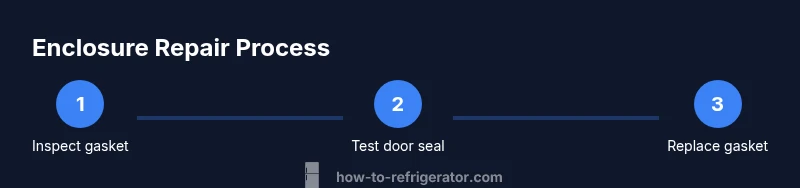
Begin with a visual survey of the gasket and door edges for cracks, stiffness, or tears. Run a simple seal test by closing the door on a receipt or tissue and gently pulling away; if the tissue releases easily, the seal may be weak. Check alignment by fully opening and closing the doors and observing uniform gaps around the edge. Listen for rubbing noises or wind-like hisses that indicate leaks. Feel for warm spots along the top and sides of the cabinet, which can signify poor insulation or airflow. If frost builds up on the evaporator or the interior turns unevenly cold, that signals potential defrost or sealed-system issues requiring professional help. This inspection helps you prioritize fixes without taking unnecessary steps.
Diagnosing enclosure issues: tests you can perform
Before touching any components, unplug the unit and clear the area around the fridge. Inspect gasket surfaces with a flashlight for embedded debris, cracks, or hardened edges. The simple tissue or dollar bill test provides a quick leak gauge: place the edge of the bill at various points around the seal and gently try to pull it away; resistance or immediate slipping indicates a problem seam. Check door alignment by measuring the gap around all four sides when the door is closed; unequal gaps suggest hinge or frame misalignment. Frost buildup at the evaporator suggests defrost or thermostat issues; test the defrost timer and heater according to the manufacturer’s guidance. Documenting symptoms helps with parts shopping and professional quotes.
Repair strategies by issue
Repair choices depend on the root cause. If the gasket is worn, replace the entire door seal with an OEM-compatible part. For misaligned doors, loosen mounting screws, adjust hinge position or shims, then retighten and recheck the seal. If there’s frame warping or damaged insulation, consider panel replacement or professional service to maintain energy efficiency. Frost and defrost problems often point to the defrost heater or timer; if you’re unsure, consult a technician. The overarching goal is to restore an airtight seal and correct door alignment while preserving insulation. This section offers practical, non-invasive fixes you can perform safely.
How to measure for replacement parts and choosing the right gasket
Accurate measurements ensure compatibility. Measure gasket thickness, door height, and the perimeter where the seal sits. When shopping for gaskets, choose a model designed for your specific door type (top-freezer, bottom-masket, side-by-side, etc.) and verify compatibility with your refrigeration system. Bring a sample or model number to the parts retailer and compare the seal profile to the existing gasket. Avoid substitutes that do not precisely match the original gasket’s thickness and contact width, as mismatches can cause leaks and inefficient cooling. This section covers practical tips for selecting parts that fit your particular enclosure.
Maintenance practices to extend enclosure life
Create a lightweight, repeatable maintenance routine. Clean gaskets with mild soap and water; avoid solvents that can dry rubber. If the manufacturer approves, lubricate hinge pivots with a light silicone-based lubricant to reduce wear and ensure smooth operation. Avoid slamming doors or overloading shelves, which can misalign the frame and compress seals. Keep exterior condenser coils free of dust, as overheating near the enclosure reduces efficiency and can warp panels over time. Documenting a monthly check helps catch wear early and keeps your enclosure performing at peak efficiency.
Safety considerations and when to call a professional
Always unplug the refrigerator before any interior work or gasket replacement. Use plastic or nylon tools to remove or reinstall gaskets to avoid damaging the seal. If you notice refrigerant odors, frost in unexpected places, or unusual noises that persist after basic maintenance, contact a licensed technician. Working with sealed refrigeration systems, refrigerants, or compressor components requires certification and appropriate equipment. Prioritize safety and avoid improvising with unverified parts or makeshift repairs.
Cost considerations and when to call a pro (no specific price ranges)
Repair costs vary with enclosure complexity, from gasket replacement to door alignment or insulation repair. Homeowners can save by performing straightforward gasket changes themselves if comfortable; more involved work or damaged insulation should be evaluated by a professional to ensure energy efficiency and safety compliance. This section emphasizes practical budgeting without presenting fixed prices, helping you decide when to DIY and when to hire.
Common mistakes and how to avoid them
Common errors include installing the wrong gasket type, overtightening hinges, or forcing a misaligned door. These actions can worsen leaks, distort the frame, or damage panels. Always confirm part compatibility with your model, and follow the manufacturer’s guidance. A small misstep can undermine energy efficiency and safety. The final takeaway is to proceed deliberately, verify fit, and test after every adjustment.
Authority Sources
This section provides references to credible, external sources that discuss refrigerator efficiency, safe repair practices, and consumer guidance. The items below offer additional context and validation for the homeowner.
- https://www.energy.gov/eere/buildings/articles/refrigerator-energy-efficiency
- https://www.nist.gov
- https://extension.psu.edu
Tools & Materials
- Phillips head screwdriver set(Include PH2 and PH0 sizes for various screws)
- Flathead screwdriver(For prying small trim or gasket edges gently)
- Putty knife or plastic pry tool(Gasket removal without tearing)
- Measuring tape(Measure door height, frame gap, and gasket perimeter)
- Flashlight(Inspect seals and corners not visible by light)
- Safety gloves(Protect hands during disassembly and handling gasket material)
- Silicone-based lubricant (light)(If manufacturer approves, apply sparingly on hinges)
- Replacement gasket(OEM-compatible gasket matched to your door type)
Steps
Estimated time: 60-120 minutes
- 1
Prepare and safety check
Unplug the refrigerator and clear the area. Gather all tools and inspect the enclosure area for obvious damage. This prep minimizes shock risk and keeps components clean during work.
Tip: Take photos before removing parts to ensure correct reassembly. - 2
Inspect door seals and gasket
Carefully examine the gasket for cracks, stiffness, or tears. A torn gasket is a common source of leaks; mark worn areas before replacement.
Tip: Gently flex the gasket to confirm it returns to its original shape; if it stays bent, replace it. - 3
Test door alignment and hinges
Close the door and check for even gaps around the perimeter. If the door leans or binds, loosen screws, adjust the hinge position, then retighten and recheck.
Tip: Do small adjustments and recheck after each tweak to avoid over-tightening. - 4
Replace gasket if needed
Remove the old gasket with a plastic tool, clean the groove, and install the new gasket, ensuring a smooth seal around the entire edge.
Tip: Work from one corner and press firmly to seat the gasket evenly. - 5
Check insulation and panel integrity
Inspect exposed insulation for moisture, sagging, or damage. Damaged insulation reduces thermal resistance and should be repaired or replaced.
Tip: Avoid puncturing insulation; handle with care to maintain your enclosure’s R-value. - 6
Reassemble and test
Reinstall any trim, reconnect power, and run a brief test cycle. Observe door closing, seal integrity, and any unusual sounds.
Tip: Record test results to compare with future maintenance checks.
FAQ
What parts make up the refrigerator enclosure?
The enclosure includes cabinet walls, doors, hinges, door seals, insulation, and trim. Each component contributes to sealing, insulation, and airflow within the unit. Understanding these parts helps you target the right fix when you notice temperature or condensation issues.
The enclosure includes the cabinet, doors, hinges, seals, insulation, and trim—knowing these parts helps you pinpoint where a problem starts.
How do I know if the door gasket needs replacement?
If the door seal is cracked, stiff, torn, or leaks air when tested with a tissue or dollar bill, replacement is usually warranted. Also check for persistent frost near the door frame and uneven cooling.
If the seal cracks or leaks air in a test, it’s time to replace the gasket.
Is it safe to replace a gasket myself?
Yes, gasket replacement is typically a DIY task when you have the right part and care. Follow the manufacturer instructions and unplug the unit before starting.
Replacing a gasket yourself is usually safe if you unplug first and follow the instructions.
Can a bad enclosure cause energy waste?
Yes. Leaks, misalignment, and poor insulation force the compressor to run longer, increasing energy use and reducing cooling efficiency.
A faulty enclosure makes your fridge work harder and use more energy.
When should I call a professional?
If you detect refrigerant odors, persistent frost in unexpected places, or if defrost components seem faulty, contact a qualified technician. Complex sealed-system issues require professional handling.
Call a professional if you smell refrigerant, see unusual frost, or hear persistent noise after basic fixes.
Watch Video
Top Takeaways
- Understand enclosure basics to identify leaks early
- Prioritize gasket and hinge checks for cost-effective fixes
- Use OEM parts to ensure proper fit and performance
- Safety first: unplug, use proper tools, and avoid sealed-system tampering
- Regular maintenance extends enclosure life and efficiency