Problem with Frigidaire Refrigerator: Troubleshooting Guide
Urgent, practical guide to diagnose and fix common Frigidaire fridge issues. Safe steps, expert tips, and when to call a pro for lasting cooling performance.


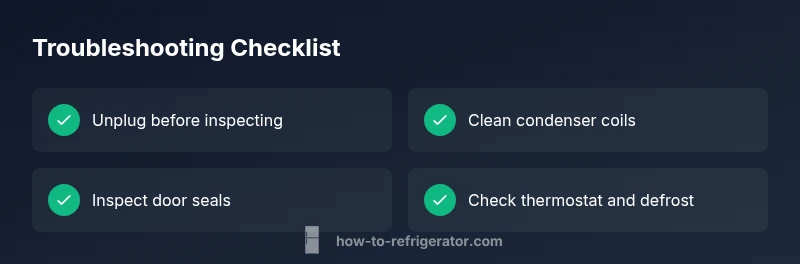
Frigidaire cooling problems usually stem from simple causes: dirty condenser coils, a worn door gasket, or an overpacked interior. Unplug the unit, clean the condenser coils, and inspect the door seal. If temperatures stay high, follow the diagnostic flow to identify the next fix or contact a professional.
Understanding the problem with frigidaire refrigerator
According to How To Refrigerator, when a Frigidaire refrigerator isn’t cooling as it should, the root cause is usually practical, solvable, and non-technical. Start by framing the issue: is the entire fridge warm, or are only the freezer and ice maker affected? Are there unusual noises, frost buildup, or water leaks? Most homeowners experience temperature discrepancies caused by clogged condenser coils, a worn door seal, or overpacking the shelves. Temperature fluctuations can also stem from a faulty thermostat, an aging defrost timer, or a blocked airflow path. The key is to isolate the symptom and test simple parts first rather than jumping to expensive replacements. This approach reduces downtime and extends the life of your appliance. In this guide we walk you through a safe, methodical process that prioritizes common culprits and safe practices. Always prioritize safety and avoid attempting refrigerant work or high-voltage repairs yourself.
Common symptoms and quick checks
- Not cooling properly: confirm the temperature setting is correct, vents aren’t blocked, and the unit is level. Check that the condenser coils (usually on the back or underneath) are clean and free of dust.
- Ice maker not producing: verify water supply line is connected, valve is open, and the ice maker is enabled.
- Excess frost in freezer: inspect the defrost drain for blockages and ensure the defrost heater isn’t stuck.
- Water leakage: check the drain pan and drain tube for clogs or cracks; inspect the door seals for gaps and wear.
- Unusual noises: listen near the compressor and fans; a loud hum or click can indicate a failed fan or motor.
If something doesn’t match these quick checks, proceed with the diagnostic flow to pinpoint the cause and plan the fix.
How a Frigidaire cooling system works (high level)
A Frigidaire refrigerator relies on a closed loop called the cooling cycle. The compressor compacts refrigerant, moving it through the condenser coils where it releases heat. It then travels to the evaporator inside the fridge, where it absorbs heat, cooling the interior. The expansion valve or capillary tube regulates refrigerant flow, while a thermostat or temperature sensor governs when the compressor turns on or off. A defrost system prevents frost buildup in the freezer. Understanding this flow helps you identify where problems originate: airflow blockages, condenser fouling, or a faulty sensor can disrupt any stage of the cycle and degrade cooling performance.
Diagnostic flow for typical symptoms
- Symptom mapping: identify whether the issue is not cooling, warm interior, frost, or leaks. 2) Basic checks: settings, vents, seals, coils, and ice maker lines. 3) If unresolved, test sensors and defrost components. 4) If symptoms persist, escalate to professional service with model and serial information. 5) Record observations and behaviors to share with a technician for faster resolution.
Step-by-step fixes for most common causes
- Unplug and safety check: unplug the unit and avoid voltages near water. Inspect coils and seals. 2) Clean condenser coils: dust and debris impair heat rejection; carefully vacuum or brush coils. 3) Check door seals: replace worn gaskets to restore airtight cooling. 4) Verify thermostat settings: ensure dial is within the recommended range and the thermometer reads accurate. 5) Defrost system checks: verify defrost timer/heater is functioning; clear frost buildup if present. 6) Ice maker lines: inspect for kinks or blockages; ensure water supply is steady. 7) If cooling still fails, schedule pro service; refrigerant work requires licensed technicians.
Safety tips and when to call a pro
Safety first: unplug before any inspection, avoid touching electrical components, and do not attempt refrigerant handling. If you notice refrigerant hissing, burning smells, or electrical burning, evacuate and call a professional immediately. If your unit is under warranty, contact the manufacturer or authorized service provider. A licensed technician can diagnose refrigerant leaks, compressor faults, and electrical problems safely and accurately.
Maintenance to prevent future problems
Regular maintenance reduces surprises. Clean coils every 6–12 months, check door seals for wear, ensure proper airflow by not overpacking the shelves, and keep the fridge at a consistent temperature. Periodically run a quick defrost check to ensure the defrost system is clear. Document any anomalies so you can spot patterns early.
What to expect from service and warranty considerations
Professional service typically begins with a diagnostic assessment, followed by a repair plan and a cost estimate. If a component fails under warranty, you may qualify for covered parts or labor; otherwise, expect a service charge and the cost of replacement parts. Keep model and serial numbers handy and check your purchase documentation for coverage details.
Steps
Estimated time: 60-90 minutes
- 1
Power down safely
Unplug the unit and switch off any accessible power sources. Wait a moment before inspecting electrical components to avoid shocks.
Tip: Use a battery-powered flashlight to avoid opening more than necessary. - 2
Inspect condenser coils
Locate the coils (usually at the back or below) and remove dust with a vacuum or brush. Dirty coils reduce cooling efficiency.
Tip: Do this outside or on a washable surface to catch dust. - 3
Check door seals
Close the door on a thin sheet of paper; if it slides out easily, the gasket may be worn and needs replacement.
Tip: Clean the gasket with warm soapy water before testing. - 4
Test thermostat settings
Verify the thermostat is set within the recommended range and check for accurate temperature readings with a separate thermometer.
Tip: Avoid placing items directly against the thermostat area. - 5
Inspect defrost system
If frost builds up, test the defrost timer and heater. Look for a stuck timer or non-heating element.
Tip: Defrost components require careful testing; consider professional help if unsure. - 6
Test ice maker supply
Ensure the water line is connected, valve is open, and the line is free of kinks or blockages.
Tip: If using a water filter, replace it according to the manufacturer’s schedule.
Diagnosis: Fridge won't cool to expected temperatures
Possible Causes
- highCondenser coils dirty or blocked
- mediumDoor gasket worn or leaking
- mediumThermostat or sensor failure
- lowDefrost system malfunction
- lowOverpacked or blocked airflow
Fixes
- easyClean condenser coils and ensure proper airflow
- easyReplace worn door seals and correct alignment
- mediumTest/replace thermostat or sensor as needed
- mediumInspect defrost components and clear frost buildup
- easyReorganize contents to restore air circulation
FAQ
Why is my Frigidaire refrigerator not cooling as expected?
Common causes include dirty condenser coils, a faulty door seal, or incorrect thermostat settings. Use the diagnostic flow to verify each possibility and determine the best fix.
Not cooling usually comes from dirty coils, a bad seal, or thermostat settings. Start with simple checks and move through the diagnostic flow.
Should I unplug the fridge before inspecting?
Yes. Always unplug to ensure safety before inspecting electrical components or coils. Reconnect after checks and test carefully.
Yes—unplug first to stay safe, then inspect components and reconnect to test.
Can a Frigidaire fridge be under warranty for cooling issues?
Warranty coverage varies by model and purchase date. Check your warranty documentation or contact the manufacturer to confirm coverage for parts or labor.
Warranty depends on model and purchase date; check documents or contact the manufacturer for coverage details.
How often should I clean condenser coils?
Clean condenser coils as part of regular maintenance, typically when you notice dust buildup or reduced cooling efficiency. Regular cleaning helps maintain performance.
Clean coils when you see dust or heat buildup; it helps maintain cooling performance.
When is it time to call a professional?
If you suspect a refrigerant leak, compressor fault, or complex electrical issue, or if basic checks don’t restore cooling, contact a licensed technician.
Call a pro if you suspect refrigerant leaks or complex electrical issues, or if basic checks fail.
Is it safe to DIY refrigerant work?
No. Handling refrigerants requires licensed technicians and specialized tools. Do not attempt this yourself.
No, refrigerant work should be left to licensed professionals.
Watch Video
Top Takeaways
- Identify symptom before taking action
- Prioritize condenser coils and door seals
- Follow a safe diagnostic flow
- Call a pro for refrigerant or electrical work