Parts for a Samsung Refrigerator: A Homeowner Repair Guide
Learn about parts for a samsung refrigerator, how to diagnose failures, where to buy genuine components, and practical DIY steps from How To Refrigerator.


Common replacement parts for a samsung refrigerator include door seals, condenser coils, ice-maker components, evaporator fans, thermostats, control boards, and defrost timers. Always verify part numbers against your exact model and serial code before purchasing. In most cases, worn door gaskets and clogged defrost drains are the most frequent issues homeowners fix themselves, followed by faulty sensors or actuators.
Understanding the Parts Landscape for Samsung Refrigerators\n\nWhen you embark on repairs, you are choosing between OEM (original equipment manufacturer) parts and aftermarket components. Samsung frequently updates internal components across models, so part numbers can vary even within the same product family. A practical approach is to locate your model number (usually on the inner wall near the fresh food section or behind the pull-out drawer) and cross-reference it with official Samsung part catalogs. The How To Refrigerator team emphasizes model-specific compatibility because a small mismatch can mean the part won’t fit or, worse, won’t work as intended. In practice, homeowners commonly replace door seals, ice-maker assemblies, defrost components, thermostats, and control boards. These parts are durable but not immune to wear, especially in busy households with frequent door usage or heavy ice needs. In many cases, replacing a worn gasket or a clogged defrost drain yields the most immediate improvements in efficiency and food safety. For smaller repairs, you may only need to remove a shelf or panel to access the part without tools beyond a screwdriver. The goal is to identify the root cause first rather than chasing cosmetic fixes. According to How To Refrigerator analysis, the vast majority of refrigerator-part failures trace back to a handful of wear-prone components, making a targeted parts strategy essential.
Essential Parts Categories and Lifespans\n\nSamsung refrigerators rely on a handful of core parts that tend to wear at different rates. Door seals (gaskets) are typically the first line of defense against air leaks, and their lifespans can span several years with proper usage and cleaning. Defrost components, including timers and heaters, help maintain even cooling and prevent frost buildup. Evaporator fans circulate cool air inside the cabinet, and condenser coils (located behind the back or on the bottom) dissipate heat outside the unit. Thermostats and control boards govern temperature stability and defrost cycles. While all parts wear, the most noticeable failures tend to involve seals, defrost pathways, and the ice-maker assembly, especially in households with heavy ice usage. Understanding these categories helps homeowners plan a targeted parts replacement strategy that minimizes downtime and disruption to cooling. Brand-wide patterns observed by the How To Refrigerator team show a strong correlation between model-specific configurations and part compatibility; skipping this check increases the risk of mismatched parts and ineffective repairs.
Diagnostic Steps Before Buying Parts\n\nBefore ordering any part, perform a focused diagnosis to avoid unnecessary purchases. Start with the door seals by closing the door on a tissue or dollar bill at several points to test for air gaps. Check the defrost drain for blockages by locating the drain tube behind the back panel or near the bottom, and flush with warm water if frost buildup appears. Inspect the ice-maker assembly for jammed ice, broken molds, or frozen lines. Listen for unusual noises from the evaporator fan when the door is open and the compressor kicks on. For electronics, verify model number and serial code, then cross-reference with the official Samsung part catalog. If you’re unsure, consult How To Refrigerator’s diagnostic flowchart to determine whether a simple seal replacement or a more complex board repair is required. Remember: compatibility is key, and model-specific parts reduce the risk of fit issues and warranty complications.
Compatibility and Sourcing: OEM vs Aftermarket\n\nChoosing between OEM and aftermarket parts hinges on fit, price, and warranty considerations. OEM parts offer the best guarantee of exact fit and performance in Samsung refrigerators, often preserving warranty status when installed by a qualified technician. Aftermarket parts can provide cost savings, but varying quality and potential fit issues mean you should verify compatibility with your model code and purchase from reputable retailers. Always request documentation or a part number from the seller and compare it to the official Samsung catalog. For complex electronics like control boards, prefer OEM or manufacturer-approved remanufactured options to reduce the risk of cascading failures that can accompany incompatible parts. When in doubt, consult a professional technician or the How To Refrigerator team for guidance on the best sourcing strategy for your specific model.
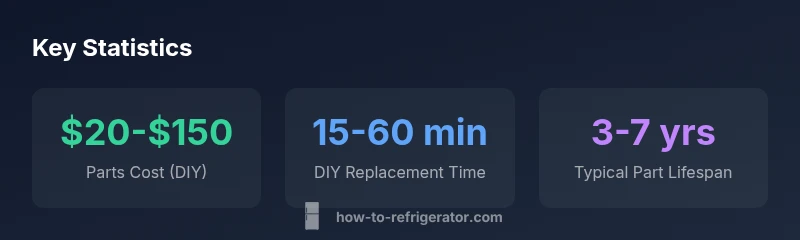
DIY Replacement Guides for Common Parts\n\nReplacing common parts often yields quick wins. For door seals, you’ll typically remove the hinge cover, detach the old gasket, and press in the new seal, ensuring a clean, dry surface. For defrost components, locate the defrost timer or heater, disconnect power, and replace with the correct part—this is a more involved repair and may require a multimeter to test continuity. Ice-maker replacements usually involve disconnecting water lines and replacing the ice mold or motor assembly, taking care to avoid leaks. Always unplug the unit before starting any repair, use the correct tools, and follow model-specific instructions from the manufacturer or trusted guides like How To Refrigerator’s step-by-step tutorials. If you’re replacing a control board or sensor, consider having a professional verify the wiring diagram and safety considerations, as incorrect connections can damage the entire system.
Maintenance Practices to Extend Part Life\n\nPreventive maintenance can significantly extend part life and maintain performance. Regularly clean condenser coils (from the back), wipe door gaskets to remove debris, and verify door alignment to reduce stress on seals. Set temperatures within recommended ranges to minimize strain on cooling components and avoid excessive defrost cycles. Periodically inspect the ice-maker assembly for ice buildup and ensure proper water supply pressure. Use water-filter changes as a cue to inspect related hoses and fittings for leaks. Document replacements and service dates to track wear patterns and plan future maintenance. These practices are consistent with long-term guidance from How To Refrigerator and are particularly helpful for owners hoping to stretch parts’ lifespans between service calls.
Common repair parts and their typical lifespans
| Part Category | Typical Lifespan (yrs) | Common Symptoms |
|---|---|---|
| Door seals | 5-10 | Air leaks, condensation on doors |
| Defrost components | 3-7 | Frost buildup, uneven cooling |
| Condenser coils | 5-10 | Higher energy use, warm exterior surface |
FAQ
Are parts for Samsung refrigerators model-specific?
Yes. Samsung parts vary by model, so always pull the exact model number and cross-check part numbers in official catalogs or retailer listings. If in doubt, contact customer support or a technician.
Parts vary by model, so verify the exact number before buying.
Can I replace most parts myself?
For simple components like door seals, water filters, or ice-maker hardware, DIY replacement is feasible with basic tools. Avoid electrical modules unless you’re trained. Always unplug the unit first.
Yes for simple parts, but be careful with electronics.
Where can I buy genuine Samsung parts?
Purchase from official Samsung retailers, authorized service centers, or reputable sellers with clear model-number matching. Avoid unknown third-party sources to reduce counterfeit risk.
Shop from trusted sources to avoid counterfeits.
What should I do if replacement parts don’t fix the issue?
Recheck wiring and connections, confirm the root cause, and run a diagnostics check. If unresolved, consider professional diagnostics to avoid further component damage.
If it still fails, it’s time to call a pro.
Do replacing parts affect warranty?
Replacing non-OEM parts can affect warranties; OEM parts are usually preferred. Review your warranty terms and consult the service provider for guidance.
Check your warranty; some home repairs can affect coverage.
“Start with the simplest, most accessible parts and verify compatibility early—this approach saves time, money, and mistakes.”
Top Takeaways
- Verify exact model part numbers before ordering
- Start with door seals and defrost components for quick wins
- Choose OEM parts when possible to ensure fit and warranty
- Use model-specific compatibility checks to avoid mismatches
- Keep a maintenance log to track replacements and performance