Overland Park Refrigerator Repair Guide for Homeowners
Learn safe, practical steps for Overland Park refrigerator repair. This homeowner guide covers diagnosing cooling issues, door seals, defrost fixes, and when to call a pro.


For Overland Park refrigerator repair, homeowners can diagnose common issues and perform safe, inexpensive fixes. This guide covers when to unplug, how to test temperatures, check door seals, coils, and thermostat, and which parts you can replace yourself. You’ll learn practical, step-by-step checks that save time and money while keeping your family’s food safe.
Understanding Overland Park Refrigerator Repair Challenges
Living in Overland Park brings seasonal temperature shifts and power fluctuations that can affect fridge performance. This guide from How To Refrigerator speaks directly to homeowners dealing with not cooling, frost buildup, and leaks. You’ll learn to read your model’s energy rating, inspect door seals, ensure proper condenser airflow, and interpret thermostat behavior. By understanding these factors, you’ll know when a DIY diagnostic is reasonable and when professional service is warranted. The goal is to empower you with practical knowledge, safety-conscious tactics, and the right expectations for repair scope and cost in the local context.
Safety Essentials for DIY Refrigerator Repair
Safety comes first when working on any appliance. Before touching electrical components, unplug the fridge and switch off the circuit at the panel. Use a flashlight, gloves, and insulated tools, and never work inside the freezer compartment when refrigerant lines are exposed. Keep children and pets away, and ensure the area is dry to prevent shocks. If you smell refrigerant or see hissing from lines, stop immediately and call a qualified technician. These precautions help ensure you avoid shorts, burns, or accidental damage during Overland Park refrigerator repair.
Diagnosing Not-Cooling Problems: Common Causes
Not cooling is one of the most common fridge issues and has several potential causes. A dirty or blocked condenser coil can reduce airflow and heat dissipation. A faulty thermostat or defrost timer can cause the compressor to run but not maintain correct temperatures. Door gaskets that don’t seal properly let cold air escape, forcing the system to work harder. Frost buildup on evaporator coils or a clogged defrost drain can also impair cooling. Systematic checks focusing on these areas often reveal the culprit without a full fridge teardown.
Defrost, Frost Buildup, and Water Leaks
Frost accumulation can block airflow and reduce cooling efficiency. If you notice frost on interior walls or in the freezer, the defrost system may be malfunctioning. A clogged defrost drain can cause water pooling inside or behind the fridge, potentially leading to ice formation or eerie odors. In many Overland Park homes, frost-related issues can be resolved with a carefully performed manual defrost and a check of the defrost heater. If frost recurs, a deeper inspection of the defrost thermostat and control board may be necessary.
Tools, Materials, and Getting Ready for a Fix
Before starting, assemble essential tools and reference your model’s service manual. A digital multimeter helps test electrical components and continuity. A screwdriver set (Phillips and flat-head) and a nut driver help with panel access. Have a cloth, bucket, and towel ready for spills, and consider a small flashlight for dim corners. Keep replacement parts only if you have confirmed the fault. Label wires if you disconnect any, and work on a non-slip surface to prevent accidents during Overland Park refrigerator repair.
When to Call a Pro in Overland Park: Costs, Warranties, and Scheduling
Some issues clearly require professional service, such as refrigerant leaks, sealed system failures, or compressor replacement. A licensed technician can diagnose and repair refrigerant, which requires specialized handling and certification. If you frequently lose cooling, notice unusual noises, or the unit is under warranty, contacting a pro is prudent. Local service costs vary by problem complexity, travel time, and parts availability. A pro can also advise on whether a unit should be repaired or replaced, considering efficiency, age, and energy use in Overland Park.
Maintenance Plan to Extend Refrigerator Life
Preventive maintenance dramatically reduces the risk of unexpected breakdowns. Regularly clean condenser coils, inspect door seals for cracks, and verify thermostat setpoints stay within recommended ranges. Clear any debris around the grille and ensure proper airflow behind the unit. Scheduling a seasonal check with a local technician can catch developing problems early and help sustain energy efficiency. A simple maintenance routine goes a long way toward reliable Overland Park refrigerator repair outcomes.
Authority Sources and Additional Reading
For trusted guidance on appliance efficiency and maintenance, consult sources such as the U.S. Department of Energy and major consumer publications. These references provide general best practices for refrigerator operation, energy saving tips, and safety considerations. Remember to compare guidance with your model’s manual and your local service options to tailor repairs to your specific unit.
Tools & Materials
- Digital multimeter(Test thermostat circuits and continuity)
- Screwdriver set (Phillips and flat-head)(Access panels and interior components)
- Nut driver(Remove panel screws and access wiring)
- Gloves and safety glasses(Protect hands and eyes during disassembly)
- Rags or towels(Clean up spills and condensation)
- Owner’s manual or service manual(Model-specific guidance and wiring diagrams)
- Replacement parts (as needed)(Only after diagnosing a faulty component (e.g., door seal, defrost thermostat))
Steps
Estimated time: 90-120 minutes
- 1
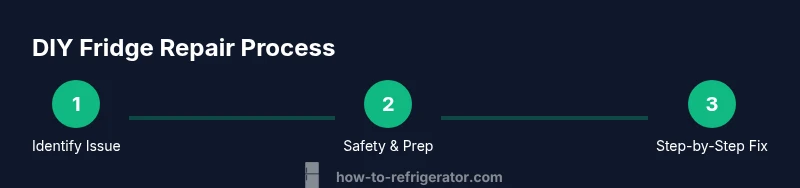
Identify the symptom and safe prep
Confirm the exact symptom (not cooling, frost buildup, leaks) and unplug the appliance. Prepare your workspace with towels, a flashlight, and the manual. This prevents electrical hazards and gives you a baseline for diagnosis.
Tip: Document symptoms with a photo and note the model number for parts and service references. - 2
Check the power and outlet
Verify the fridge is truly receiving power by testing the outlet with a small device or lamp. A tripped breaker or a loose outlet can mimic fridge faults. If power is intermittent, consider trying a different outlet on a different circuit.
Tip: Rule out house wiring before suspecting the fridge itself to avoid unnecessary parts replacement. - 3
Inspect door seals and gasket integrity
Open the doors and look for cracks or gaps in the gasket. A poor seal allows cold air to leak, causing the compressor to run longer and potentially frost buildup. Clean the gasket with mild soap and water and test seal by closing on a sheet of paper.
Tip: If the paper easily pulls out, the gasket likely needs replacement. - 4
Clean condenser coils and verify airflow
Unplug the unit, locate the condenser coils (usually at the back or beneath the fridge), and remove dust with a brush or vacuum. Clean coils improve heat transfer and efficiency. Ensure there’s at least a few inches of clearance behind and around the unit.
Tip: Avoid bending delicate fins; if needed, use a soft brush or coil cleaner spray designed for electronics. - 5
Test the thermostat and defrost system
Follow the model’s service manual to test the thermostat resistance and defrost heater. A faulty thermostat or stuck defrost timer prevents proper cooling. If you can access the defrost drain, ensure it’s clear to prevent frost formation.
Tip: Only perform electrical tests if you’re comfortable; improper testing can damage components. - 6
Evaluate whether a component replacement is needed
If tests point to a defective part, order an exact replacement from a reputable supplier. Compare model numbers and serial data to ensure compatibility. Replacing a thermostat, door seal, or fan can resolve many issues without a full unit replacement.
Tip: Keep hardware organized and reassemble carefully to restore proper refrigerant flow paths. - 7
Run a controlled post-repair test
Plug in the unit, set temperatures to recommended ranges, and monitor performance for several hours. Check for stable temperatures (not too warm or too cold) and verify no new frost forms. Document readings for future reference.
Tip: If the problem recurs quickly, revisit the diagnosis or contact a pro for a second opinion.
FAQ
Why is my Overland Park refrigerator not cooling?
Not cooling can result from a dirty condenser coil, a faulty thermostat, a failed defrost system, or a door seal issue. Start with easy checks—coils, door seals, and temperatures—before diagnosing internal electronics.
If your fridge isn’t cooling, start with coils and seals, then check temperatures. If easy fixes don’t help, a professional diagnosis may be needed.
How should I handle safety and electricity during repairs?
Always unplug the unit before opening panels or touching electrical components. Use insulated tools, wear safety gear, and avoid working on a wet surface or with damaged cords.
Unplug the fridge and use insulated tools. Don’t work on it if it’s wet or the cord is damaged.
Can I repair a defrost issue myself?
Defrost problems can often be diagnosed by checking the defrost drain and heater, but some failures require specialist tools and knowledge. If you see recurring frost or ice buildup, consider professional service.
Defrost issues can be tricky; if frost keeps forming, a pro may be needed.
Is it worth repairing an older refrigerator in Overland Park?
Repair value depends on appliance age, energy efficiency, and the repair cost. In many cases, older models become less cost-effective to repair than replace with a newer, more efficient unit.
Older fridges can be costly to repair; compare the repair estimate with the cost of a newer, energy-efficient model.
What are safe signs that I should stop DIY and call a pro?
If you detect refrigerant leaks, extensive electrical faults, or you’re uncomfortable with testing live components, stop and consult a licensed technician. These scenarios require specialized training and equipment.
If you smell refrigerant or feel unsure about live voltages, call a professional.
Watch Video
Top Takeaways
- Identify symptom first, then test safety-proof steps
- Door seals and condenser airflow are common culprits
- Only replace parts after confirming a fault
- Know when to call a pro to protect yourself and the warranty
- Maintain a simple maintenance schedule to extend life