Is Refrigerator Water the Same as Distilled Water? A Practical Comparison
Compare fridge water to distilled water: mineral content, taste, safety, and appliance implications. Learn when to choose distilled water and when fridge water suffices in real-world home scenarios.


Is refrigerator water the same as distilled water? In practice, no. Refrigerator water comes from your local supply and may carry minerals and treatment by filters, while distilled water is mineral-free, produced by boiling and condensation. The differences affect taste, scale, and which tasks each water type is best for.
Is Refrigerator Water the Same as Distilled Water? Understanding the Basics
For many homeowners, the question at hand is straightforward: is refrigerator water the same as distilled water? The short answer is no. Refrigerator water typically comes from your home's water supply and passes through filtration and a dispenser in the door. It may retain minerals present in the source or have trace amounts adjusted by filters. Distilled water, on the other hand, is produced by boiling water and condensing the steam back into liquid, which removes minerals and most impurities. This distinction matters not only for taste but also for how the water interacts with appliances and certain tasks. When discussing this topic, the How To Refrigerator team emphasizes practical considerations: everyday drinking water versus purified water intended for specialized uses. In many homes, fridge water is perfectly adequate for drinking and cooking; distilled water is most often reserved for specific equipment or laboratory-like tasks. The language of refrigerator water often reflects the delivery system (tap-line, filter, and dispenser) rather than a single chemical profile. To decide between them, consider your priority: convenience versus mineral-free purity. How you use water in your kitchen and around the house will guide your choice. This article compares both types side by side and explores when each is appropriate, with practical steps you can take today.
What Refrigerator Water Really Is: Tap Water, Filters, and Dispensers
When people refer to refrigerator water, they usually mean water delivered through a built-in dispenser or ice maker that sources from the home plumbing. The water may be pre-filtered in the fridge, or a dedicated filter may be replaceable at the door. The key takeaway is that refrigerator water reflects your local water supply and any filtration steps you choose. If your municipal water has notable minerals or chlorine, a fridge filter can improve taste and odor, but it does not remove minerals to the level of distilled water. The result is water that is convenient, fresh-tasting, and generally safe for drinking and cooking. Users should remember that the exact mineral content varies by geography and the condition of the filtration system. For those who rely on a drip coffee maker or kettle, minor mineral content can subtly affect flavor and scale formation over time. This block also sets up the practical difference in usage scenarios: fridge water for daily hydration, distilled water for specialized needs. The How To Refrigerator approach involves assessing your water source, evaluating filter effectiveness, and deciding if a deeper purification step is needed for particular tasks.
What Distilled Water Is and How It Is Made
Distilled water is defined by its production method, not just its purity claim. It begins with boiling water to produce steam, which then condenses back into liquid in a separate chamber. Minerals and many impurities remain behind in the original container. The result is water that is essentially mineral-free. People often choose distilled water for scientific experiments, certain medical devices, or circumstances where mineral content could interfere with results or equipment performance. In a kitchen context, distilled water may taste flat because it lacks the minerals that some people enjoy from tap or filtered water. Understanding the distillation process helps explain why distilled water behaves differently in appliances and tasting profiles. It also clarifies that “distilled water” and “fridge water” serve different roles in daily life, health considerations, and appliance maintenance. For homeowners, this means recognizing when mineral content is a friend (taste, essential nutrients) or a foe (scale buildup in kettles or humidifiers).
Taste, Minerals, and Perception: How They Differ in Everyday Use
One of the most noticeable differences between refrigerator water and distilled water is taste. Minerals like calcium and magnesium contribute to mouthfeel and flavor, while chlorine and other disinfectants can influence aroma. Fridge water often carries the taste signature of the local water supply, filtered or not, and may appeal to most palates. Distilled water, by contrast, is mineral-free and typically described as neutral or flat in flavor. This difference matters for day-to-day beverages, cooking, and even water used in tea and coffee—where mineral balance can subtly impact extraction and aroma. If you’re sensitive to taste, you may prefer fridge water after a filter change, whereas if you’re chasing purity for a specific recipe or device, distilled water might be the better option. It’s also important to note that minerals present in fridge water can contribute to mineral buildup over time in some appliances, which is a factor in maintenance planning. How To Refrigerator recommends testing taste and monitoring any scale formation after long-term use to decide whether to switch strategies.
Appliance Implications: Scale, Filtration, and Maintenance
Water quality matters for appliances as well as for taste. When minerals are present in fridge water, they can contribute to scale buildup in kettles, coffee makers, and humidifiers. A fridge filter can mitigate some of this, but it does not guarantee a mineral-free outcome. Distilled water, by contrast, minimizes mineral-related scale, which can be advantageous for appliances with heating elements or water circuits. However, distilled water can be less forgiving for devices that rely on mineral content for proper conductivity or taste, and it can be more expensive to source regularly. Maintenance planning becomes a key factor: filter replacements for the fridge, occasional descaling for kettles, and deciding whether to carry a bottle of distilled water for particular needs. The decision is often a balancing act between convenience, cost, and appliance longevity. How To Refrigerator emphasizes practical trial: compare device performance with fridge water versus distilled water for a few weeks and monitor taste, appliance cleanliness, and running costs.
Practical Scenarios: Drinking, Cooking, and Special Appliances
In everyday life, refrigerator water is usually sufficient for drinking and cooking, particularly when you use a filter that aligns with your local water quality. If you routinely prepare beverages that highlight mineral flavors (like coffee or tea), you may notice subtle differences based on mineral content. For special appliances—such as CPAP machines, humidifiers, or steam irons—distilled water is often recommended precisely because it minimizes mineral deposits and mineral-related residue. While some people drink distilled water regularly for perceived purity, it’s less common as a daily beverage due to taste and cost. If your home relies on a fridge dispense, maintain the filter according to the manufacturer’s schedule and keep a mental note of when flavor or odor changes occur. In short, use fridge water for convenience; turn to distilled water for equipment care and precise recipes when minerals matter.
Debunking Myths About Water in Refrigerators
Several myths surround refrigerated water versus distilled water. A common belief is that fridge water is unsafe because it’s “not pure.” In reality, fridge water can be entirely safe for drinking if your water supply is treated to potable standards and your fridge filter is maintained. Another myth is that distilled water is always the best choice for cooking. While it offers purity, the mineral content in fridge water can enhance flavor and mouthfeel in many dishes. Finally, some assume distilled water cannot be used in cooking or beverages. In practice, distilled water is acceptable for many recipes and particular equipment, but taste and cost considerations will guide the choice. How To Refrigerator’s approach is to help homeowners assess their actual needs rather than adhering to a one-size-fits-all rule.
How to Decide: A Simple Framework to Choose Between Refrigerator Water and Distilled Water
To decide between refrigerator water and distilled water, start with the task at hand. If you need water for daily hydration, cooking, and general household use, fridge water with a maintained filter is typically sufficient. For devices and tasks sensitive to minerals—such as certain medical devices or scientific experiments—distilled water is preferred. Consider your budget and access: if distilled water is readily available and affordable, you may keep a stock for those specific needs. If mineral buildup concerns you, track appliance cleanliness and scale formation over a few weeks. A practical approach is to adopt a hybrid system: rely on fridge water for everyday needs and reserve distilled water for particular appliances and experiments. How To Refrigerator recommends keeping these guidelines in mind while also reviewing the local water report and testing taste periodically to ensure alignment with your preferences.
Practical Steps to Switch or Maintain Your Water Setup
If you decide to adjust your water setup, begin with your fridge’s filter status. Replace the filter according to the manufacturer’s schedule and run a few tanks of water to refresh the taste. If you’re considering distilled water for specialty uses, evaluate your storage options and cost. A simple. approach is to keep a measured supply of distilled water for appliances that require it, while using fridge water from the dispenser for all other purposes. Regular cleaning of the dispenser and ice maker helps prevent any buildup that could influence flavor. For those curious about DIY options, a basic home distillation setup is possible but may involve investment and safety considerations. In all cases, document what you notice—taste, odor, and appliance performance—so you can make data-driven decisions over time.
Comparison
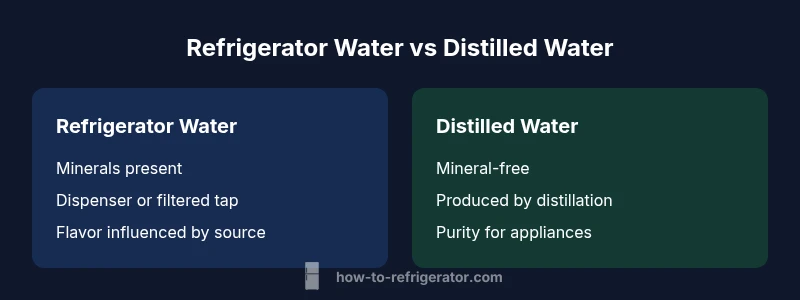
| Feature | Refrigerator Water | Distilled Water |
|---|---|---|
| Mineral Content | Contains minerals depending on source and filter | Mineral-free by definition |
| Taste/odor | Taste influenced by local supply and filtration | Neutral or flat taste due to mineral removal |
| Production/Availability | Delivered via fridge dispenser or tap with filtration | Produced by distillation; available bottled or homemade |
| Cost and Convenience | Lower ongoing cost; depends on filter life and usage | Higher ongoing cost; requires energy/time or purchases |
| Appliance impact | Minerals can contribute to scale; filters mitigate but not eliminate | Reduces mineral buildup; ideal for scale-sensitive devices |
| Best use case | Everyday drinking and cooking with convenience | Purity-focused uses for appliances and experiments |
Strengths
- Convenient access to drinking water via fridge dispenser
- Filtered fridge water often tastes good with minimal effort
- Distilled water minimizes mineral buildup in sensitive appliances
- Clear separation of uses helps protect certain devices
Cons
- Fridge water may still contain minerals and contaminants depending on source and filter
- Distilled water can taste flat and is more expensive to maintain
- Not all appliances benefit equally from mineral-free water
- Relying solely on distilled water can be impractical for daily hydration
Choose based on use-case: fridge water for daily hydration and general cooking; distilled water for mineral-sensitive devices and precise recipes
The difference lies in mineral content and production method. For everyday needs, fridge water suffices with proper filtration; for equipment care and certain experiments, distilled water offers purity and reduced scale risk. Balance your approach with practical testing and local water quality data.
FAQ
Is refrigerator water safe to drink if the fridge has a filter?
Yes, fridge-filtered water is generally safe to drink when the filter is maintained and the water supply meets local safety standards. The filter can improve taste and odor, but it does not guarantee the same mineral-free purity as distilled water. Always follow manufacturer recommendations for filter replacement.
Fridge-filtered water is usually safe if you replace the filter on schedule. It improves taste and odor, but it isn’t mineral-free like distilled water.
Can drinking distilled water every day harm me?
Distilled water is safe to drink for most people, though it lacks minerals found in other water types. Some people may notice a flatter taste. If you rely on distilled water for hydration, you can alternate with mineral-rich options for balance.
Distilled water is generally safe daily, but it lacks minerals. You may notice a flatter taste, so alternating with mineral-containing water is fine.
Will using distilled water in a coffee maker or kettle affect flavor?
Using distilled water can reduce mineral buildup and heat-related scaling in appliances, which can subtly alter extraction and flavor. Some people notice a cleaner taste, while others miss mineral nuances. Experiment to see what aligns with your preferences.
Distilled water can reduce scale and may alter flavor slightly. Try it and compare with your usual water to decide what you prefer.
How do I know if I should use distilled water for my CPAP or humidifier?
Many CPAP machines and humidifiers recommend distilled water to minimize mineral buildup and residue. Check the device manual. If you notice scale or white deposits, distilled water is a safer long-term option.
If your device manual recommends distilled water, use it to avoid mineral buildup.
Does distilled water affect taste in cooking or tea?
Distilled water can taste flatter due to mineral absence, which may alter aroma and flavor perception in some recipes. For cooking where mineral balance matters, you might prefer filtered or fridge water.
Distilled water can taste flatter; for cooking where minerals matter, consider filtered or fridge water.
Where can I buy distilled water or set up home distillation?
Distilled water is commonly sold in supermarkets, drugstores, or online. Home distillation is possible but requires equipment and careful handling to ensure safety and purity.
Distilled water is widely available; buying it is simplest, while home distillation is an option if you’re set up for it.
Top Takeaways
- Assess your primary use: drinking vs. appliance care
- Maintain fridge filters to optimize taste and safety
- Distilled water offers mineral-free purity for sensitive tasks
- Taste and nutritional needs influence water choice
- A hybrid approach can work well for many homes