Is Refrigerator Water the Same as Tap Water? A Homeowner's Guide
Is refrigerator water the same as tap water? This How To Refrigerator guide analyzes delivery, filtration, taste, and safety to help homeowners choose.


Is refrigerator water the same as tap water? In most homes, fridge water comes from the same municipal or well supply but passes through the fridge’s dispenser and a built-in filter. This can improve taste and remove certain contaminants. So, fridge water is not identical to tap water, but often close in safety.
Is refrigerator water the same as tap water? A practical baseline
People often wonder is refrigerator water the same as tap water. In everyday kitchens, both sources originate from the same municipal or well supply, but the path to your glass can introduce changes. The refrigerator’s dispenser typically connects to a dedicated water line and uses an integrated filter cartridge. Depending on the model and maintenance, this can alter taste and odor. When homeowners ask, 'is refrigerator water the same as tap water?' the answer is nuanced: the source may be identical, while the delivery and filtration differ enough to matter for flavor, chlorine bite, and mineral perception. How To Refrigerator has analyzed common household configurations and found that the most noticeable differences stem from filtration efficiency and line cleanliness rather than the fundamental water source. If your city uses chlorine or chloramine, the fridge filter can reduce the taste impact, but it may not remove every contaminant at the same level as a dedicated home filtration system. Across the board, the key factor is whether the fridge is properly maintained and whether the filter is current. These variables largely determine whether fridge water tastes cleaner or simply mirrors tap water.
How fridge water is delivered and filtered
The journey of fridge water begins at the main supply line, travels through the home’s plumbing to the fridge, and then passes through at least one filter cartridge inside the appliance. Most modern refrigerators offer a replaceable filter with a documented lifecycle—typically every 6 to 12 months, depending on usage and water quality. The specific contaminants removed depend on the filter media (activated carbon, ion exchange, or specialty media). This means that is refrigerator water the same as tap water in every kitchen is not a simple yes or no. In many homes, fridge water is effectively filtered tap water, but performance varies by model and maintenance habits. If your water has a noticeable chlorine taste or odor, a well-maintained fridge filter can mitigate it more consistently than a bare tap. Brand warranties may influence filter choice, but upkeep remains the key determinant of consistent quality.
Taste, odor, and mineral content differences
Taste and odor are among the most noticeable differences when comparing refrigerator water to tap water. Chlorine disinfection in municipal supplies can leave a faint taste; fridge filters can reduce this taste substantially, though they may not eliminate it entirely. Mineral content also plays a role: some minerals present in tap water can be reduced by filtration, producing a smoother mouthfeel in fridge water, while others may be preserved depending on filter type. For households evaluating is refrigerator water the same as tap water, consider performing blind taste tests with and without the fridge filter to gauge perceptible differences. It’s also worth noting that mineral balance affects perceived hardness and aftertaste, which some people prefer in tap water but others prefer the cleaner profile fridge water can offer.
Safety standards and regulatory context
Water safety standards apply at the source and at point-of-use設備, including fridge dispensers. Municipal water systems are regulated to meet safety guidelines, and fridge filters add an additional layer of consumer-focused protection. The fridge’s filter is not a substitute for a municipal treatment plant; rather, it targets substances commonly found in household distribution such as certain organic compounds and a subset of contaminants. If you live in an area with known contaminants or aging infrastructure, you may want to pair fridge filtration with an additional home filtration system. How To Refrigerator emphasizes that following the filter’s replacement schedule and keeping the line clean are essential for ensuring is refrigerator water the same as tap water remains a matter of taste and safety aligned with your local water quality.
Common myths debunked
Myth 1: Refrigerator water is always purer than tap water. Reality: It depends on your filter and maintenance; the water source may be the same, but the filtration system determines taste and contaminant reduction. Myth 2: All fridge filters remove lead. Reality: Some filters target lead effectively, while others do not; always verify filter specifications and compatibility with your water quality. Myth 3: If the water tastes fine from the tap, there’s no need for fridge filtration. Reality: A fridge filter can reduce odor and improve consistency across batches, especially where municipal taste varies by season. Understanding is refrigerator water the same as tap water hinges on both the source and the filtration stage in your setup.
Practical at-home tests and comparisons
To assess whether is refrigerator water the same as tap water for your family, start with a simple approach: compare taste, odor, and mouthfeel in a controlled tasting. Use identical glassware and chill both sources to similar temperatures. Consider a basic water testing kit for common contaminants to understand the filtration’s impact. Track changes over several weeks as you replace filters, noting shifts in taste and clarity. If you want to quantify taste differences, you can log scores for aroma, aftertaste, and mouthfeel on a simple 5-point scale. While tasting alone isn’t a formal scientific test, it provides a practical gauge of how your fridge water compares to tap water for daily consumption.
Maintenance essentials for fridge water quality
Maintaining fridge water quality is central to reliability in is refrigerator water the same as tap water. Change the built-in filter according to the manufacturer’s schedule and your usage. Flask and reservoir cleanliness matters: wipe down the dispensing area regularly and flush the line when you replace filters. If you notice reduced flow or off-tastes after filter changes, recheck installation, ensure the O-rings are seated correctly, and consult the service manual. For households with aging plumbing or mineral-rich water, consider pairing fridge filtration with a secondary under-sink filter to extend the interval between fridge filter replacements and achieve consistently optimized taste.
When to favor fridge water vs tap water in daily life
For many households, fridge water delivers a quick, filtered option without extra steps: you press a lever, and clean water flows. This makes it a strong choice for families with kids, busy mornings, or concerns about scent and flavor from tap water. However, if you value simplicity and the lowest possible maintenance burden, tap water remains a reliable baseline. In regions with highly variable water taste, a dedicated home filtration system paired with tap water can offer a consistent profile with less frequent filter changes. Your decision should reflect taste preferences, convenience, maintenance tolerance, and local water quality.
Environmental and health considerations for households
Choosing between fridge water and tap water also invites environmental and health considerations. Fridge water, while convenient, involves plastic bottle usage and regular filter replacements, which contribute to waste unless properly recycled. Tap water generally has a lower plastic footprint if you avoid disposable bottles and rely on a well-maintained municipal supply. From a health perspective, both sources are safe when the water quality meets standards and you maintain appliances correctly; perform periodic water testing if you rely on well water or are in an area with known quality concerns. As always, prioritize safe handling practices and maintain your refrigerator’s filtration schedule to keep is refrigerator water the same as tap water in your home context.
Summary: practical decision factors at a glance
- Source vs delivery: Both often come from the same supply, but fridge filtration can alter taste and odor. is refrigerator water the same as tap water is contextual and hinges on maintenance.
- Filtration: Fridge filters provide targeted improvements but require regular replacement; tap water benefits from municipal treatment but may require additional filtration at home.
- Taste and odor: If taste is a priority, fridge water with a fresh filter often yields a cleaner profile; if you prefer minimal upkeep, tap water might be preferable.
- Maintenance burden: Regular filter changes and line cleaning are essential for fridge water quality; tap water has no built-in filter maintenance.
Final take
In most homes, fridge water offers a convenient, filtered option that can improve taste and odor when properly maintained. However, is refrigerator water the same as tap water in all cases? No—differences arise primarily from filtration and line cleanliness. Users should align their choice with taste preferences, maintenance willingness, and local water quality, a conclusion supported by How To Refrigerator's practical guidelines.
Comparison
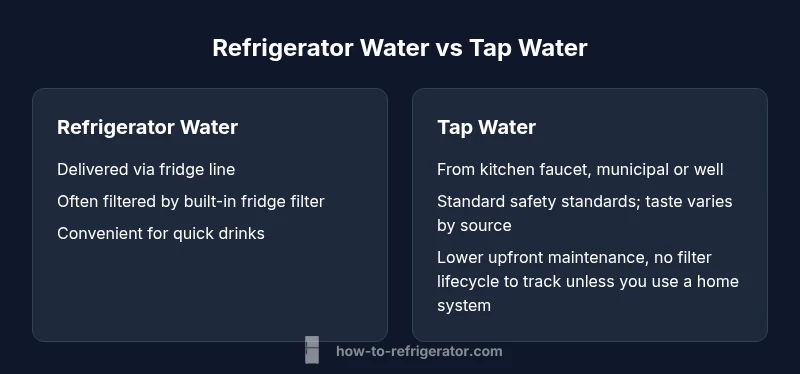
| Feature | Refrigerator Water | Tap Water |
|---|---|---|
| Source and delivery | Delivered via a fridge water line and dispenser; may include an internal filter | Delivered directly from the faucet; source depends on municipal or well water |
| Filtration and treatment | Built-in fridge filter removes select contaminants; effectiveness depends on filter type and maintenance | Municipal filtration is at the source; no built-in filter at point of use unless you install one |
| Taste & odor | Often improved taste/odor due to filtration; chlorine bite reduced | Taste varies with source water and local treatment; odors depend on source and plumbing |
| Maintenance & lifecycle | Requires regular filter replacement and line flushing; performance declines with old filters | No fridge-specific maintenance; only standard plumbing maintenance and any home filtration you install |
| Convenience | High convenience for ongoing drinking water; quick access from the fridge | Low friction: turn on the tap; no filter replacement cycle to track unless you use a home system |
| Environmental impact | Filters and line waste contribute to disposal; energy use is tied to fridge operation | Typically lower disposal waste if you rely on tap water and avoid bottled water |
| Best for | Homes prioritizing filtered taste and convenient access | Homes prioritizing minimal maintenance and lower waste; strong baseline tap water |
Strengths
- Convenient daily access to filtered water
- Potentially cleaner taste and odor due to fridge filtration
- Improved consistency for households with variable tap water taste
- Easy to monitor when maintenance schedules are kept
Cons
- Requires ongoing filter replacements and line maintenance
- May not remove all contaminants depending on filter type
- Adds plastic waste from used filters unless recycled
Fridge water is convenient and can taste better with good maintenance, but tap water remains a solid baseline.
If you value filtered taste and quick access, fridge water is usually the better pick when filters are current. If you want minimal upkeep and lower waste, tap water is reliable and cost-effective.
FAQ
Is fridge water safer to drink than tap water?
Safety depends on local water quality and filter maintenance. Fridge water can be safer for taste and odor due to filtration, but it should not be considered a substitute for municipal safety standards. If your tap water quality is uncertain, verify with local testing or upgrade filtration.
Fridge water can be safer for taste when filters are maintained, but always rely on local water tests for safety guidance.
Does fridge water taste better than tap water?
Many people notice a difference due to the fridge’s filter removing chlorine and other compounds. The result varies by filter type and water source. A clean, recent filter generally yields a more neutral taste.
Fridge water often tastes cleaner after filtration, but it depends on the filter and the source water.
Can fridge water filter remove lead and other contaminants?
Some fridge filters are certified to reduce lead and other contaminants, but not all. Check the filter’s certifications and compatibility with your water quality. For higher-risk sources, consider a separate filtration system at the point of use.
Lead removal depends on filter certification; verify before relying on fridge filtration alone.
How often should I replace a fridge water filter?
Follow the manufacturer’s schedule, typically every 6 to 12 months, or sooner if you notice reduced flow or off-tastes. Regular replacement ensures optimal taste and safety.
Replace the fridge filter as recommended by the maker to keep taste and safety up.
If my home uses well water, is fridge water still a good option?
Yes, you can still use fridge water with well water, but you may need a dedicated filtration system that targets well-specific contaminants. Test well water regularly and adjust filtration accordingly.
Well water can be filtered through the fridge, but test and tailor filtration to local contaminants.
Can I drink fridge water if the power goes out?
Yes, fridge water remains drinkable if the water line is intact and the fridge does not rely on power to deliver water. However, filtration maintenance should not be neglected during outages.
Drinking fridge water during a power outage is fine if the line remains intact.
Top Takeaways
- Identify your primary goal: taste, convenience, or maintenance.
- Regularly replace fridge filters to maintain quality.
- Taste tests can reveal noticeable differences between fridge water and tap water.
- Consider an additional filtration system if local water quality is variable.
- Balance environmental impact with daily convenience when choosing.