Is It OK to Turn Off the Refrigerator Every Night? A Homeowner's Guide
Learn whether nightly power-downs are safe for your refrigerator, explore energy-saving strategies, and get practical steps to preserve food safety while reducing energy use. How To Refrigerator explains when to turn off, how to do it safely, and better alternatives.


Is it ok to turn off the refrigerator every night? In most cases, no. Keeping it on ensures temperatures stay in the safe range to preserve food and prevent mold or spoiled dairy. If you’re trying to save energy, you can adjust the thermostat to a lower energy-saving setting, ensure proper door seals, and limit door openings. If you’re leaving for extended trips, unplug only if the contents are safe and the unit is empty.
Why keeping the fridge running is important
Is it ok to turn off the refrigerator every night? According to How To Refrigerator, most households benefit from keeping the unit powered on, day and night. A refrigerator is designed to maintain a steady, cool environment, which slows bacterial growth and keeps dairy, meat, and produce safer for longer. When the compressor stops, interior temperatures can drift, especially if the door is opened frequently or if bulky items block air flow. Even short periods of warmth can cause condensation, which fosters mold on seals and shelves. Over time, repeated temperature fluctuations can shorten the shelf life of perishable foods and increase food waste. For families who store a lot of fresh items or rely on ready-to-eat leftovers, uninterrupted cooling provides a margin of safety that every household should consider. That said, frequent nightly shutdowns can stress the compressor during restart cycles and may extend the time needed to return to safe temperatures. The bottom line is to minimize temperature swings, maintain tight door seals, and plan storage so that the fridge is rarely exposed to prolonged warm air. This guidance aligns with insights shared by How To Refrigerator to help homeowners think critically about nightly power-down decisions.
Energy considerations and how turning off affects energy usage
Turning off a refrigerator to save energy might seem logical, but real savings depend on how the appliance is built and how you use it. Most modern fridges have a small baseline energy draw even when idle due to internal fans or control electronics. When you power the unit back on, the compressor may run longer to restore temperatures, which can negate the short-term savings. Additionally, warm air entering when doors are opened increases cooling load. If your goal is energy efficiency, focus on consistent door habits, proper door seals, and thermostat settings rather than nightly power-downs. How To Refrigerator analysis, 2026, suggests that small, steady changes can yield meaningful results without compromising food safety. For example, keeping the door closed, arranging items to promote air flow, and ensuring coils are clean all contribute to lower energy use over time. If you choose to apply a temporary power-down, keep it brief, and make a plan to return to normal operation as soon as possible.
Food safety: risk of spoilage when power is off
Food safety concerns are central to the decision of turning off the fridge. Food begins to enter the danger zone when temperatures rise above safe levels, allowing bacteria to multiply. Even a few hours of elevated interior temperature can accelerate spoilage, particularly for dairy, raw poultry, and leftovers. If your fridge is off overnight, pack perishables in a cooler with ice packs or relocate them to a second refrigerator if you have one. When power returns, discard any perishable items that have thawed or warmed beyond safe limits. Regularly inspecting door seals and ensuring the gasket remains airtight reduces the chances of warm air sneaking in and forcing the temperature to rise. In short, food safety should guide energy-saving decisions; uninterrupted cooling provides a durable safety margin, especially for households with small children or elderly family members who may be more sensitive to foodborne illness.
Scenarios where turning off nightly might be considered
While nightly power-downs are generally discouraged, there are legitimate scenarios where you might consider it. If you are away from home for an extended period and cannot rely on neighborly checks, you may opt to unplug the fridge to avoid wasting energy while empty. If you do this, remove all perishables, clean the interior to minimize odors, and leave the door slightly ajar to prevent mold, if recommended by your model’s manufacturer. Some people with older, poorly insulated units may see temperature swings that make nightly power-down more appealing, but this is unusual in new or mid-range models. In any case, communicate clearly with anyone who has access to the fridge, so they know when it will be powered down and can adjust food storage accordingly. Remember that even a brief breakdown in cooling can compromise dairy and meat safety.
Safer alternatives to reduce energy without turning off
Before turning the fridge off, try proven energy-saving practices. Start with the door seals: a loose gasket costs more energy than you might expect. Clean and test seals; replace worn ones. Next, keep the condenser coils clean; dust buildup makes the compressor work harder. Optimize temperature: set the fridge to a stable mid-range temperature that keeps food safe but reduces energy. Minimize door openings; plan meals and stocking so you open the door less often. If your goal is to cut peak usage, consider scheduling power-downs during the warmest part of the day and only for a short period, ensuring you can promptly restock. For households with smart appliances, enable energy-saving or eco modes. How To Refrigerator analysis, 2026, finds that these adjustments typically produce more reliable results than turning off the unit nightly. Finally, ensure your fridge is level; poor leveling can reduce cooling efficiency and cause frost or ice buildup.
How to assess your fridge before deciding to power down
Assessing your fridge before any power-down begins with a simple checklist. Start by checking the interior temperature with a thermometer: the goal is to maintain a consistent cold level. Inspect the door seals for gaps and test their effectiveness by closing the door on a dollar bill or card; if you can pull the bill out easily, seals may need replacement. Clean condenser coils and ensure air can circulate freely around the back of the unit. Note how often the compressor runs through a day—unusually long runtimes can indicate overheating or poor insulation. Review the model’s manual for any specific power-down guidance, including recommended minimum off times and whether the ice maker or water dispenser should be disabled during an outage. If you are unsure, contact a professional technician before attempting to power down.
Step-down approach: planned off periods
This section explains a cautious approach to brief, planned power-downs. Plan in advance: choose off periods when the fridge will be least full (e.g., during a weekday when few items are present). Unplug using the wall switch or a surge-protecting power strip rated for appliances. Before powering down, transfer perishables to a cooler with ice packs if you anticipate longer than a few hours. When ready to re-power, plug back in and wait for several minutes before loading items back in; ensure the compressor starts without abnormal noises. If the unit features an automatic defrost, avoid interrupting the cycle; repeat off times too frequently can confuse the defrost system. Keep a written note of the off times in case others access the kitchen to avoid accidental power-downs.
Myths vs. reality
Several common myths surround overnight power-downs. Myth: turning off saves big energy; reality: most of the energy is spent restarting the compressor, so savings are limited. Myth: older models are more tolerant of power-downs; reality: most refrigerators are designed for continuous operation and do not perform well with repeated restarts. Myth: you can never preserve leftovers if you turn off the fridge; reality: with proper planning and storage, short power-down is manageable. By debunking these myths, homeowners can make more informed choices about when to turn off and when to keep running.
Quick-start homeowner checklist
Before deciding to power down, use this concise checklist to verify you can do so safely and minimize waste. - Empty the fridge of perishable items if you plan a longer off period. - Move any items that must stay cold to a separate cooler or secondary fridge. - Ensure door seals are clean and intact. - Note the planned off duration and set reminders to re-activate cooling. - Record the temperatures before and after the off period to confirm safe recovery. - Reintroduce items only once the interior has returned to safe temperatures. - After power is restored, monitor for unusual noises or frost buildup and address promptly.
Tools & Materials
- Wall outlet with switch or surge-protecting power strip(Choose a device rated for appliance use and able to safely cut power to the refrigerator.)
- Thermometer for refrigerator(Optional to verify temperatures when the unit returns to operation.)
Steps
Estimated time: 15-20 minutes
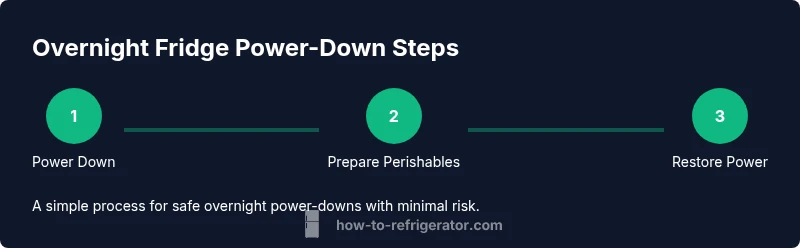
- 1
Power down safely
Shut off power to the refrigerator at the wall switch or unplug the cord. Keep the doors closed to minimize spoilage and odors during the off period.
Tip: If you use a plug-in power strip, switch it off first and then unplug the fridge for a clear disconnect. - 2
Move perishables or prepare a backup
If you expect the off period to be longer than a few hours, relocate dairy, meat, and prepared foods to a cooler with ice packs or a second refrigerator if available.
Tip: Label items clearly and group perishables together to monitor temperature exposure easily. - 3
Limit door openings
Plan meals and stocking so doors are opened as little as possible to reduce warming from ambient air.
Tip: Set a timer to remind household members to minimize fridge access during the off period. - 4
Prepare for reactivation
Before powering back up, ensure the interior is clean and the door seals are intact. Wait a few minutes after plugging back in before loading items.
Tip: If you have a thermometer, check interior temperature after restart to confirm it’s returning to safe levels. - 5
Restart and monitor
Plug the unit back in or switch the outlet on. Allow the compressor to start normally; observe for unusual noises or frost buildup.
Tip: Do not load full perishables right away; give the fridge time to reestablish proper cooling. - 6
Document outcomes
Note the off duration and the temperature recovery to refine future decisions and avoid repeated power-downs.
Tip: Use this record to decide whether nightly shutdowns are worth the risk for your household.
FAQ
Is it safe to turn off the fridge every night?
Generally not recommended due to food safety concerns. If you must, plan carefully and limit exposure of perishables.
Generally not recommended due to food safety concerns.
Will turning off the fridge save energy?
Savings are typically modest because cooling restarts can use energy quickly. Focus on seals, temperature settings, and door habits for real gains.
Savings are usually modest; focus on better cooling habits.
What should I do with frozen items if I turn off the fridge?
Keep the freezer closed and move items to a cooler if possible. If power-down is brief, monitor temps to avoid thawing.
Keep the freezer closed; use a cooler if you can.
Can I unplug a refrigerator with an ice maker?
You can unplug, but disconnect the water line and make sure the ice maker is turned off. Plan for safe storage of any items that rely on continued cooling.
Yes, but disconnect water and plan for storage.
Are there fridge models designed for power outages?
Some models include energy-saving or reserve modes, but continuous operation remains the baseline for most households.
Some have eco modes, but most rely on continuous operation.
Watch Video
Top Takeaways
- Maintain continuous cooling is safer for food safety.
- Use energy-saving practices instead of nightly shutdowns.
- Unplug only when the fridge is empty and you have a plan for perishables.
- Monitor interior temperatures after reactivation to confirm safety.