How to Take Refrigerator Doors Off: A Step-by-Step Guide
Learn how to safely remove refrigerator doors for cleaning, repairs, or replacement. This guide covers tools, safety, model variations, and precise reattachment tips to keep your fridge balanced and operating smoothly.


Taking refrigerator doors off lets you access hinges, seals, and interiors for cleaning, repairs, or replacement. This step-by-step guide covers safe, model-agnostic methods, essential tools, and proper support. Plan to work with a helper for heavy doors, brace the cabinet, and verify door alignment and seal compression after reattachment.
Why You Might Need to Remove Refrigerator Doors
There are several practical reasons to remove refrigerator doors beyond cosmetic upgrades. Deep cleaning behind hinged panels is common when doors are heavy or messy, and it’s essential for severe gasket wear, iced-over hinges, or misalignment that affects the door seal. If you’re relocating a fridge for remodeling, replacing a damaged door, or installing a new hinge kit, removing the doors provides clear access. The How To Refrigerator team finds that most repairs are safer and faster when you temporarily free the doors rather than forcing misaligned hinges. Always consult your model’s manual first, as some doors have unique pins, conceal screws, or safety interlocks that change the process.
In addition, removing doors can help when adjusting fridge levelers or when diagnosing not-cooling issues that are related to door alignment and gasket compression. A well-seated door contributes to energy efficiency and proper temperature control, so isolating the door from the cabinet can help you isolate the root cause. While the idea is straightforward, handling heavy doors requires care to avoid bending frames or cracking finishes. Plan for visual checks and take photos before you detach anything so you can reference orientation during reassembly.
Tools and Safety Precautions
Before you begin, gather the essential tools and prepare a safe workspace. This task involves lifting heavy doors, so two people are strongly recommended. Work on a clear, dry area with room to move and a soft surface to rest the doors on. Unplug the fridge to prevent any electrical risk, especially if the doors have integrated ice and water dispensers. If your unit uses a water line, shut off the water supply before disconnecting it to avoid leaks. Use masking tape to label hinge positions if you plan to reassemble later, and consider placing a cardboard shield between the door and floor to prevent scratches. Wear gloves to protect your hands and safety glasses to shield eyes from any pinching hazards. The steps below are designed to minimize stress on the cabinet and hinges while keeping the door’s weight balanced during removal.
Model Variations: What Changes Across Brands
Fridges differ in hinge designs, door weight, and attachment hardware. French-door models often require removing the bottom hinge and releasing the upper hinge, while top-freezer models may have single or double hinges with different pin placements. Some doors use integrated handles that must be removed first, while others have removable handles after unscrewing hidden fasteners. Doors with water dispensers or ice makers may connect to water lines or electrical harnesses, adding steps or safety interlocks. Always check your model’s service manual or manufacturer website for model-specific diagrams and torque specifications. If you can’t locate the manual, take photos of screw positions before loosening anything and keep track of any shims or spacers that come with the hinges.
Preparing for Door Removal: Common Scenarios
Start with a plan for the most common scenarios: removing doors for cleaning behind them, replacing gaskets, or swapping a damaged panel. Empty the doors completely to avoid items falling during removal. Remove door shelves and bins to reduce weight and prevent breakage. If handles are integrated, determine whether they must be removed first; some models require handle screws to be loosened before hinge screws. Verify that you have a proper support plan—never lift a door by its hinge alone, and keep your partner close to guide and stabilize the door as you work. Finally, label each screw and hinge with its corresponding location to simplify reattachment.
Reattaching Doors and Realignment
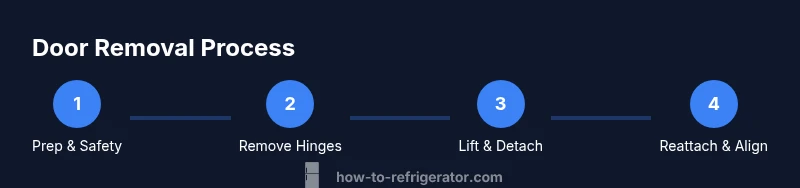
Reattachment is the reverse of removal and requires careful alignment to ensure a tight seal. Start by loosely placing the door on the top hinge and securing the upper hinge bolts without fully tightening, so you can adjust the door position. Check the gap around the door to ensure even spacing from the cabinet and edge of the frame; use a level to verify horizontal alignment. Tighten the top hinge first, then the bottom hinge, checking the door swing and seal compression as you go. If you notice misalignment after tightening, you may need to loosen and adjust hinge screws, shims, or the anti-tip bracket. Reattach any removed handles and reattach water lines or electrical connectors last, following the manufacturer’s torque specs.
For safety, test the door by opening and closing several times and listening for binding or rubbing. A door that doesn’t seat squarely may cause energy loss or gasket wear. If you lack the tools or confidence, consult a pro to avoid damaging the cabinet or finish.
Maintenance After Removal
After you’ve reinstalled the doors, take a few minutes to inspect the door seals and alignment again. Clean the gasket channels and inspect hinges for rust or wear. Check the anti-tip brackets to ensure they’re firmly attached and not interfering with door movement. Recheck the door alignment after 24 hours of normal use, as some frames settle slightly after installation. If you notice persistent rubbing or an air leak, re-adjust or replace gaskets or seals. Document the work you did and the model’s hinge configuration for future maintenance.
Authority Sources and Additional Reading
For safety guidelines and model-specific instructions, refer to trusted sources. How To Refrigerator recommends reviewing official resources when possible. You can consult the following: Energy Department guidance on energy-efficient appliance maintenance, the Consumer Product Safety Commission for safety reminders, and Energy Star’s appliance maintenance tips. These sources provide general safety standards and best practices to support DIY repairs without compromising warranty or safety.
Authority Sources
- How To Refrigerator Analysis, 2026: Safety-conscious DIY guidance for appliance repair and maintenance. https://www.energy.gov
- U.S. Consumer Product Safety Commission: Safe handling of household appliances and electrical safety. https://www.cpsc.gov
- Energy Star: Maintenance and safety practices for refrigerators and freezers. https://www.energystar.gov
Tools & Materials
- Screwdriver set (Phillips and flat-head)(Essential for removing hinge screws; include magnetic tip if possible)
- Nut driver or socket set(Sizes vary by model; common sizes are 1/4" and 5/16")
- Adjustable wrench(Use for jammed fasteners or to hold nuts steady)
- Pliers(Useful for pin removal or securing wires during disconnection)
- Helper or two people(Doors are heavy; a second person prevents drops and damage)
- Masking tape(Label hinge positions to aid reassembly)
- Gloves(Protect hands from sharp metal edges and cold surfaces)
- Soft protective blankets or towels(Prevent dings on doors and cabinet surfaces)
- Level(Check door alignment after reinstallation)
- Owner’s manual(Model-specific torque and sequence details)
Steps
Estimated time: 45-60 minutes
- 1
Power down and prepare
Unplug the refrigerator and clear a clean workspace. If there’s a water line, shut off the supply to prevent leaks. Have a partner ready to support the door as you begin. This step reduces electrical and water-related risks.
Tip: Take a photo of the door orientation before removal to ease reattachment. - 2
Empty and detach door accessories
Remove all items from the door shelves and bins to reduce weight. If handles are integrated, determine if they must be removed first; some models require handle screws to be loosened. Set items and hardware aside for easy reassembly.
Tip: Label screws and small parts with masking tape to avoid mix-ups. - 3
Brace and support the doors
With a helper, place soft blankets on the floor where the doors will rest. Have one person hold the door while the other begins loosening hinge screws. Do not lift by the door alone; keep it supported at all times.
Tip: Work from the top hinge down to keep control of the door’s weight distribution. - 4
Remove hinge covers and disconnect top hinge
Carefully pry off any hinge covers with a flat-head screwdriver and expose the screws. Loosen the top hinge bolts enough to free the door without fully removing them. Keep the door supported to prevent it from snapping back.
Tip: Do not force screws; if a bolt is stubborn, apply a small amount of penetrating oil and wait 5 minutes. - 5
Release bottom hinge and lift the door
Support the door’s weight and lift it away from the bottom hinge, guiding the pin out. Remove the door slowly and place it on the prepared surface. Have your helper guide the door horizontally to avoid side impact.
Tip: Keep hands on the door’s sides, not the center edge, to prevent bending or warping. - 6
Repeat for the second door (if applicable)
If you’re removing a double-door setup, repeat the process for the other side, maintaining orientation labeling. Ensure both doors are supported and aligned when resting.
Tip: Verify door orientation marks remain visible for accurate reattachment. - 7
Inspect, clean, and store
With doors removed, inspect hinges, gaskets, and cabinet surfaces for wear or debris. Clean any grime and inspect seals, then label and store components safely until reattachment.
Tip: Take photos of hinge positions and gasket alignment as a reassembly reference. - 8
Prepare for reattachment or professional service
If you plan to reattach later, ensure you have the correct hinge screws and handle components. For complex repairs or uncertain torque specs, consider professional help to avoid damage.
Tip: Keep a spacer or shim kit from the hinge package in case you need to fine-tune alignment later.
FAQ
Do I need to unplug the fridge before removing the doors?
Yes. Unplug the fridge to avoid electrical hazards, and disconnect any water lines if your unit has an ice/water dispenser to prevent leaks during removal.
Unplug the fridge and disconnect water lines if needed to stay safe during door removal.
Can I remove the doors by myself or is a helper required?
Heavy doors are best handled with a helper. Having two people reduces the risk of injury or door damage. If you must proceed solo, use solid supports and take extra time.
Two people is safer and easier for door removal.
What tools do I need for door removal?
You’ll typically need a screwdriver set, a nut driver or socket, an adjustable wrench, pliers, and a helper. Have a level handy for checking alignment after reattachment.
Screwdrivers, a nut driver, and a level are your main tools.
How do I reattach doors and ensure proper alignment?
Lift the door onto the top hinge, loosely secure screws, then adjust for even gaps and level; tighten progressively. Check the seal; if misaligned, loosen and readjust as needed.
Place the door on the top hinge first, then align and tighten, checking the seal.
Will removing doors affect my warranty?
Warranty terms vary by brand and model. Generally, removing doors for maintenance isn’t automatically covered, but improper reassembly could void coverage. Check your manufacturer’s policy and consult a professional if in doubt.
Warranty terms vary; consult the manufacturer for specifics.
What if the doors don’t align after reinstallation?
If misalignment persists, recheck hinge screws, shims, and anti-tip brackets. Small adjustments and re-tightening are often sufficient, but large gaps may require professional service.
Revisit hinge screws and shims; persistent misalignment may require expert help.
Watch Video
Top Takeaways
- Plan for two people; doors are heavy and awkward.
- Label screws and hinge positions to simplify reassembly.
- Unplug the unit and disconnect water lines if applicable.
- Align doors carefully for an airtight seal after reinstall.
- Consult model-specific manuals or a professional if unsure.