Stop Refrigerator Door Hitting Wall: Step-by-Step Guide
Learn homeowner-friendly steps to stop a refrigerator door from hitting the wall. This guide covers hinges, spacers, leveling, and wall protection with practical, safe fixes you can try today.


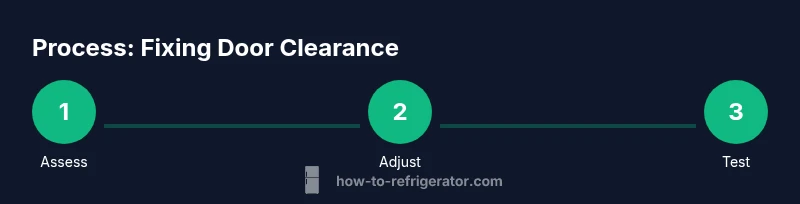
To stop a refrigerator door from hitting the wall, correct alignment and clearance are essential. Start with adjustable hinges or door stops, then reposition the fridge slightly, install a bumper or spacer, and test swing radius. If space is tight, swap to a narrower door or relocate nearby fixtures. Use even spacing and protect walls.
Why proper clearance matters in preventing door damage and improving seal health
Clearance around a refrigerator door is essential for safe operation, door seals, and preventing damage to walls and trim. If the door hits the wall, you risk peeling paint, chipping plaster, and misaligning the gasket. This is a common homeowner issue, especially in tight kitchens or when appliances are pushed up against the backsplash. How to stop refrigerator door from hitting wall starts with accurate measurement and a plan. According to How To Refrigerator, correct assessment is the first step in any reliable fix. The team highlights that even small gaps can compound over time, causing doors to misalign and seals to fail. Taking a methodical approach now saves headaches later. In most homes, the issue isn’t a mystery—it's a combination of leveling, hinge wear, and the door’s swing radius. By addressing each factor, you restore both function and longevity.
Quick checks before making adjustments
Before you touch screws or reposition the appliance, perform quick checks that reveal the root cause. Measure the clearance at the door edge in multiple points along the wall to assess uniformity. Use a level to confirm the refrigerator is plumb from side to side and front to back. Inspect hinges for loose screws, worn bushings, or damaged plates. If you notice rust or bent hinge parts, replace them before proceeding. Finally, check the wall behind the fridge for protrusions, trim, or outlets that might encroach on the door swing. Document your findings so you can track changes as you adjust. Remember, the goal is a balanced, even gap that lets the door close snugly without contacting the wall consistently.
How to adjust hinges and door stops effectively
Hinges are the primary control for door swing. Start by loosening the hinge screws enough to reposition the door without fully removing them. If your model has an adjustable hinge plate, set it to increase or decrease the door offset by small amounts, testing with the door opened to 90 degrees. When the door begins to miss contact with the wall, re-tighten screws and check for binding or rubbing. If your door stop is built into the hinge or mounted on the cabinet, adjust it to add a tiny clearance—often just a millimeter makes a big difference. Keep the door’s gasket aligned with the cabinet frame as you tune.
Using spacers, bumpers, and wall protection
Sometimes hinges aren’t enough and you’ll need a spacer or bumper. Adhesive door bumpers can create a clean, cushioned gap that prevents contact without altering the door’s alignment drastically. Place bumpers on the wall-facing edge of the door or on the cabinet corner where the door meets the wall. For deeper or more frequent contact, consider a small foam or rubber spacer mounted behind the door to push it outward slightly. Panic-free wall protection strips or foam edge guards are a low-cost option to prevent scuffs when the door does come into contact.
Repositioning the fridge for safer swing
If adjustments don’t achieve the desired clearance, a slight reposition can help. Move the unit away from the wall by a small amount—ideally 1-2 centimeters (about 1/2 to 3/4 inch)—to increase the swing radius. This may require disconnecting and rerouting the power cord, water line, or drain hose, so proceed only if you’re comfortable and the connections are accessible. After moving, recheck level and door clearance across the full swing. Small shifts can yield big improvements without major rework.
Testing, sealing gaps, and maintaining clearance over time
Once you’ve tuned hinges, added bumpers, and adjusted the fridge position, test the door by opening to full range several times. Check that the gasket seals evenly without obstruction. If you still notice contact, revisit the hinge settings and wall protection—sometimes a second iteration is required. Regular maintenance helps prevent recurrence: re-check level every few months, tighten loose screws, and replace worn bumpers as needed. Proper upkeep preserves energy efficiency and door longevity, ensuring the door stops hitting the wall in daily use.
Common mistakes to avoid and when to stop
Avoid overcorrecting: tiny adjustments yield big results, and overcompensation can push the door into new contact points. Don’t force a jammed hinge—this can strip mounting holes or damage the cabinet. Don’t neglect safety: unplug the fridge when working near electrical connections. Finally, don’t install bulky spoilers or trims that alter the door’s sealing geometry. If you’re unsure, take a measured, incremental approach and consider professional help if alignment seems stubborn.
Tools & Materials
- Phillips screwdriver(for hinge screws)
- Flathead screwdriver(needed for certain hinge caps)
- Allen wrench/hex key(model-dependent)
- Level(verify fridge is plumb)
- Measuring tape(check clearance and offsets)
- Pencil/marker(mark adjustments)
- Door stop bumpers(adhesive or screw-on)
- Shim material (wood/plastic)(fine-tune distance)
- Wall protection pad or foam strip(protect walls)
- Safety gloves(hand protection)
Steps
Estimated time: 30-60 minutes
- 1
Assess current clearance and level
Begin by measuring the gap between the door edge and the wall at several points. Confirm the fridge sits level front-to-back and side-to-side using a spirit level. Note any hinge wear or loose mounting that could contribute to uneven swing.
Tip: Take photos of each angle before making changes to reference later. - 2
Level the fridge
Use a level placed on the top surface or against the door frame to confirm level. If the unit isn’t level, adjust shims behind the feet or loosen and reposition the leveling screws. A level fridge improves hinge alignment and prevents rubbing.
Tip: Small, iterative adjustments beat large, single moves. - 3
Tighten and adjust top hinge
With the fridge level, tighten top hinge screws gradually while monitoring the door’s swing. If the door still contacts the wall, slightly loosen and re-index the hinge by a millimeter or two. Re-test after each micro-adjustment.
Tip: Only tighten after you’ve confirmed a better swing path. - 4
Tune bottom hinge and toe-kick clearance
Check the bottom hinge alignment and ensure there’s enough space for the door bottom edge to clear the wall as it opens. If needed, shift the bottom hinge slightly outward or inward to expand the swing radius while maintaining level.
Tip: Avoid forcing the toe-kick area; use gentle shifts and recheck level. - 5
Install bumpers or door stops as needed
Place adhesive or screw-on bumpers on the wall-facing edge of the door or on the cabinet corner to create a deliberate, cushioned gap. Ensure they don’t interfere with the gasket or door seal when closed.
Tip: Start with small bumper size and test fit before final placement. - 6
Add spacers or shims behind the door if required
If clearance remains tight, insert thin spacers behind the door frame or hinge mounting to push the door outward slightly. Re-tighten screws and re-check the gap across the full door arc.
Tip: Use non-permanent shims initially to test impact. - 7
Reposition the fridge slightly away from the wall
If needed, gently slide the fridge away from the wall by a small amount. Make sure power and water lines are not strained. Reconnect and re-test the door swing and seal.
Tip: Move only if lines have slack and you can safely unplug first. - 8
Test door swing and gasket seal
Open the door to full range several times, ensuring no contact with the wall and a clean gasket seal. If any rubbing occurs, repeat the previous steps with smaller adjustments.
Tip: Document final measurements for future reference.
FAQ
What causes a fridge door to hit the wall?
Door contact is usually due to improper leveling, misaligned hinges, and insufficient clearance for the door swing. Aging hinges or worn seals can also contribute. Correcting these elements often resolves the issue without major changes.
Door contact usually comes from leveling, hinges, or insufficient clearance. Fix these factors, and the door should swing cleanly.
Can I use door bumpers to prevent contact?
Yes. Door bumpers create a controlled gap and protect the wall from scuffs. Place them on the wall edge or cabinet corner where the door would touch. Check that the bumper does not interfere with the door gasket when closed.
Door bumpers are a simple, effective solution if aligned correctly with no gasket interference.
Is it safe to move the fridge away from the wall?
Moving the fridge a little from the wall is generally safe if you disconnect power and hoses first. Ensure there’s slack in lines and re-check level and clearance afterward.
Yes, but unplug first and ensure hoses have room to avoid kinks.
Should I call a technician if damage has occurred?
If you notice dents, damaged cabinetry, or persistent misalignment after careful adjustments, a professional technician can assess structural impact and correct alignment without causing further harm.
If the door still rubs after adjustments or there’s damage, a pro can help.
How long does the process take on average?
Most homeowners complete the adjustments in 30-60 minutes, depending on how tight the space is and whether additional wall protection is installed.
Typically under an hour, with extra time if you add bumpers or spacers.
What if the door won’t seal after adjustment?
If the door seals poorly after adjustments, re-check hinge alignment and ensure the gasket sits evenly on the door frame. A misaligned gasket can cause air leaks and reduce efficiency.
Re-check alignment and gasket seating; a misfit gasket causes leaks.
Watch Video
Top Takeaways
- Assess current clearance and level first
- Adjust hinges and stops to create even gaps
- Use spacers or bumpers to protect walls
- Reposition the fridge slightly if needed
- Test the door swing and seal after changes