How to Prevent Refrigerator Fire: A Homeowner Guide
A practical, step-by-step guide for homeowners to reduce refrigerator fire risk through electrical safety, routine maintenance, and safe handling.


This guide explains how to prevent refrigerator fire by inspecting electrical cords, cleaning condenser coils, ensuring proper ventilation, and using safe power practices. You will learn a practical, step-by-step approach homeowners can follow with common tools and minimal risk. Start with safety, then perform routine maintenance to lower fire risk.
Why Refrigerator Fires Happen
A refrigerator fire typically starts when electrical or mechanical faults interact with heat and flammable materials. According to How To Refrigerator, electrical faults are a leading risk factor in home kitchens, often triggered by frayed cords, overloaded outlets, or damaged plugs. A failing compressor can run hotter than intended, and dirty condenser coils can force the unit to work harder, increasing heat around the wiring. Another common spark source is a poor or neglected door gasket that allows warm air to meet cold surfaces, causing moisture and dust buildup that can ignite if a loose connection exists. Homeowners may also place flammable items such as paper towels, aerosols, or cooking oils near the back of the appliance, creating an unnecessary ignition path. While refrigerators are designed with safety features, these incidents usually begin with a preventable combination of damaged wiring, poor ventilation, and clutter around the unit. By understanding these triggers, you can build a simple, repeatable safety routine rather than chasing after repairs after a scare.
According to How To Refrigerator, staying proactive with a concise safety routine is far more effective than scrambling after an incident. Regular awareness and small habits can significantly reduce risk before it escalates.
- Key takeaway: Know the common triggers and establish a routine before problems appear.
- Related concept: Pair electrical safety with appliance maintenance for a safer kitchen environment.
This quick overview helps you spot hazards and start safe maintenance; click through for the full, detailed instructions and safety tips.
Tools & Materials
- Multimeter(Use for testing outlets and circuits to rule out hidden faults)
- Screwdriver set (Phillips and flat-head)(Access panels and terminals if needed; include a magnetic tip set)
- Non-conductive gloves(Wear when handling damaged cords or touching hot surfaces)
- Vacuum with brush/narrow nozzle(Gently clean condenser coils without bending fins)
- Soft brush(Loosen dust from coils and behind grille)
- Flashlight(Inspect dark crevices and around the back of the unit)
Steps
Estimated time: 45-60 minutes
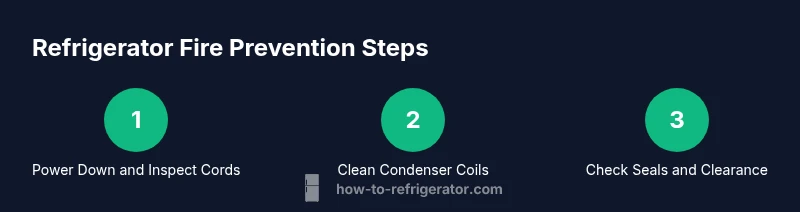
- 1
Power Down Safely
Unplug the refrigerator from its wall outlet and, if safe, switch off the dedicated circuit at the panel. This prevents any live electrical current while you inspect components. Do not touch damaged cords with bare hands.
Tip: If you smell burning or see visible damage, stop and call a professional—do not proceed. - 2
Inspect Cords and Outlets
Carefully check the power cord for cracks, exposed wires, or scorch marks. Inspect the outlet for heat discoloration or buzzing sounds. Replace damaged cords and avoid using damaged outlets or extension cords.
Tip: Use a non-contact tester to confirm the outlet is de-energized before touching wires. - 3
Clean Condenser Coils
Identify whether coils are behind the grille at the bottom or behind the back panel. Use a soft brush and vacuum to remove dust and lint without bending coils. Clean coils allow the compressor to run efficiently and reduce heat buildup.
Tip: Do not use a metal brush that could snip wires; keep a gentle stroke. - 4
Check Door Seals and Air Clearance
Inspect door gaskets for cracks and ensure a tight seal; a poor seal forces the compressor to work harder. Maintain air clearance around the back and sides of the unit to promote sufficient cooling airflow.
Tip: If a dollar-bill test confirms a loose seal, replace the gasket promptly. - 5
Test Safety Features and Ventilation
Ensure the fridge’s safety features (if present) are functioning and the area around the unit remains well-ventilated. Keep flammable items away from the back panel and away from heat sources.
Tip: Avoid storing aerosols or solvents near the appliance. - 6
Restore Power and Monitor
Reconnect to power, set the breaker if needed, and monitor for abnormal noises, warmth, or smells during initial operation. Schedule seasonal checks to maintain safety over time.
Tip: Record findings and set reminders for future maintenance.
FAQ
What is the most common cause of refrigerator fires?
Electrical faults and overheating account for many refrigerator fires, especially when cords or outlets are damaged or when the unit runs hotter due to dirty coils or blocked ventilation.
Electrical faults and overheating are the main culprits, especially with damaged cords or blocked ventilation.
Can I use a power strip for my fridge?
Using a power strip with a refrigerator is not recommended. Fridges require a dedicated, grounded outlet to handle startup surges and prevent overheating.
Avoid power strips; use a dedicated outlet.
Is it safe to clean coils with a vacuum?
Yes, using a vacuum with a soft brush attachment is safe when the appliance is unplugged. Keep the nozzle steady to avoid bending components.
You can vacuum the coils once the fridge is unplugged.
Should I unplug the fridge before cleaning coils?
Always unplug before cleaning coils or performing any internal checks to avoid electrical shock or short circuits.
Yes, unplug first.
When should I call a professional?
If you notice burning smells, visible damage, or repeated breaker trips, stop work and call a licensed electrician or appliance technician.
If you smell burning or see damage, call a pro.
How often should I perform preventive maintenance?
Perform basic checks every few months and schedule a full safety review at least once a year to keep risks low.
Do quick checks every few months and a yearly safety review.
Watch Video
Top Takeaways
- Inspect electrical components regularly
- Clean condenser coils to reduce heat stress
- Use a dedicated circuit, not a power strip
- Ensure door seals are tight and vents are clear
- Document findings and schedule regular maintenance