Do You Need Space Around a Refrigerator? A Homeowner's Guide
Learn why proper clearance around a refrigerator matters, how to position it for airflow and energy efficiency, and a practical checklist homeowners can use to maintain safe, quiet operation in 2026.


Yes. Adequate clearance around a refrigerator is essential for airflow, heat dissipation, and door clearance. Do you need space around a refrigerator? The general rule is to leave several inches of space on the sides and back and avoid enclosing the unit in tight cabinets. Always consult the owner's manual for your model’s exact requirements.
Why proper clearance matters for refrigerators
Clearance around a refrigerator isn't just about aesthetics; it's essential for performance and longevity. If you're asking do you need space around a refrigerator, the short answer is yes. Adequate airflow around the condenser coils helps maintain consistent temperatures, reduces compressor workload, and minimizes frost buildup. Space also ensures door clearance, prevents rubbing against walls or cabinets, and reduces heat transfer to nearby cabinetry. In 2026, our observations and homeowner reports indicate that problems often trace back to poor ventilation—dusty coils, hot spots behind the unit, or tight gaps that trap warm air. Placement near heat sources like the stove or dishwasher can raise energy use and stress the cooling system. For kitchens with limited space, plan the fridge’s location with ventilation openings in mind, and verify clearances whenever you remodel. Remember: the measurements you take today become the baseline for future maintenance and energy efficiency.
How much space is recommended (without model-specific numbers)
Manufacturers publish model-specific clearance requirements; there is no universal inches figure. The core idea is to keep enough space on the sides, back, and top to allow air to circulate around the condenser and compressor. Avoid building in the fridge behind solid cabinetry without grills or vents—the airflow path should remain open. If space is tight, look for ventilated panels, adjustable shelves, or rear gaps that stay clear of wires and hoses. Side-by-side and French-door models often need extra room at the sides to ensure doors fully swing open without hitting adjacent counters. Always treat the owner's manual as the final authority; it will specify safe clearance tailored to your exact model and installation scenario. If you rent or live in a compact apartment, you may opt for a smaller or front-venting unit and plan for a modest gap behind it to facilitate airflow.
Placement considerations for energy efficiency
Space around the refrigerator directly influences energy efficiency. When air can flow freely around the condenser coils, the unit doesn't have to work as hard to reject heat. Position the fridge away from heat-producing appliances and direct sunlight; keep it on a level floor to prevent vibration. Avoid sealed alcoves where warm room air cannot escape; a small air gap at the back helps convection carry heat away. The kitchen layout should enable access to the fridge and avoid blocking the intake or exhaust vents. In open-plan homes, consider heat sources in adjacent rooms and how they might raise ambient temperatures near the appliance. All these factors contribute to steadier interior temperatures, lower energy bills, and longer appliance life.
Common installation mistakes and how to avoid them
Below are frequent missteps homeowners make when setting up a fridge. Enclosing the fridge behind closed cabinetry without ventilation grills is a common error. Pushing the unit tight against the wall without considering back clearance blocks heat dissipation. Forgetting to account for door swing interference with nearby cabinetry or islands leads to frequent door strikes. Failing to keep the coils clean reduces cooling efficiency and increases noise. Finally, ignoring manufacturer recommendations and attempting to conceal the fridge in a way that violates airflow guidelines can shorten the appliance’s life. To avoid these issues, map out a simple floor plan, verify all recommended clearances, and test the setup with the doors open and closed before loading groceries.
Built-in, under-counter, and closet-style installations
Built-in refrigeration requires careful integration with the surrounding cabinetry and ventilation. Under-counter and closet-style installations may seem compact, but without a dedicated vent or breathable gap behind the unit, heat will accumulate and energy use will rise. In these scenarios, a visible dead space behind the appliance, or a designed vent panel, can be crucial. If a closet-style enclosure is used, ensure there is adequate airflow and an access panel so maintenance can be performed without disassembly. Always verify that the front of the refrigerator remains clear of obstructions and that doors swing fully within the available space. If you must place a fridge in unusual configurations, consult the manufacturer’s guidelines to adapt the ventilation plan accordingly.
Seasonal checks and maintenance
Perform a quick airflow check every season. Dust and debris that accumulate around the rear coils impede heat rejection. Use a vacuum with a soft brush to remove dust from the coils and behind the kick plate. Inspect door seals for wear or gaps; a poor seal forces the compressor to work harder. Keep the area around the fridge free from clutter that could trap heat or block airflow. If you notice unusual heat buildup behind or around the appliance during operation, revisit the clearance plan and adjust as needed. Document any changes you make so you can monitor long-term performance.
Troubleshooting: symptoms of poor clearance
Symptoms of insufficient clearance include unusually warm air near the back of the appliance, increased energy bills, frequent cycling of the compressor, and frost buildup along the rear wall. If you notice any of these signs, recheck the ventilation gap, clean the condenser coils, and ensure the fridge is positioned away from heat sources. In some cases, moving the unit a few inches can restore proper airflow and quiet operation. If issues persist after rechecking clearances, consult a professional technician.
Quick-start checklist
Use this brief checklist to quickly evaluate and adjust fridge clearance: 1) Measure gaps on all sides and the top; 2) Confirm vents behind the unit are unobstructed; 3) Check that cabinet doors or drawers do not collide with the fridge; 4) Inspect coils and clean if dusty; 5) Re-check interior temperatures after a few hours; 6) Record measurements for future reference.
Authoritative sources
- Energy.gov: General guidance on energy efficiency and appliances (https://www.energy.gov).
- EPA: Green Living and energy-saving guidance (https://www.epa.gov).
- OSHA: Workplace safety guidelines (https://www.osha.gov).
Authoritative sources
Tools & Materials
- Tape measure(Long enough to measure side, back, and top gaps; 1.5-2 meters is ideal.)
- Owner's manual or model number(Keep handy to verify manufacturer clearance.)
- Pencil and notepad(Document measurements and layout notes.)
- Flashlight or headlamp(Helpful for inspecting back coils and vents in dim spaces.)
- Ventilated spacer or rack(Optional to create a gap behind the fridge if space is tight.)
- Vacuum with brush attachment(Useful for cleaning coils and vents during maintenance.)
Steps
Estimated time: 25-40 minutes
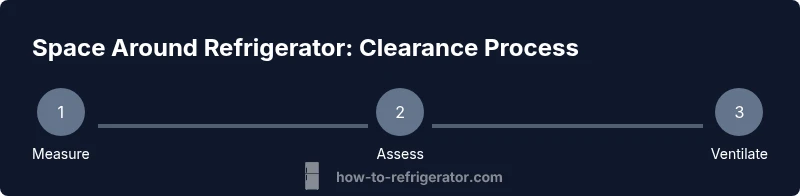
- 1
Measure current clearance
Place the fridge away from walls and cabinets enough to access the back and sides. Use a tape measure to record gaps at the back, sides, and top. Note any contact points or tight spots and photograph the setup for reference.
Tip: Mark each measured gap with painter's tape for clarity. - 2
Assess enclosure viability
Inspect whether the fridge sits behind panels or inside a cabinet without ventilation. Check for grills or vents and confirm they are not blocked. If airflow is restricted, plan a simple vent panel or move the unit slightly.
Tip: Open nearby cabinet doors to verify airflow before finalizing placement. - 3
Create a ventilation gap
If space is tight, install a ventilated spacer behind the fridge or reposition to create a natural channel for air to move. Ensure the spacer does not press on coils or hoses. Maintain a visible air path for heat to escape.
Tip: Avoid sealing the back; keep a clear channel for convection. - 4
Clean coils and vents
Unplug the unit and vacuum the condenser coils and vents regularly to maintain efficient heat rejection. Dust buildup makes the compressor work harder and raises energy use. Do a quick coil clean when you notice reduced cooling efficiency.
Tip: Do not use metal tools that could damage fins. - 5
Check door swing and clearance
Open each door fully and verify there’s no contact with walls, cabinetry, or island edges. If doors rub, adjust hinges or add spacers as needed. Ensure the door seals are not distorted by proximity to obstacles.
Tip: Test with a full grocery load to ensure clearance under load. - 6
Observe airflow after setup
Plug in the fridge and monitor heat discharge from the rear for a few hours. If the back feels excessively warm or you hear the compressor running continuously, revisit the clearance and ventilation plan.
Tip: Use a thermometer to track interior temperatures for a day. - 7
Document final measurements
Record all gaps and the final placement in a notebook or photo log. This baseline helps with future remodels or seasonal maintenance checks. Update the log if you rearrange or add ventilation.
Tip: Keep the log accessible near the appliance.
FAQ
Do built-in refrigerators require more clearance than freestanding models?
Built-in units often rely on ventilation from surrounding cabinetry, so adequate airflow is crucial. Refer to the installation manual for model-specific requirements and avoid blocking vents with cabinetry. If uncertain, consult a technician or the manufacturer.
Built-in fridges usually need more airflow than freestanding ones; always check the manual for model-specific venting needs.
Can insufficient clearance cause overheating?
Yes. Limited space restricts heat dissipation, causing the compressor to work harder, increasing energy use and potentially shortening the appliance’s life. Ensure vents are clear and there’s adequate space around the unit.
Yes. Not enough clearance can make the fridge overheat and waste energy.
Is clearance the same for all fridge types?
No. Different models (top-freezer, side-by-side, French-door) have different ventilation and door-swing requirements. Always follow the exact guidelines in the owner's manual for your specific model.
No—check your model's manual for exact clearance needs.
What should I do if space is truly tight?
Prioritize ventilation over aesthetics. Use ventilated panels behind the unit or relocate it to a position with better airflow. If relocation isn’t possible, consult a professional about safe installation alternatives.
If space is tight, improve airflow with vents or see a pro for safe options.
How often should I check fridge clearance?
Periodically inspect clearance during renovations or seasonal maintenance. Quick checks every few months help prevent heat buildup and ensure efficient operation.
Do a quick clearance check every few months.
Watch Video
Top Takeaways
- Measure space on all sides and back before install.
- Do not enclose the fridge without ventilation.
- Consult the model’s manual for exact clearance.
- Regularly dust coils and check seals for best efficiency.