Does Fridge Need Space on the Sides? A Homeowner Guide
Discover why fridge clearance matters, how to measure side and back space, and practical steps to optimize airflow for efficient cooling. How To Refrigerator provides practical, homeowner-friendly guidance.


Yes. A fridge should have some space on the sides and back for airflow and heat dissipation. Follow your model’s installation guide for exact clearances to ensure optimal cooling and energy efficiency. Avoid cramming the unit against walls or cabinets, and perform periodic checks after moves or flooring changes.
Does fridge need space on the sides
The question you’re asking—does fridge need space on the sides—has a straightforward answer: yes, some space is required for proper ventilation. The How To Refrigerator team emphasizes that ventilation gaps on the sides, back, and around the doors support consistent cooling and reduce wear on the compressor. Space also helps prevent heat buildup near seals, which can lead to air leakage and inefficiency. In practical terms, avoid forcing the fridge into a tight nook where panels contact walls or cabinetry. Instead, plan a modest, repeatable gap that remains stable over time. Regularly verify that the area remains clear after moves, renovations, or heavy foot traffic around the kitchen. Creating a simple, repeatable spacing ritual protects components and improves overall performance.
Why side clearance matters
Airflow is the lifeblood of a refrigerator. When the sides are blocked, the compressor has to work harder to maintain temperatures, increasing energy use and wear over time. Clear space allows air to circulate around the condenser coils and cooling fins, keeping temperatures steady and reducing frost buildup. Proper clearance also minimizes the chance of the door seals catching on adjacent cabinetry, which can compromise a seal and cause temperature fluctuations or leaks. In short, adequate side clearance helps the appliance run efficiently and quietly.
How much space is recommended by manufacturers
Manufacturers publish model-specific clearance requirements, usually in the installation section of the owner’s manual. If you can’t locate exact numbers, the general rule is to leave space for airflow around the cabinet and make sure the back isn’t pressed against the wall. For built-ins or tight kitchens, consider vented panels or trimming that preserves airflow while maintaining a clean look. Always cross-check with the manual and the appliance’s official website for any caveats about side clearance, door swing, and anchoring.
Sizing up your kitchen: measuring and planning
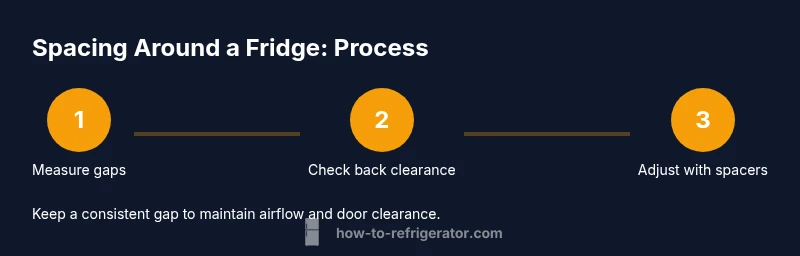
Begin by removing items from the sides and above the fridge and then measure the gaps with a tape measure on both sides and behind the unit. Record the distances and compare them to the manufacturer’s guidance. Check that floor level is even; a tilt can affect door alignment and seal efficiency. Mark the ideal clearance with painter’s tape to keep a visual reminder. If there’s a need to create space, use non-obstructive spacers or foam blocks behind the unit rather than forcing the fridge away from the wall. Planning ahead reduces the need for later repositioning.
The role of door swing and anti-tip clearance
Fully open doors require unobstructed space in front and a reasonable side clearance so the door doesn’t hit cabinetry. If gaps are tight, door overhang can bind or rub, stressing hinges and seals over time. Where necessary, install door stops or adjust hinge alignment per the manual. Ensuring comfortable door swing enhances usability and reduces the temptation to wrench doors open, which can damage seals or flooring.
Built-in vs freestanding: different constraints
Freestanding fridges usually benefit from generous side and back clearance, while built-ins rely more on front ventilation and may have tighter gaps on the sides. If you’re integrating a fridge into cabinetry, verify compliance with the manufacturer’s recommendations and any trim kit guidelines. Even in built-ins, avoid sealing the sides completely unless the manual explicitly allows it, as restricted airflow can shorten service life and increase energy use.
Measuring and adjusting your space: a practical checklist
- Read the manual for exact clearances and vent locations. Tip: If the manual is missing, search the model number on the manufacturer’s site.
- Use a tape measure to confirm side and back gaps, and note any high spots or uneven flooring.
- Check door swing clearance in both directions and verify that handles don’t contact nearby cabinets.
- If gaps are insufficient, place non-permanent spacers behind the fridge to restore a uniform gap while preserving a stable setup.
- After adjustments, recheck temperature stability over 2–4 hours and verify seals with a simple test.
Practical setup tips for tight kitchens
In kitchens with limited space, consider a few practical strategies: install vented panels behind the unit, add reclining spacers to maintain back clearance, or rework adjacent cabinetry to provide a respectful air channel. Avoid placing the fridge flush against a wall or cabinet without an obvious ventilation path. Small adjustments can yield meaningful improvements in cooling consistency and energy use. Regularly inspect vents and seals to catch issues early.
Common myths and mistakes
One common myth is that any extra space is wasteful. In reality, too little clearance causes overheating and uneven cooling, while excessive gaps can waste energy and invite dust or pests. Another mistake is assuming a perfectly level floor is enough; floors can be uneven, and fridge feet should be adjusted to correct tilt. Finally, never block rear vents with stored items; airflow needs a clear path to dissipate heat.
Maintenance for consistent cooling
Routine maintenance reinforces the benefits of proper spacing. Clean the condenser coils as needed, keep the area around the back free of dust, and check door gaskets for integrity. Ensure there’s no debris in vents and that airflow channels remain unobstructed. With correct space and regular upkeep, your fridge will maintain stable temperatures and operate more efficiently over time.
Troubleshooting space-related cooling issues
If temperatures drift or efficiency drops, reassess the clearance. A too-narrow space can mimic a poor seal or clogged vents; relocate items that block airflow and recheck the gaps. If problems persist, consider professional service to inspect the compressor and coils. In many cases, a simple repositioning and vent clearing restores performance.
Authority sources
- https://www.energy.gov
- https://www.epa.gov
- https://www.nist.gov
Does fridge need space on the sides (recap)?
Always verify side and back clearances per your model’s guidance, and keep the area around the back clean to support airflow. The How To Refrigerator team recommends treating space as a necessary maintenance parameter, not an afterthought. Regular checks after moving the fridge or changing the kitchen layout help preserve cooling efficiency.
Tools & Materials
- Measuring tape(Prefer a 25 ft (7.6 m) tape for easy measurement around corners)
- Level(Bubble or digital level for front-to-back tilt)
- Pencil and notepad(Record measurements and notes)
- Spacers or foam blocks(Non-permanent shims to establish a consistent gap)
- Painter’s tape(Mark planned gaps without leaving residue)
- Owner’s manual or model sheet(The most authoritative clearance values)
Steps
Estimated time: 60-90 minutes
- 1
Read the model’s clearance guidelines
Locate the owner’s manual or installation sheet and note recommended side and back clearances. This ensures you measure against factory standards rather than generic rules.
Tip: If the manual is hard to find, search the model number on the manufacturer’s site. - 2
Measure current gaps
Use a tape measure to determine the distance from the fridge to walls on both sides and the wall behind it. Record the numbers for comparison.
Tip: Include door swing area and handle clearance in your measurements. - 3
Check level and stability
Place a level on top of the fridge to ensure it isn’t tilted forward or backward, which can affect seals and door alignment.
Tip: If uneven, adjust the front feet or use shims under the legs. - 4
Plan adjustments with spacers
If gaps are too small, plan to insert spacers or foam pads behind the fridge to maintain a uniform gap without forcing it away from the wall.
Tip: Avoid rigid blocks that press on the back or sides. - 5
Reposition and recheck door clearance
Slide the unit back into position and reopen doors to verify full swing without contact.
Tip: Move slowly to avoid damaging flooring. - 6
Test cooling performance
After repositioning, allow the fridge to run for 2–4 hours and monitor internal temperature for stability.
Tip: Use a thermometer if your fridge doesn’t display accurate temps.
FAQ
Does a fridge need space on the sides?
Yes; most models require some side clearance for airflow and proper door operation. Always consult the owner's manual for exact numbers.
Yes, most fridges need some side clearance for airflow and door operation; check your manual for exact measurements.
How much space should be left at the back?
Back clearance is typically the most important for airflow. Leave enough room for venting; refer to the manual for exact distances.
Back clearance is crucial for airflow; keep enough space per the manual.
What happens if there’s no space?
Blocking airflow can lead to overheating, higher energy use, and uneven cooling. It may shorten the fridge’s life and cause temperature swings.
No space can cause overheating and uneven cooling, increasing energy use and wear.
Can I push a fridge into a corner?
Pushing into a corner is generally not recommended; it restricts airflow and complicates door operation. Use at least the manual’s recommended clearance.
Avoid pushing into corners; it restricts airflow and door movement.
How can I improve air flow if space is tight?
Use vented panels or gaps around the back, and minimize items blocking air pathways. If needed, slightly relocate cabinets to create a proper channel.
Improve airflow by venting and keeping pathways clear; small cabinet tweaks can help.
Watch Video
Top Takeaways
- Check the model’s exact clearance guidelines.
- Measure gaps on all sides and behind the unit.
- Keep back clearance clear for airflow and heat dissipation.
- Avoid tight corners or direct contact with cabinets.
- Re-test cooling after any repositioning.