Do Refrigerators Need Water to Cool? What Homeowners Should Know
Explore whether refrigerators require a water line to cool. This evidence-based guide covers cooling basics, ice maker water lines, maintenance, and practical homeowner tips for 2026.


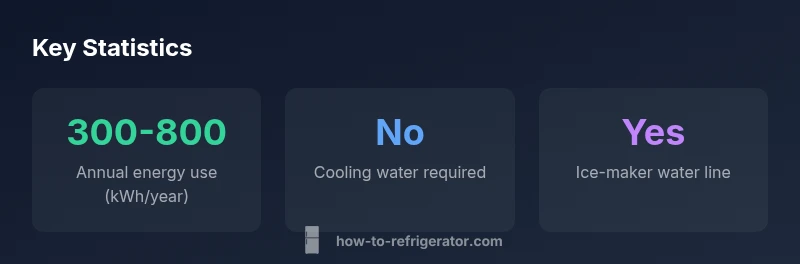
Do refrigerators need water to cool? Not in the traditional sense. The cooling process relies on a sealed refrigerant cycle powered by a compressor, not water. Water is only required for certain features like ice makers or water dispensers. If your model has no ice maker, a separate water line is not needed for cooling.
Do refrigerators need water to cool?
In most homes, the short answer is no. Refrigeration relies on a closed-loop refrigerant cycle that moves heat from the interior to the exterior of the appliance. A compressor compresses the refrigerant, which travels through coils and a phase-change process to absorb heat. Water does not participate in this cooling loop, so you cannot use water to “cool” the fridge directly. The phrase do refrigerator need water to cool can pop up in consumer FAQs, but the physics remains clear: the essential cooling happens inside the sealed system. For many households, this means no plumbing work is required for the fridge to function as a cooler, regardless of ambient temperature, kitchen layout, or energy efficiency class. In terms of performance, the absence of a water line does not imply weaker cooling; it simply means water access is not used for cooling.
How cooling actually works inside a typical fridge
A modern refrigerator uses a compressor, evaporator, condenser, expansion device, and refrigerant. The evaporator absorbs heat from the fridge interior, and the condenser releases that heat to the surrounding environment. Insulation minimizes heat gain, and fans circulate air. The efficiency of this system depends on proper sealing, condenser cleanliness, and compressor health. While water is not part of the cooling loop, it can indirectly affect performance if the appliance’s exterior or interior humidity changes or if frost buildup occurs due to improper air circulation. Regular maintenance—like cleaning coils and checking seals—helps maintain consistent cooling performance year after year.
When water is part of the equation: ice makers and dispensers
If your refrigerator includes an ice maker or a water dispenser, a water line is connected to a dedicated inlet valve. The water line supplies cold water to ice molds or the dispensing mechanism, separate from the cooling system. The presence of a water line affects installation requirements, potential leak risks, and long-term maintenance. If you don’t use the ice maker or dispenser, you can often disable the water feature or simply ignore the valve. Water line considerations are a major reason homeowners ask do refrigerator need water to cool; the answer remains that water is for ice and drinking water, not essential cooling.
Common myths about water and fridge cooling
Myth: Water cools the fridge. Reality: The refrigerant cycle does the cooling, not the water supply. Myth: A water line improves cooling efficiency. Reality: It has no direct impact on cooling performance; it only enables ice and water features. Myth: Ice makers require more space. Reality: Most models fit standard footprints, but installation requires a supply line and proper drainage. Myth: You must replace hoses annually. Reality: Hoses last several years with proper maintenance; replace if cracked or leaking.
Should you install a water line? Practical factors
Consider whether you actually need ice or a water dispenser. Adding a water line involves cost, potential leaks, and a slightly higher installation complexity. If you frequently use ice or filtered water, the benefits may justify the setup. Otherwise, select a model based on cooling performance, energy efficiency, and storage capacity. Check warranty terms: some manufacturers have specific guidelines about water line installations and ice-maker components. If you’re unsure, consult a licensed plumber and verify compatibility with your appliance.
Maintenance tips for water lines and ice makers
Regular maintenance reduces leaks and ensures reliable ice production. Inspect the water line for signs of wear, cracks, or corrosion at least biannually. Replace any flexible stainless-steel hoses every 5-7 years or as recommended by the manufacturer. If your dispenser or ice maker slows or stops, check the water supply valve, filter status (if applicable), and water pressure. Keep the area under the fridge dry to prevent mold and corrosion, and ensure proper drainage for any condensate.
Practical homeowner checklist: water and cooling considerations
- Confirm whether your model includes an ice maker or water dispenser.
- If not, you can skip installing a water line.
- If yes, ensure a dedicated cold-water supply with a shutoff valve.
- Inspect door seals and coils regularly to maintain cooling efficiency.
- Schedule professional service if you notice frost buildup, unusual noises, or leaks.
- Review the user manual for manufacturer recommendations on water connections and warranty coverage.
Water and cooling dependencies across common fridge types
| Model Type | Water Dependency for Cooling | Ice Maker Availability | Typical Lifespan |
|---|---|---|---|
| Standard refrigerator | No water required to cool | Ice maker: optional | 10-15 years |
| Ice-maker equipped model | Cooling does not use water | Ice maker present | 10-15 years |
| Compact/counter-depth | No water needed for cooling | Ice maker option varies | 10-14 years |
FAQ
Do refrigerators cool without water?
Yes. Refrigerators rely on a closed refrigerant cycle to remove heat. Water is not part of the cooling process. Ice makers and dispensers may use water, but cooling itself does not depend on it.
Yes. Cooling comes from the refrigerant cycle, not water.
When do I need a water line?
A water line is needed only if you want an ice maker or a water dispenser. If you don’t use these features, a water line isn’t required for cooling.
Only if you want ice or water from the fridge.
Can connecting a water line cause damage if not needed?
Installing or using a water line incorrectly can lead to leaks or water damage. Use a qualified professional and follow the manufacturer’s guidelines.
Leaks can happen if you don’t install it correctly.
Is there an energy difference with ice makers?
Ice makers can add a small amount of energy use due to the additional mechanisms, but the impact is typically modest compared with overall fridge energy use.
Ice makers use a little more energy, but it’s usually small.
What maintenance matters for water lines?
Check hoses for cracks, replace filters if the dispenser uses one, and ensure the shutoff valve remains tight to prevent leaks.
Watch for leaks and replace worn hoses.
Do compact fridges still need water for cooling?
No. Compact models follow the same cooling principle; water is not required for cooling.
No, cooling doesn’t require water even in compact models.
“In most households, the cooling mechanism operates independently of any water supply; water is reserved for ice and dispensing, not the cooling process.”
Top Takeaways
- Most refrigerators do not need a water line for cooling.
- Water is used only for ice makers and dispensers, not cooling.
- Ice-maker availability changes installation requirements and potential leaks.
- Regular maintenance supports consistent cooling performance.
- Choose features based on your ice/water needs and warranty terms.