Can You Transport a Refrigerator on Its Side? A Practical Guide
Learn whether you can move a refrigerator on its side, the risks involved, and the safest step-by-step approach for homeowners.


Transporting a refrigerator on its side is generally discouraged; upright transport is safer for the compressor, seals, and coolant. If you must move it on its side, unplug, secure doors, remove shelves, protect edges, and plan to let the unit stand upright for a period before powering on after the move.
Can You Transport a Refrigerator on Its Side?
The question can you transport a refrigerator on its side has a straightforward answer: it is usually not recommended. The compressor and the lubricant inside rely on gravity to circulate properly when the appliance is upright. Laying a fridge on its side can cause oil to move away from the compressor, which may affect startup performance, cause unusual noises, or increase wear over time. For most homeowners, upright transport is the safest and most reliable method. If you encounter a doorway or stairway that makes upright transport impractical, plan carefully, secure all moving parts, and consult the appliance manual. As the How To Refrigerator team notes, model-specific guidance matters; some units tolerate brief side movement better than others, but this is not the default expectation.
Why orientation matters for fridge mechanics
Inside every refrigerator the compressor relies on lubrication and gravity to keep oil in the right place. When the appliance is laid on its side, oil can move away from the compressor, increasing friction and risking startup problems. Seals and gaskets can shift or deform, and the coolant may not circulate normally when the fridge restarts. The risk is not identical across brands or models; some units have protective ramps or alternative lubrication paths. Because the consequences may involve costly repair or replaced parts, the default approach should be upright transport whenever feasible. If there is no alternative, proceed with extreme care and plan for a longer settling period after moving.
Preparing if side transport is unavoidable: risk assessment
If you must move a refrigerator on its side, conduct a quick risk assessment first. Evaluate the route for door clearance, stairs, and floor conditions. If possible, transform the move into a short, controlled side transfer rather than a long drag. Secure the doors against swinging, remove loose items from shelves, and protect the exterior with moving blankets. Document the appliance’s orientation before lifting so you can return it to upright orientation with minimal disruption. Remember that the simplest, least risky option is to relocate using upright transport whenever it’s feasible.
Pre-move checklist
Before any moving attempt, create a small pre-move checklist: measure doorway widths, clear a clear path, and gather essential equipment (appliance dolly, moving blankets, straps, gloves). Unplug the unit and, if accessible, disable the defrost cycle. Remove shelves and drawers to reduce weight and movement inside the cabinet, and empty all food to prevent spills. If there is a water line connected, disconnect at the valve and cap the line to prevent leaks. Keep the fridge oriented upright as much as possible during lifting to minimize weight shifts.
Using the right tools and secure setup
Equip yourself with a sturdy appliance dolly rated for refrigerators, heavy-duty moving blankets, and ratchet straps. Place blankets around the fridge to cushion edges, then secure the unit to the dolly with straps. Keep doors taped or strapped closed, avoiding strong adhesives that could leave residue. If you’re not comfortable handling a large appliance, invite a helper and communicate the plan clearly. The goal is to minimize shifting of heavy components and maintain a controlled, slow pace during the move.
Move with care: orientation control during shift
With a team of two or three, push the dolly along the planned path at a controlled pace. Maintain as level a posture as possible, avoiding sudden tilts or jerky movements. If you must tilt, do so only slightly and steadily—never twist the appliance to fit a corner. Watch for floor irregularities, door frames, or stair landings, and stop if the fridge binds or you hear unusual noises. Keep hands dry and grips secure to prevent slips. Plan rest breaks if the route is longer than a few minutes.
After the move: settling and tests
Stand the fridge upright as soon as you reach the destination and allow it to settle before power is connected. Reconnect the power and wait for the compressor to start; listen for odd noises and inspect for any signs of a leak around seals or drainage lines. Reinstall shelves and drawers, then monitor temperatures for a few hours to ensure even cooling. If cooling performance is off or you notice leakage, contact a professional for a diagnostic. Patience after moving helps prevent premature failures.
Alternatives to side transport: when to call a pro
If you’re facing a tight doorway, long distance, or a heavy unit, professional movers specializing in large appliances can provide crating, palletizing, and equipment that minimizes risk. A pro can adapt the transport strategy to your space and ensure the fridge ends up upright at the destination. Always review warranty terms and service guidelines before relocation to avoid voiding coverage.
Common mistakes and how to avoid them
- Not confirming door clearance before starting
- Failing to secure doors and internal shelves
- Dragging or sliding the fridge across rough surfaces
- Moving the unit excessively on its side without a plan
- Powering on too soon after relocation
- Skipping the settling period before use
Tools & Materials
- Moving dolly (appliance dolly)(Heavy-duty wheel dolly rated for refrigerators; ensure it handles the weight and size of your unit.)
- Moving blankets(Protects edges and doors from impact during transport.)
- Ratchet straps(Secure the fridge to the dolly; use at least two straps in diagonal configuration.)
- Gloves(Grip and protect hands during lifting and maneuvering.)
- Screwdriver/hex key(Useful for removing shelves if easy to detach.)
- Tape(Optional for securing doors if wrapping with blankets isn’t sufficient.)
- Helper(s)(At least one extra person to guide and support the move.)
Steps
Estimated time: 60-90 minutes
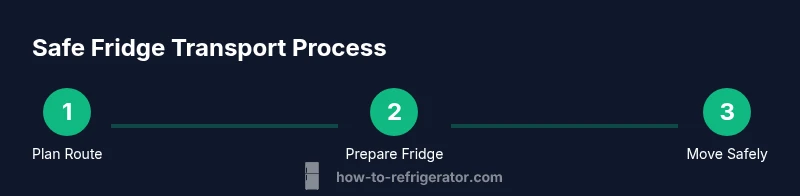
- 1
Assess and plan
Evaluate the route, measure doorways, and determine if upright transport is possible. Confirm you have enough helpers and space to perform the move safely. Create a clear plan and communicate it to everyone involved.
Tip: Take a breath, assign roles, and confirm each person’s move position before starting. - 2
Unload and prepare fridge
Unplug the unit, remove all shelves and drawers to reduce weight and prevent internal damage. Empty the contents to avoid spills and make the fridge lighter for the move.
Tip: Better to lose a few shelves than to risk internal damage during transport. - 3
Secure doors and accessories
Close and secure doors with tape or straps to prevent swinging. Wrap the exterior with moving blankets to protect finishes.
Tip: Don’t rely on door friction alone; secure doors explicitly. - 4
Position dolly and attach straps
Place the dolly under the fridge or alongside it if width is tight. Attach ratchet straps diagonally to hold the fridge to the dolly.
Tip: Check strap tension—enough to hold but not to crush seals. - 5
Move carefully to destination
Slide the fridge with the dolly along the planned route, keeping movement steady and avoiding sharp turns or slopes.
Tip: Move slowly; quick actions invite slips or tipping. - 6
Set upright and rest
Reach final location and stand the unit upright. Do not power on immediately; allow it to settle for a while before reconnecting power.
Tip: Patience after moving prevents startup stress. - 7
Reconnect and test
Plug the fridge back in, wait for the compressor to cycle, and verify cooling across shelves. Reinstall any removed parts.
Tip: Monitor temperatures for a few hours to confirm even cooling.
FAQ
Is it safe to transport a refrigerator on its side?
Generally, upright transport is the safest option. Side transport should be avoided unless there is no alternative and you take careful precautions.
Usually not safe; upright transport is best. If you must, secure the unit and move slowly.
What should I do after moving a fridge on its side?
Stand the fridge upright as soon as you reach the destination and let it settle before powering on. Check seals and listen for odd noises.
Stand it up and wait awhile before powering on, then inspect for leaks and noises.
Can I move a fridge on its side for a short distance?
If absolutely necessary, keep tilting to a minimum, protect the coils, and secure doors. Short distance still carries risk.
If you have to, keep tilt shallow and secure everything well.
Should I hire a professional to move a fridge?
For large or heavy units or tight spaces, a professional mover with appliance equipment is advisable.
If you’re unsure or don’t have the right gear, hire a professional.
What if the fridge won’t start after the move?
If it won’t start after settling, unplug and inspect for obvious issues. If problems persist, contact a technician.
If it won’t start after settling, check connections and call for help if needed.
Top Takeaways
- Plan upright transport when possible
- Secure doors and internal components during move
- Let the fridge settle upright after moving before powering on
- Check for leaks or unusual noises before use
- Consider professional help for tight spaces or heavy units