Can You Run a Propane Refrigerator While Driving? Practical Guidance
Learn whether you can safely operate a propane fridge on the road, plus safer alternatives, maintenance steps, and expert-tested tips for RV owners.


You should generally not run a propane refrigerator while the vehicle is in motion. Propane appliances require stable, vented operation and risk gas leaks, backdraft, or carbon monoxide when the RV moves. The safe approach is to power the fridge from the vehicle battery or shore power while driving, and reserve propane operation for stationary use with proper ventilation.
Why driving with propane refrigeration is generally discouraged
For safety, you should avoid running a propane refrigerator while the RV is in motion. Propane appliances are designed to operate in a stable, vented environment, and vehicle movement can increase the risk of gas leaks, backdraft, and carbon monoxide entering living spaces. The How To Refrigerator Team emphasizes that a moving vehicle makes gas lines flex and fittings strain, which can create unsafe conditions. If you must travel with the fridge running on propane, you should have a trained technician confirm the installation and assure proper ventilation and detector placement. In most cases, manufacturers recommend powering the fridge from the vehicle battery (12V) or from shore power while in transit and reserving propane operation for stationary use. This approach minimizes fire and explosion risks and simplifies diagnostic checks if something goes wrong on the road.
How propane refrigeration systems work in RVs
RV propane refrigerators run on a three-stage process: a burner heats a generator inside the unit, the heat drives a propane-based refrigeration cycle, and a heat exchanger propels the cold air through the interior compartments. Propane operation requires proper ventilation to avoid gas buildup and a functioning CO detector for safety. When the unit is installed, it relies on the vehicle's fuel system and a dedicated venting path that exits outside the coach. Because the refrigerator depends on a stable flame and steady venting, movement or jostling can disturb flame stability and misalign gas fittings, which is why many manufacturers design for stationary operation or parking mode rather than driving.
Safety risks and practical guidelines for on-the-road use
Gas leaks, backdraft scenarios, and carbon monoxide exposure are real hazards if a propane fridge runs during driving. In addition, the fridge's venting paths can become partially obstructed by road debris or door seals that rub during motion. The US safety framework and RV industry best practices advocate reducing propane usage on the move and ensuring detectors are calibrated. How To Refrigerator Analysis, 2026, underscores that staying off propane while driving lowers risk and simplifies troubleshooting later. If the fridge must be used on propane temporarily, keep all interior doors closed, maintain ventilation, and never sleep with doors tightly sealed around the fridge area. Always have a fire extinguisher rated for gas fires accessible.
Safer alternatives for driving scenarios
- Power from the vehicle battery (12V) or a shore power connection while in motion or parked briefly; this avoids flame ignition near occupants.
- If you must use propane on the road for a short time, ensure the RV is stationary and well-ventilated, with all doors open and detectors functioning.
- Use a purpose-built RV refrigerator that is designed for on-the-road operation, or switch to a different appliance rated for mobile use.
- Regularly check the 12V wiring and fuses to prevent electrical faults that could cause overheating.
- Schedule professional propane system checks before long trips to ensure venting and gas lines are in good condition.
Practical steps to prep your fridge when parked
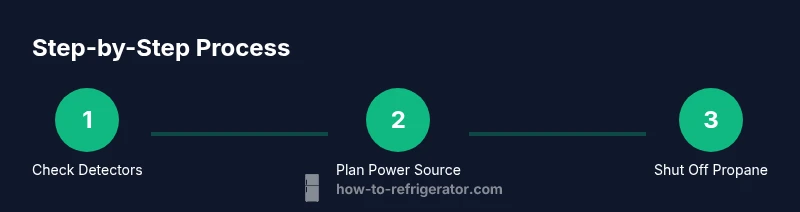
Before you park and run propane for extended periods, perform these checks: 1) Verify detectors: CO detectors and propane alarms are current and functional. 2) Inspect gas lines: Look for cracking, corrosion, or loose fittings. 3) Ventilation: Make sure exterior vents are clear of debris. 4) Battery readiness: Confirm battery is charged for 12V operation. 5) Cooling load: Pre-chill the fridge if possible to minimize propane usage. 6) Safety equipment: Keep a fire extinguisher accessible and learn how to shut off propane quickly in an emergency. These steps help ensure safe operation and reduce the chance of accidental ignition or gas leaks while camping or stationary use.
When to use propane on the road (practical scenarios)
There are rare cases where some operators may temporarily rely on propane during busy travel routes where the vehicle will be briefly stationary at a service area. In those moments, ensure doors and windows are open for ventilation, confirm detectors are active, and avoid long stretches of driving with propane active. The majority of route planning should favor 12V or shore power for continuous cooling while driving.
Common mistakes to avoid
Common mistakes include running propane during dynamic driving, ignoring CO detector maintenance, and failing to secure gas lines against movement. Another frequent error is not pre-chilling the fridge, which increases propane consumption and risk of flame instability. Regular maintenance and adherence to manufacturer guidelines prevent many road-use issues and keep occupants safer during transit.
Tools & Materials
- Gas detector or CO detector(Install near kitchen/garage area; test monthly)
- Screwdriver set (Phillips and flat-head)(Access panels and connections)
- Adjustable wrench(For gas line fittings and regulators)
- Multimeter (optional)(Electrical checks when using 12V system)
- Appropriate inverter/shore power setup (if using 12V to 120V)(Only if your system supports it and adheres to safety specs)
Steps
Estimated time: Total time: 45-60 minutes
- 1
Check safety detectors
Verify that all CO and propane detectors are functional before any use. A non-working detector is a critical safety risk, especially when propane is involved near living spaces.
Tip: Test detectors weekly; keep spare batteries on hand. - 2
Plan power source for transit
Decide whether to run on 12V or shore power during driving. Propane should be off to minimize risk; ensure the chosen power source is ready and within your vehicle’s electrical capacity.
Tip: If using 12V, confirm alternator capacity and battery health first. - 3
Shut off propane and ventilate
If you need to move with the fridge, shut off the propane valve and relight only when parked. Open exterior vents to prevent gas buildup during startup and driving.
Tip: Never drive with an active propane flame near confined spaces. - 4
Secure gas lines and appliance
Ensure all hoses and fittings are secured to minimize movement. Use clips or strap supports to prevent chafing or leaks while on bumpy roads.
Tip: Inspect lines for wear before long trips. - 5
Test cooling in safe mode
With propane off, power the fridge in 12V mode or shore power to confirm cooling performance reduces risk during transit.
Tip: Monitor interior temperature for the first 30 minutes after switching modes. - 6
Maintain ventilation during operation
If propane is used on-site, keep interior doors open briefly initially to vent any buildup and verify airflow through exterior vents.
Tip: Avoid blocked vents by keeping surroundings clear. - 7
Emergency shut-off familiarity
Know how to quickly shut off propane at the tank and appliance in an emergency. Practice the shut-off sequence when parked.
Tip: Keep shut-off tools accessible near the cooking area. - 8
Schedule professional checks
Have a qualified technician inspect gas lines, regulator, and venting before long trips.
Tip: Annual propane system checks reduce roadside risks.
FAQ
Is it safe to run a propane refrigerator while the RV is moving?
In general, no. Most manufacturers and safety guidelines discourage on-the-road propane use due to gas leak and ventilation risks. Use 12V or shore power during transit and reserve propane for stationary use.
Generally not safe to run propane fridges on the road. Use 12V or shore power while driving.
What should I do if I smell gas while driving?
Immediately pull over to a safe location, turn off the propane supply, ventilate the area if possible, and call for assistance. Do not operate electrical switches near the detected gas.
Pull over, shut off propane, ventilate, and seek help.
Can I convert my propane fridge to be used on the road?
Conversions should only be performed by qualified technicians and must comply with safety codes. Improper changes can introduce serious gas and fire hazards.
Conversions require a pro; don’t DIY major changes.
What power options are best for RV fridges while driving?
Use 12V DC power from your vehicle’s battery or shore power when parked. Reserve propane for stationary use to minimize risk during transit.
12V or shore power is best for driving; propane is for stationary use.
How often should I test my detectors?
Test CO and propane detectors monthly and after any air-system work. Replace batteries as recommended by the manufacturer.
Test monthly and after work; replace batteries regularly.
What maintenance should I perform before a long trip?
Have lines inspected, verify vent clearance, and ensure detectors are functioning. Confirm that your 12V system and fuses are in good condition.
Do line checks, vent checks, detector tests before trips.
Watch Video
Top Takeaways
- Avoid propane operation during transit.
- Power with 12V or shore power while driving.
- Inspect detectors and venting before use.
- Secure gas lines to prevent movement-related leaks.
- Consult a professional before trips.