Can You Put a Refrigerator in an Unheated Garage? A How To Refrigerator Guide
Explore whether a refrigerator can safely operate in an unheated garage, with practical steps, temperature considerations, and maintenance tips from How To Refrigerator.


Can you put refrigerator in an unheated garage? Yes, with the right garage-rated model and protective setup. This quick answer outlines when it works, the temperature realities, and the essential steps to test and maintain a fridge in a garage space. Follow the guide for safe electrical connections, condensation control, and periodic checks.
Can You Put a Refrigerator in an Unheated Garage? Practical Answer
So, can you put refrigerator in an unheated garage? The answer depends on the model and setup, but How To Refrigerator guidance shows it's feasible with garage-rated units that are designed to tolerate wider temperature swings. According to How To Refrigerator, choosing a fridge with a feature set geared for non-kitchen environments—such as solid doors, robust seals, and frost-free operation—will improve reliability in a garage. In many homes, a secondary or dedicated garage fridge is a smart way to increase storage for beverages, produce, and bulk items without crowding kitchen space. Yet it’s not a universal win: if your garage experiences extreme cold in winter or blistering heat in summer, only certain models perform well, and you must account for electrical protection, humidity, and condensation. This article is written for homeowners who want clear, actionable guidance. We’ll cover whether garage placement is suitable for your climate, how to interpret temperature and humidity effects, and the practical steps to choose, install, and monitor a refrigerator placed in an unheated garage. The goal is to help you decide—based on real-world conditions—whether your space can safely support refrigerated storage year-round.
Temperature Realities in an Unheated Garage
Garage environments are not kitchen-grade climates. They swing with seasons, humidity, and wind exposure, which pushes a standard kitchen refrigerator beyond its comfort zone. The key insight from the How To Refrigerator team is that temperature swings affect compressor duty cycles, door seals, and defrosting needs. A fridge placed in a garage will likely run more often and for longer periods during hot spells, and it may struggle when temperatures drop toward freezing. You’ll notice energy use changes, potential frost buildup on condenser coils, and occasional condensation near door gaskets. To minimize issues, you should select a unit explicitly labeled for garage use, place it away from direct sun or heat sources, and create a stable micro-environment with proper insulation and airflow. This section helps you interpret what ambient conditions mean for performance and safety, using practical guidance rather than abstract theory. If your climate experiences extreme winter or summer conditions, consult the manufacturer’s guidelines and plan for protective measures accordingly.
Pros and Cons of Garage Refrigeration
Pros:
- Adds usable cold storage without taking up kitchen space.
- Can support large groups, parties, or seasonal stock (beverages, meats, bulk items).
- Often priced competitively relative to compact kitchen fridges.
Cons:
- Greater exposure to temperature swings can increase energy use and wear.
- Condensation and moisture concerns can affect seals and electrical components.
- Outlets and electrical reliability are critical; a garage is not a controlled environment like a kitchen.
The decision to place a refrigerator in a garage should weigh these factors against your storage needs, climate, and willingness to manage maintenance. According to How To Refrigerator analysis, successful garage use hinges on selecting the right model and implementing protective steps that mitigate temperature and humidity challenges. This balanced view helps homeowners decide if garage storage is worth the extra considerations given their unique space and lifestyle.
Choosing a Garage-Ready Refrigerator: Key Features
When you’re shopping for a fridge to live in an unheated garage, look for features that specifically address non-kitchen conditions. Garage-rated models often include thicker insulation, more robust door seals, and frost-free technology to reduce coil frost and energy spikes. A compressor designed for wider ambient ranges can handle hotter summers and colder winters without overworking. Energy efficiency ratings remain important, but you should prioritize thermal stability and moisture resistance. Other useful features include:
- High-temperature and low-temperature alarms to flag out-of-range conditions.
- A reversible door with a solid seal to minimize drafts.
- Frost-free operation to reduce manual defrosting in high-humidity environments.
- A sturdy, vibration-dampening interior to preserve contents during temperature shifts.
Choose a unit with a warranty that explicitly covers non-standard installation environments, and verify compatibility with your local climate. How To Refrigerator’s recommendations emphasize garage-friendly models with a reputation for reliability and service support. Always compare energy usage over a typical seasonal cycle and consider the potential cost of running a fridge in a garage compared to a kitchen model.
Installation and Protection Measures
Installing a garage fridge requires attention to electrical safety, moisture control, and physical placement. Start by selecting a dry, shaded corner with good airflow and away from direct exposure to weather. Use a dedicated, grounded outlet; a GFCI outlet is strongly advised in garage spaces to protect against moisture. Avoid extension cords—these add resistance and overheating risk. Install a surge protector rated for refrigerators to shield the compressor and electronics from spikes, especially if the garage experiences power fluctuations.
Position the fridge on a level surface; use anti-tip brackets if your space experiences vibrations or if the fridge is in a high-traffic area. Leave space around the back and sides for ventilation, and keep the condenser coils clean—regular dusting helps efficiency. If you anticipate long stretches of heat or cold, consider adding insulation or an insulating blanket around the back and sides to reduce ambient exchange. Remember to verify door seals and inspect gaskets for gaps—poor seals invite moisture intrusion and energy waste. This section provides concrete steps to ensure safe operation and minimize wear in the garage environment.
Seasonal Variations and Maintenance
Seasonality drives performance in garage refrigerators. In summer, ambient temperatures can raise the appliance’s internal temperature, causing it to work harder and consume more energy. In winter, drafts near doors or uninsulated walls can introduce moisture and cause temperature instability. To optimize performance, maintain a steady indoor climate around the unit, especially in extreme climates where garages swing from hot to cold. Regular maintenance includes checking door gaskets, cleaning condenser coils, and testing the thermostat at the start of each season. Periodically verify that the fridge interior reflects the intended temperature with a calibrated thermometer. If you notice frost buildup, ice, or inconsistent cooling, address it promptly—this reduces energy use and protects perishables. Keeping a log of ambient garage temperatures alongside fridge performance can help you spot trends and adjust settings accordingly. How To Refrigerator’s guidance supports a proactive approach to maintenance, enabling homeowners to sustain reliable cooling in even challenging garage environments.
Common Mistakes to Avoid
- Assuming a standard kitchen fridge will perform identically in a garage.
- Skipping electrical safety steps, such as proper outlets and surge protection.
- Placing the appliance in direct sun or near heat sources.
- Using extension cords or overloaded circuits.
- Neglecting humidity and condensation control around seals and doors.
Avoid these pitfalls with a garage-focused plan that prioritizes the right model, solid electrical protection, and regular upkeep. Brand guidance from How To Refrigerator emphasizes choosing a garage-rated unit, installing on a stable surface, and staying vigilant about seasonal changes to prevent spoilage and energy waste.
DIY vs Professional Advice
Many homeowners can perform the basic selection and installation steps for a garage fridge, but some situations benefit from professional input. If you live in an extreme climate, have unusual electrical constraints, or notice persistent cooling issues after installation, consult an appliance technician or an HVAC pro. For most standard garages, following manufacturer guidelines, using a garage-rated model, and ensuring a safe electrical setup will meet safety and efficiency expectations. The How To Refrigerator team encourages homeowners to weigh the cost and benefit of expert help against the complexity of the installation, especially when dealing with climate-driven performance questions and potential warranty considerations.
Tools & Materials
- Digital fridge thermometer (with min/max)(Place inside the fridge to monitor actual temp; also record ambient in the garage)
- Ambient/room thermometer(Helps track garage temperature swings that affect performance)
- Multimeter(Check outlet voltage and continuity; ensure safe wiring)
- GFCI-protected outlet or GFCI outlet tester(Garage outlets should be protected against moisture)
- Heavy-duty surge protector(Protect compressor and electronics from power spikes)
- Anti-tip brackets(Secure fridge to prevent tipping on uneven garage floors)
- Level and measuring tape(Ensure fridge sits level for proper door seals)
- Insulation blanket or curtain (optional)(Extra protection for extreme temperature swings)
- Screwdriver set(For brackets and panel access)
- Cleaning supplies (dust cloth, coil brush)(Regular condenser coil maintenance)
Steps
Estimated time: 60-120 minutes
- 1
Check ambient conditions
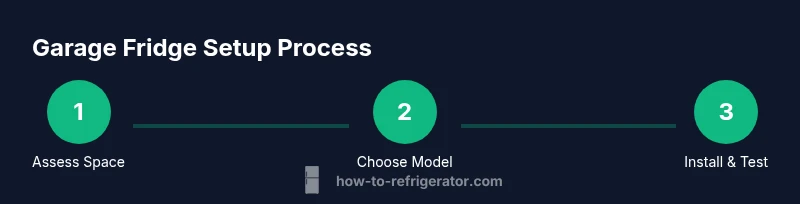
Measure typical garage temperatures throughout the year and evaluate exposure to sun and wind. Confirm there is a dry, stable space that supports safe electrical installation. This sets the baseline for whether a garage fridge will meet expected performance.
Tip: Record both peak summer and cold-season temps to inform model choice. - 2
Choose a garage-rated model
Select a refrigerator explicitly labeled for garage use or with an ambient operating range that includes your climate. Compare energy efficiency and door seals, and confirm warranty coverage for unconditioned environments.
Tip: Prioritize models with frost-free operation to minimize defrost cycles in humid garages. - 3
Prepare electrical readiness
Install a dedicated, grounded outlet in a dry location. Use a GFCI outlet for safety and connect to a surge protector rated for refrigeration. Do not rely on extension cords or shared circuits that could trip during peak cooling.
Tip: Test voltage with a multimeter before plugging in the fridge. - 4
Position and seal
Place the fridge on a level surface, with space around for air to circulate and a clear intake at the back. Check door seals for gaps and replace if needed. Avoid direct sunlight or proximity to heating elements.
Tip: Keep at least several inches of clearance behind the unit for airflow. - 5
Set up and test
Plug in and set a conservative interior temperature (as recommended by the manufacturer). Monitor for the first 24-72 hours using internal and ambient thermometers. Look for frost buildup or abnormal cycling and adjust settings accordingly.
Tip: Document initial readings to identify long-term trends. - 6
Monitor and adjust over time
Keep a maintenance log and inspect gaskets and coils regularly. If the garage becomes unusually hot or cold, revisit placement, insulation, or consider a different model. Seasonal checks help prevent spoilage and energy waste.
Tip: Plan a seasonal maintenance check at the start of each season.
FAQ
Is it safe to store all fridge types in a garage?
Not all refrigerators are suitable for garage use. Only models rated for wider ambient ranges and with robust moisture protection should be considered for unheated spaces.
Not all fridges are safe for garages. Use models rated for wider temperature ranges and moisture protection.
What temperature should a garage refrigerator operate at?
Set the interior to the manufacturer’s recommended range, typically higher than a kitchen unit in very cold environments and lower in hot conditions. Use a thermometer to verify both interior and ambient temperatures.
Set it per the manufacturer’s guidance and verify with a thermometer.
Do garages need a heating system for a fridge?
No dedicated heating is required, but insulation and climate adaptation are important. In extremely cold climates, a garage fridge may perform better with insulation or a specialized model.
No dedicated heater is required, but insulation helps a lot.
Can I run a garage fridge on a generator during outages?
If you rely on a generator during outages, ensure the generator’s output matches the fridge’s requirements and that proper ventilation and safety practices are followed to prevent carbon monoxide risk.
Yes, with proper generator sizing and safety.
What maintenance is essential for garage fridges?
Regularly inspect door seals, clean condenser coils, check for frost buildup, and monitor interior temperatures. Schedule seasonal checks to adjust settings for climate changes.
Inspect seals, clean coils, and monitor temps seasonally.
Will cold winters damage the compressor?
Extremely cold environments can slow startup or cause short cycling if not properly insulated. Use garage-rated models and consider extra insulation if winters are harsh.
Very cold winters can affect startup; insulation helps.
Watch Video
Top Takeaways
- Verify garage ambient temps before purchase.
- Choose a garage-ready fridge with solid seals and frost-free operation.
- Protect power with a GFCI outlet and surge protection.
- Monitor temperature and performance weekly at first.