Can a Refrigerator Be Kept Outside? Outdoor Storage Guide
Learn whether you can store a refrigerator outdoors, the risks involved, weather considerations, and practical placement tips. This How To Refrigerator guide helps homeowners decide and, if feasible, how to prepare an outdoor setup safely.


You can learn whether you can keep a refrigerator outdoors and what safeguards are necessary. This guide explains weather exposure, power setup, ventilation, and safety steps to decide if outdoor placement is feasible. Follow the step by step instructions to assess location, prepare the unit, and monitor performance after setup.
Can a Refrigerator Be Kept Outside?
A frequent question homeowners ask is can refrigerator be kept outside. The short answer is that most consumer models are not designed for long term outdoor use, and exposure to sun, rain, humidity, and wide temperature swings can stress seals, lubricants, and the compressor. According to How To Refrigerator, outdoor placement introduces risks that are not present in a typical kitchen, including moisture intrusion, electrical hazards, and potential warranty issues. In this section we explore when it might be feasible, what conditions must be met, and how to weigh the tradeoffs. If you live in a climate with stable shelter and temperature, you may consider an outdoor rated unit or a weatherproof enclosure. For most homes, the recommended approach is indoor storage or placement in a climate controlled space like a garage with reliable temperature control. The goal is to minimize moisture exposure, prevent direct sun, and preserve refrigerant integrity. This section provides a clear framework to help you decide, with practical steps and safety considerations woven through the guidance.
Weather and Environment: Why Outdoors Is Risky
Outdoor conditions collide with a fridge in several ways. Rain and humidity can corrode electrical components, condense on coils, and promote rust on metal panels. Direct sun raises ambient temperature inside the cabinet, increasing compressor cycling and energy use. Temperature swings between day and night stress seals and expand plastic parts. According to industry best practices summarized by How To Refrigerator, even sheltered outdoor areas can still experience moisture ingress and condensation that reduces efficiency and shortens component life. If the unit must be outdoors, plan for a sheltered footprint with good airflow and a stable microclimate to minimize these risks.
Alternatives to Outdoor Placement: Safer, Practical Options
In many cases, the safer path is to keep the refrigerator indoors or in a garage, basement, or utility room where climate control is possible. If you need cold storage near an outdoor entertaining area, consider alternatives such as a dedicated outdoor-rated unit installed in a weatherproof cabinet, a beverage cooler designed for outdoor use, or a compact fridge in a sheltered porch closet. Based on How To Refrigerator research, pairing a storage solution with proper weather protection can deliver similar convenience without compromising safety or warranty. Removable covers and controlled spaces can help when a wall outlet is nearby, but always verify that the device is rated for outdoor exposure and that installation complies with local electrical codes.
Electrical Safety and Code Considerations: Protecting People and Equipment
Outdoor refrigeration requires careful electrical planning. Use a dedicated outdoor GFCI protected outlet with a weatherproof cover. Avoid daisy chaining power strips or non outdoor rated cords. Ensure cords are rated for exterior use and kept away from puddles and lawn sprinklers. Ground fault protection reduces shock risk in damp environments. Check local codes or consult a licensed electrician before running new circuits to avoid unsafe conditions. The primary aim is to prevent moisture from entering outlets and to reduce trip hazards, especially in high traffic outdoor spaces.
Placement and Ventilation: Keeping Coils Cool and Airflow Free
A fridge needs adequate clearance around its condenser coils for efficient heat rejection. Outdoor placements should maintain several inches of air gap on all sides and a minimum distance from walls and furniture. Direct sun exposure should be avoided to prevent heat buildup inside the cabinet. If you must place a fridge outdoors, shield it from rain with a canopy or enclosure that still allows ventilation. For best results, position the unit on a level, dry surface and keep nearby vegetation trimmed to prevent moisture and debris from interfering with airflow.
Maintenance, Durability, and Warranty Implications: What to Expect
Exposure to moisture and temperature fluctuations can accelerate wear on seals, door gaskets, and electronics. Outdoor use can void warranties if the model is not explicitly rated for exterior operation. Regular maintenance becomes crucial: check door seals for cracks, inspect power cords for abrasion, clean coils to maintain efficiency, and monitor temperature stability. Document installation details and keep receipts and manuals in a dry place in case of warranty inquiries. If issues arise, consult the How To Refrigerator team for guidance on whether repairs or replacement are warranted in your scenario.
Real-World Scenarios and Decision Matrix: When Outdoors Is Feasible
Consider climate, shelter, and usage patterns. In temperate climates with strong year round shelter and controlled humidity, an outdoor rated cabinet paired with a purpose built unit may work. In hot or humid locations, or in regions with freezing temperatures, the risk grows substantially. Build a decision matrix noting climate data, shelter quality, and energy costs. The goal is a sound, defensible choice that prioritizes safety, reliability, and warranty coverage. Remember that the decision should be revisited if conditions change, such as renovations or weather events.
Quick Reference: What Homeowners Should Do Right Now
If you are contemplating outdoor storage, begin with a shelter assessment, confirm electrical readiness, and review manufacturer guidance. Create a safety checklist that includes weatherproof outlets, airflow clearance, and moisture control measures. If any red flags arise, revert to indoor storage or consult a professional. How To Refrigerator emphasizes that informed decisions protect your home and appliance investment.
Common Misconceptions Debunked: Facts vs Feelings
Many homeowners assume that a simple weatherproof cover solves all problems. In reality, outdoor placement introduces complex interactions between humidity, temperature, power, and electronics. Another misconception is that a garage is always suitable; garages experience temperature swings and may trap humidity or pests. Finally, some believe energy use will be lower outdoors due to cooler nights; in fact, outdoor heat load and equipment protection needs often offset any perceived savings.
Tools & Materials
- Outdoor-rated GFCI outlet(Ensure it is installed by code and has weatherproof cover)
- Weatherproof enclosure or cabinet(Ventilated design to prevent heat buildup)
- Shelter or canopy for rain protection(Avoid direct rain but allow airflow)
- Thermometer with humidity sensor(Monitors ambient and cabinet temperatures)
- Tape measure and level(Check clearance and provide stable surface)
- Weatherproof power cord or conduit kit(Only if an existing outlet is not nearby)
- Silicone sealant for weatherproofing(Seal gaps around enclosure)
- Cable management straps(Keep cords off the ground and clear of debris)
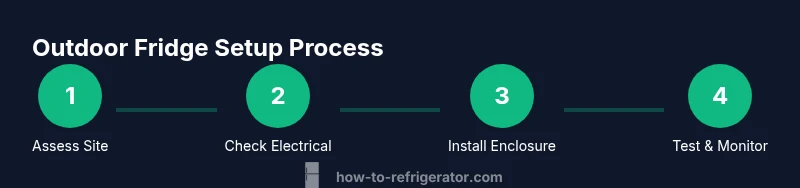
Steps
Estimated time: 60-90 minutes
- 1
Assess location for outdoor suitability
Identify a sheltered, dry spot with minimal direct sun and secure footing. Measure clearance around the unit to ensure adequate airflow on all sides. If the site fails any clearance test, choose a different location or consider indoor placement.
Tip: Take photos of the chosen spot for future reference and warranty documentation. - 2
Verify electrical readiness
Confirm a dedicated outdoor GFCI outlet is nearby and properly wired. Do not use indoor outlets or extension cords for permanent outdoor use. If no suitable outlet exists, hire a licensed electrician to install one.
Tip: Always test the GFCI outlet with a tester before connecting the fridge. - 3
Set up the weatherproof protection
Install a ventilated weatherproof cabinet or shelter. Ensure there is a minimum gap between the fridge and enclosure walls to allow air movement. Seal any gaps with weatherproof sealant to prevent moisture intrusion.
Tip: Place the unit on a level, dry stand to reduce vibration and noise. - 4
Prepare the appliance and connections
Move the fridge into position carefully, avoid bending the power cord, and secure it from tipping. Route cords through a protected channel and keep them dry. Install a cord strain relief if the enclosure lacks a dedicated pass-through.
Tip: Disconnect power during any re-positioning to prevent compressor surge. - 5
Test operation and monitor
Plug in the unit and verify that it reaches and maintains the desired temperature. Check for abnormal noise, frost buildup, or condensation around seals in the first 24 hours. Keep a journal of readings.
Tip: Set an initial target of 35-38 F (2-3 C) for refrigerator compartments and adjust if needed. - 6
Ongoing maintenance and review
Schedule regular inspections for seals, coils, and electrical connections. Clean coils every 3-6 months and inspect weatherproofing for wear. Reassess outdoor viability every season and after major weather events.
Tip: Document maintenance with dates and photos for warranty records.
FAQ
Is it safe to run a refrigerator outdoors in winter or freezing temperatures?
Running a standard fridge outdoors in freezing conditions can damage lubricants and may cause compressor failure. Outdoor rated models or indoor storage are safer options in cold climates. Always consult the manufacturer guidance before exposing appliances to freezing temperatures.
Outdoor use in freezing weather is not advised for standard fridges. Check the manufacturer guidance and consider indoor storage or an outdoor rated unit.
Will the warranty cover an outdoor installation?
Most manufacturers specify indoor use only; outdoor installation can void the warranty unless the model is explicitly rated for exterior operation. Review your warranty terms carefully and consult the manufacturer if you plan outdoor placement.
Warranties often require indoor use; outdoor placement may void coverage unless the unit is labeled for exterior use.
What climates are suitable for outdoor refrigeration?
Outdoor refrigeration is feasible mainly in sheltered, moderate climates with stable temperatures. In hot, humid, or freezing climates, an outdoor rated appliance in a protective enclosure is generally required. Always verify outdoor suitability with the product specs.
Outdoor use works best in sheltered, moderate climates; in extreme climates, consider outdoor rated units with proper protection.
What are safer alternatives to keep beverages outdoors?
Consider a dedicated outdoor rated beverage cooler or a compact fridge placed in a covered, ventilated outdoor cabinet. These options reduce risk while providing convenient access near outdoor living spaces.
A dedicated outdoor cooler or a weatherproof cabinet with a fridge can offer safer outdoor storage.
What maintenance is required for outdoor refrigeration?
Regularly inspect seals, clean condenser coils, check for moisture ingress, and verify electrical connections. Document events like heavy rain or heat waves and reassess the setup after major weather changes.
Inspect seals, clean coils, and monitor moisture and electrical connections; reassess after weather events.
Can I reuse an indoor fridge outdoors with a protective cover?
Even with a cover, indoor-only appliances are not guaranteed to endure outdoor conditions. If you must, use a purpose built outdoor enclosure rated for exterior use and follow manufacturer guidance to minimize risk.
Indoor fridges are not meant for outdoor use; protective enclosures may help but do not substitute for exterior rated equipment.
Watch Video
Top Takeaways
- Assess climate, shelter, and safety before outdoor placement
- Electrical readiness and weatherproof protection are non negotiables
- Outdoor use may void warranties unless the unit is rated for exterior operation
- Ventilation and stable temperature control are essential
- If in doubt, use indoor storage or a purpose-built outdoor appliance