Can a Refrigerator Be Plugged Into an Extension Cord? Safe Power Practices
Can a refrigerator be plugged into an extension cord? This educational guide explains why dedicated outlets are safer, outlines safer alternatives, and shows how to install a proper receptacle. A How To Refrigerator resource for homeowners.


No. A refrigerator should not be plugged into an extension cord. It needs a dedicated, properly grounded outlet on a stable circuit. Extension cords can overheat, cause voltage drop, and trip breakers, risking damage to the appliance and your home. If your outlet isn’t nearby, hire a licensed electrician to install a proper receptacle.
Can a refrigerator be plugged into an extension cord? Why this question matters
The can a refrigerator be plugged into an extension cord question is common when kitchen layouts change or outlets are hard to reach. The short answer, echoed by How To Refrigerator, is that refrigerators require a dedicated outlet on a stable circuit to operate safely. A proper outlet reduces the risk of overheating and voltage fluctuations that can stress the compressor or affect cooling performance. According to How To Refrigerator, ensuring a dedicated power source is the safest and most reliable approach for long-term reliability, warranty protection, and energy efficiency. Homeowners who are planning a kitchen remodel or moving appliances should treat this as a non-negotiable safety issue rather than a temporary workaround.
Extension cords and refrigerators: the hidden risks
Refrigerators demand steady voltage and solid grounding. An extension cord introduces resistance and potential heat buildup, particularly when the compressor starts and runs. Voltage drop can cause the compressor to work harder, increasing wear, noise, and the chance of nuisance tripping. Over time, these issues can affect cooling performance and shorten the appliance’s life. How To Refrigerator analysis shows that the primary danger of using an extension cord with a fridge is sustained heat and inconsistent power, which can lead to equipment damage and food safety concerns.
Safer choices: dedicated outlets and circuits
The recommended approach is a dedicated 15-amp or 20-amp circuit with a properly grounded 120-volt outlet that serves only the refrigerator, or a small set of non-safety-critical devices. This setup reduces electrical noise, keeps the fridge at a stable temperature, and minimizes the risk of tripping breakers that affect other kitchen appliances. If your current kitchen wiring doesn’t provide a suitable outlet, consult a licensed electrician to install one. The How To Refrigerator Team emphasizes avoiding improvised power solutions and sticking to code-compliant installations that protect your family and property.
Planning a safe outlet installation: steps homeowners can take
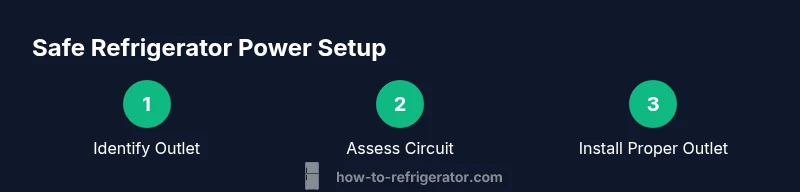
Start by locating an existing wall outlet on a dedicated circuit or determine where a new outlet can be added. If no suitable outlet exists, schedule a circuit assessment with a licensed electrician. They will determine amperage, run proper wiring, install a dedicated receptacle, and confirm grounding. In many kitchens, a simple receptacle on a dedicated run with proper box and cover is all that’s needed, but professional installation is essential for safety and to maintain warranty requirements. After installation, you’ll benefit from a stable power source that minimizes heat buildup and power interruptions.
Temporary measures and when to avoid them entirely
If you must relocate a fridge temporarily for cleaning or staging, the safest option is to move it closer to an existing outlet or arrange a quick, code-compliant upgrade. Do not rely on a short-term extension cord for long-term operation. If you are in a pinch, consider scheduling professional help rather than attempting risky improvisations that could lead to heat buildup or electrical faults. Remember: the temporary solution should not be treated as a permanent fix.
Safety checks before plugging in a dedicated outlet
Before connecting the fridge to a dedicated outlet, perform a few checks: verify the outlet is grounded, inspect the cord for cracks or heat damage, and test the outlet with a voltmeter to confirm roughly 120V. Keep the area around the plug dry, away from water, and ensure the fridge is on a level surface. If the outlet, plug, or wiring shows any damage, stop and call a licensed electrician. This proactive approach reduces the risk of shock, fire, or appliance failure.
Warranties, codes, and long-term protection
Many manufacturers require a dedicated circuit for refrigeration, and local electrical codes reflect this. Using an extension cord can void warranties and complicate insurance claims in the event of a fault. The takeaway is that choosing a dedicated outlet aligns with code, reduces risk, and helps protect food safety. The How To Refrigerator team recommends consulting with licensed professionals for installation and ongoing safety.
Quick safety checklist before plugging in any appliance
- Verify a dedicated outlet is available and properly grounded
- Inspect cords and outlets for damage and moisture
- Test voltage with a meter before plugging in the fridge
- Avoid any extension cord, power strip, or daisy-chain setup
- Schedule professional installation if required
Tools & Materials
- Voltage tester or multimeter(To verify outlet voltage and grounding)
- Non-contact voltage tester(Optional for quick live checks)
- Licensed electrician contact information(Essential if you need a new dedicated outlet)
- Measuring tape(Helpful for planning outlet placement)
Steps
Estimated time: 30-60 minutes (for planning and quick checks) + professional installation time
- 1
Identify outlet location
Locate a wall outlet on a dedicated circuit or determine where a new outlet can be added without crowding other devices. This step sets the stage for a safe, code-compliant installation.
Tip: Take measurements and photos of the current layout to share with the electrician. - 2
Test the current outlet
Use a voltage tester to confirm the outlet provides roughly 120V and that grounding is intact. If readings are abnormal, do not proceed and call an electrician.
Tip: Record the reading for future reference and warranty checks. - 3
Avoid temporary extension cords
Plan to relocate the fridge or install a dedicated outlet rather than using an extension cord for ongoing use. This step reduces fire and shock risks.
Tip: Treat this as a safety upgrade, not a temporary workaround. - 4
Consult a licensed electrician
Request a professional assessment to determine whether a new dedicated outlet is feasible and compliant with local codes and the fridge’s requirements.
Tip: Ask about required gauge, circuit rating, and grounding method. - 5
Install the dedicated outlet
Have the electrician install a properly anchored receptacle on its own circuit, with correct box, grounding, and cover. Confirm the wiring and test again after installation.
Tip: Avoid DIY wiring in living spaces; professional work ensures safety and warranty validity. - 6
Final safety test
Plug the fridge into the new outlet and monitor performance for 24–48 hours. Check for warming, unusual noises, or tripping breakers.
Tip: Keep a log of temperature stability and power events during the initial period.
FAQ
Is it safe to plug a refrigerator into an extension cord?
No. Extension cords are not designed for continuous, high-load appliances like refrigerators. They can overheat and cause safety hazards. Use a dedicated outlet installed by a licensed electrician.
No. Extension cords aren’t safe for refrigerators. Use a dedicated outlet installed by an electrician.
What kind of outlet does a refrigerator require?
A dedicated, grounded 120-volt outlet on its own circuit—typically 15 or 20 amps—without sharing power with other high-load devices.
A dedicated grounded 120-volt outlet on its own circuit.
Can a heavy-duty extension cord be used for short-term testing?
Even for testing, extension cords are discouraged because of heat and voltage stability concerns. If you must test, do so briefly and only under guidance from a professional.
Extension cords are not recommended, even briefly. Consult a professional for testing guidance.
Do warranties cover damages from using an extension cord with a fridge?
Most manufacturers advise against using extension cords with refrigeration. Using one can void or limit warranty coverage and complicate insurance claims.
Using extensions can void warranties—check your manual and talk to a pro.
What should I do if there’s a power outage while the fridge is plugged in?
Unplug the fridge until power returns and a qualified electrician inspects the outlet and circuit. Avoid reset attempts that could cause surges when power returns.
Unplug it and have a pro inspect the outlet when power returns.
Can I use a surge protector with a refrigerator?
Most refrigerators are not designed to be connected to surge protectors. Check your manufacturer’s guidance; if uncertain, install a dedicated outlet instead.
Only use a dedicated outlet unless the manufacturer approves a surge protector.
Watch Video
Top Takeaways
- Use a dedicated outlet for refrigerators.
- Avoid extension cords as a long-term solution.
- Hire a licensed electrician for safe, code-compliant installation.
- Test and monitor after installation for stability and safety.