Counter Depth Refrigerator vs Standard: A Practical Comparison
Compare counter depth vs standard depth refrigerators, covering depth profiles, capacity tradeoffs, aesthetics, energy efficiency, and buying tips to help homeowners choose the right model for their kitchen.


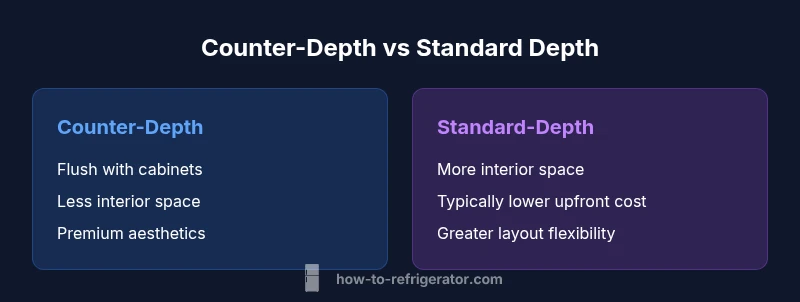
Counter-depth refrigerators sit flush with most kitchen cabinets for a built-in look, while standard-depth models project outward from the cabinet line. The core tradeoffs are aesthetics, usable capacity, and cost: counter-depth units typically cost more and offer slightly less interior space, but they create a sleek, integrated appearance that many buyers value. If you want a seamless, modern kitchen and have room to spare, counter-depth is compelling; if you prioritize total capacity and lower upfront cost, standard-depth is often the smarter pick. How To Refrigerator explains the differences.
What is a counter depth refrigerator vs standard
A counter depth refrigerator is designed to align with typical kitchen cabinetry, creating a smooth, flush look that many homeowners associate with high-end, built-in kitchens. In contrast, standard-depth models sit noticeably behind or in front of the cabinet face, depending on door swing and handle design. The visual difference matters in open-plan layouts and for people who want a cohesive, seamless line between appliances and cabinets. According to How To Refrigerator, the depth choice often comes down to a balance between aesthetics and practical space. In kitchens with shallow countertops or tight aisles, the flush profile can create a more open feel, while in busy households, a standard-depth unit may offer more usable interior space and simpler installation. When you start comparing models, focus on how the depth affects alignment with cabinetry, the amount of usable interior volume, and the overall flow of your kitchen.
Depth and installation: how it changes your kitchen workflow
The most immediate effect of choosing counter depth versus standard depth is installation and cabinet alignment. Counter depth requires precise measurements to ensure doors clear cabinet faces and adjacent appliances, and it often demands careful door swing planning to avoid interference with islands or traffic patterns. In practice, you may need to adjust nearby cabinetry or confirm that hinge clearance is adequate. How To Refrigerator notes that the flush look is easier to maintain in open kitchens, but any miscalculation can result in doors that hit the counter, or a fridge that doesn’t sit perfectly level. If your kitchen uses tall uppers or glass-front cabinets, verify whether the door handles protrude beyond the cabinet line, and consider hinges and door-in-door configurations that impact depth perception.
Capacity and usability: does depth affect storage?
The depth difference can influence interior layout, shelf adjustability, and overall usability. Counter depth models typically trade a portion of internal volume for a shallower profile, which means you may find slightly less space for tall items or bulky groceries. The practical impact depends on the model and organization features, such as adjustable shelves, deeper bins, and freezer compartment design. In real-world kitchens, efficient internal layout—like tiered shelves and smart door storage—can mitigate space loss, but you should measure your typical grocery load and compare usable gallons or liters conceptually, rather than relying on external depth alone. If you routinely store large platters or oversized containers, standard-depth may offer a more comfortable fit.
Aesthetics, integration, and home resale value
For many homeowners, the appearance of the kitchen is a deciding factor. Counter-depth models can be panel-ready or designed to accept custom cabinetry panels, producing a seamless, built-in impression. This integration often contributes to a modern, cohesive aesthetic that can influence perceived value. However, the flush look comes with trade-offs in interior layout flexibility and sometimes in feature availability. How To Refrigerator emphasizes that the choice should align with your kitchen’s overall design language and your plans for future renovations. If you value a high-end, magazine-worthy kitchen, counter-depth typically shines; if your priority is pragmatic storage and flexibility, standard-depth remains compelling.
Energy efficiency and performance considerations
Depth is not the sole driver of efficiency; compressor type, insulation, door seals, and special features (like energy-saving modes or door-in-door configurations) play major roles. Many counter-depth models offer energy-efficient options comparable to standard-depth units, but the overall footprint can influence heat transfer and door-opening exposure. In practice, you’ll want to compare the energy ratings and expected annual consumption per model rather than assuming counter-depth automatically uses more or less energy. How To Refrigerator notes that efficiency often tracks with overall build quality, insulation thickness, and gasket integrity rather than depth alone.
Price, value, and total cost of ownership
Price is usually the most tangible difference between counter-depth and standard-depth refrigerators. Counter-depth units generally command a premium due to their construction, panel-ready options, and the demand for a flush kitchen look. This premium can affect long-term value, especially if you plan to resell soon. At the same time, broader availability and competition can influence price trends over time. Homeowners should weigh the upfront premium against potential gains in aesthetics and integration, as well as expected maintenance costs associated with more complex hinge systems or panel-ready designs. The decision often hinges on whether the look and flow of the space outweigh the extra cash upfront.
How to measure depth: reading specs and practical checks
To avoid misalignment, start with the spec sheet and then verify in person. Read the official depth measurement, including door handles and hinges, and compare it to your cabinet depth. Check for door swing requirements and ensure there is adequate clearance for walkway paths and island access. Practical checks include bringing a tape measure to the showroom, measuring your cabinet face-to-face depth, and assessing whether you’ll need to reposition doors or add negative space around the appliance. Remember to account for doorway clearance and potential impact on nearby drawers and cabinets so you don’t end up with a tight, difficult pastry shelf or crisper access.
Decision framework: which is right for your kitchen?
If your goal is an integrated, high-end look with a streamlined footprint, counter depth is worth serious consideration—especially in open-plan layouts where matching lines matter. If you need maximum storage, flexibility, and a lower upfront investment, standard-depth generally serves best. A practical approach is to shortlist models in both depth classes, compare interior layouts, and visit showrooms to assess feel and access. Create a simple pros/cons matrix that rates aesthetics, capacity, and cost for your family’s routines, then weigh the trade-offs against your kitchen’s width, traffic patterns, and renovation plans. How To Refrigerator’s framework centers on aligning the purchase with your actual cooking habits and space constraints.
Real-world buying tips and checks
When shopping, look beyond depth alone and examine shelf configurations, door storage, and freezer organization. Prioritize models with adjustable shelves, full-width crisper drawers, and smart energy features. Confirm that the external depth accounts for door handles and hinges, and verify warranty terms for hinges and seals. If you live in a space-conscious home, request a side-by-side comparison of counter-depth and standard-depth units to visualize the lines in your kitchen. Finally, factor in installation requirements and potential cabinet adjustments—these can significantly affect both the installation experience and the long-term satisfaction with your refrigerator choice.
Comparison
| Feature | counter-depth refrigerator | standard-depth refrigerator |
|---|---|---|
| Depth profile (how it sits in the kitchen) | flush with cabinetry for a built-in look | projects out from cabinetry and often becomes a visible feature |
| Usable interior space | slightly less interior space due to shallower depth | typically more interior space for tall items and bulky groceries |
| Aesthetics and kitchen flow | clean, seamless lines—great for modern kitchens | classic look with flexible placement options |
| Installation considerations | requires precise alignment with cabinetry | more forgiving in layouts with existing cabinetry |
| Price premium | generally higher upfront cost | often lower upfront cost than counter-depth equivalents |
| Energy efficiency potential | depends on model; depth is not a sole determinant | depends on model; depth is not a sole determinant |
| Best for | homes prioritizing aesthetics and built-in feel | homes prioritizing capacity and budget |
Strengths
- Improved kitchen aesthetics with a seamless look
- Potentially higher resale value in modern designs
- Better alignment with existing cabinetry in new builds
- Panel-ready options enable customized integration
Cons
- Higher upfront cost and possible interior space trade-offs
- More complex installation and potential cabinet modifications
- Can be less forgiving in tight kitchens due to swing clearance
Counter-depth is best for a flush, integrated kitchen look; standard-depth wins on space and cost.
If your kitchen design prioritizes a seamless, built-in appearance and you’re willing to pay a premium for that look, counter-depth is a strong choice. If you need maximum storage, lower upfront cost, and easier installation, standard-depth is typically more practical for everyday use.
FAQ
What is the main difference between counter-depth and standard-depth refrigerators?
The main difference is depth alignment with cabinetry. Counter-depth units sit flush with cabinets for a seamless look, while standard-depth models sit back or forward from the cabinet line, affecting aesthetics, space, and installation. Both types can offer similar features depending on the model.
The main difference is depth: counter-depth for a flush look, standard-depth for more space and flexibility.
Do counter-depth refrigerators save space or limit capacity?
Counter-depth models prioritize appearance and fit with cabinetry, often sacrificing a bit of interior space. If you regularly store large items, you may notice a difference, while organized interiors can help mitigate capacity concerns.
They look flush with cabinets but may have a little less interior room; good organization helps.
Are counter-depth models more expensive to buy?
Yes, counter-depth models typically carry a price premium due to their build, cabinetry-ready design, and demand for integrated aesthetics. The exact premium varies by brand and features.
They usually cost more upfront because of the built-in look and panel options.
Can you retrofit a standard-depth fridge to sit flush with cabinets?
In many cases, you cannot truly retrofit a standard-depth fridge to sit perfectly flush without cabinet modifications or custom panels. It’s best to plan depth during the initial kitchen design or consult a pro for options.
A retrofit shuffle is possible in some cases, but may require changes to cabinets or panels.
What should I measure before buying a counter-depth fridge?
Measure the cabinet depth, door swing clearance, and the overall footprint including handles and hinges. Also check nearby pathways and island clearances to ensure comfortable access.
Measure cabinet depth and door clearance to avoid fitting issues.
Which brands offer true counter-depth options?
Many major brands offer counter-depth options across different configurations. Look for models that specify counter-depth in their specs or product pages and compare features that matter to your kitchen.
Most big brands have counter-depth choices; check specs to be sure.
Top Takeaways
- Choose counter-depth for a cohesive kitchen aesthetic and built-in feel
- Prioritize standard-depth when interior capacity and cost matter more
- Measure door swing, cabinet depth, and clearance before buying
- Compare interior layouts, not just exterior depth
- Expect a price premium for counter-depth models
- Check energy features and warranty terms when comparing models