Cabinet-Style Refrigerators: A Side-by-Side Comparison
Explore cabinet-style refrigerator options—integrated panels, built-ins, and cabinet-front looks. This How To Refrigerator guide compares aesthetics, installation, costs, and maintenance to help homeowners choose the best path for a seamless kitchen design.


For a refrigerator that visually reads as part of the cabinetry, the best path is an integrated, panel-ready unit installed flush with surrounding cabinets. This comparison weighs integrated panels, built-in installs, and freestanding fridges wrapped in cabinet-style doors. Read on to understand design differences, costs, and practical tips. We cover flush mounting, panel compatibility, and service access.
The Aesthetic Goal: understanding the refrigerator looks like cabinet and why homeowners pursue it
According to How To Refrigerator, the goal of a cabinet-like refrigerator goes beyond function; it’s about visual harmony. When your kitchen cabinets, countertops, and appliances share a single visual language, the room feels more spacious and cohesive. The phrase refrigerator looks like cabinet captures a design intent that many homeowners pursue during renovations or new builds. The first decision is whether you want a completely integrated panel system or a cabinet-front look on a freestanding unit. In either case, the objective is to minimize metal seams, vents, and hardware that disrupt the cabinetry rhythm. The How To Refrigerator team emphasizes that a successful cabinet look starts in the planning phase, with precise measurements, panel compatibility checks, and a clear sense of airflow and clearance. The result is an appliance that performs as well as it appears—an appliance that blends rather than interrupts the kitchen’s visual story.
bold: true,
Feature Comparison
| Feature | Integrated Panel Refrigerator | Built-in Refrigerator | Freestanding Refrigerator with Cabinet-Style Doors | Custom Cabinet Front |
|---|---|---|---|---|
| Flush Fit with Cabinetry | Excellent | Good | Moderate | Excellent |
| Panel Compatibility | Full panels | Full panels | Partial panels | Custom fronts |
| Installation Complexity | High | High | Medium | Very High |
| Typical Cost Range | $3,000–$7,000 | $4,000–$9,000 | $2,000–$5,000 | $5,000–$12,000 |
| Best For | Cohesive cabinet look, new builds | Flush appearance, remodels | Budget-friendly cabinet look | Premium, one-of-a-kind fronts |
Strengths
- Strongest cabinet-like look when paired with matching panels
- Flexible installation paths for different remodel scopes
- Can improve kitchen resale appeal by blending with cabinetry
- Panel-ready options minimize visible appliance hardware
Cons
- Higher upfront cost compared with standard refrigerators
- Longer lead times and installation planning required
- Limited model availability compared to standard freestanding units
- Maintenance alignment with cabinetry can complicate service
Integrated panel and built-in options edge ahead for a seamless cabinet look, but budgeting and remodel scope determine the best fit
Choose integrated or built-in for the strongest cabinet alignment. Opt for cabinet-front or panel-wrapped freestanding units if you need lower upfront costs or faster timelines. The right path balances aesthetics with installation practicality.
FAQ
What is the main difference between an integrated panel refrigerator and a built-in refrigerator?
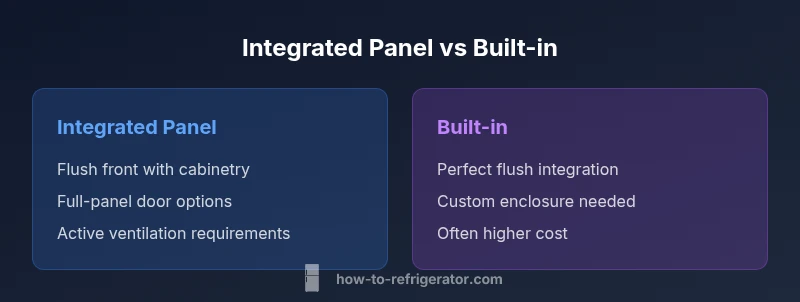
An integrated panel refrigerator uses cabinet panels to cover the door fronts, creating a seamless look with existing cabinetry, but may be freestanding within a framed enclosure. A built-in refrigerator is designed to sit flush inside cabinetry and often requires integration into the cabinet structure for a truly seamless fit. Both aim for a cabinet-like appearance, but installation effort and windowing for airflow vary.
Integrated panels blend with cabinets, while built-ins are flush installed—both aim for a seamless look; installation effort differs.
Can I retrofit my existing fridge with cabinet panels?
Retrofitting is possible on some panel-ready models, but it depends on the fridge’s door dimensions and hinge design. In many cases, homeowners opt for a panel-ready model at purchase time for a guaranteed fit. Retrofit complexity can add cost and may require a professional.
Panel-ready current models are easier to retrofit; check panel compatibility before buying.
Do cabinet-style fridges affect kitchen resale value?
Cabinet-style fridges can positively impact resale value when they match the overall kitchen style. Prospective buyers often perceive a cohesive design as a sign of quality and thoughtful remodeling. The impact varies by market and execution quality.
A cohesive cabinet look can boost perceived value in resale, especially if execution is high-quality.
How long does installation take for a cabinet-style fridge?
Installation time depends on whether it is a simple panel replacement, a built-in retrofit, or a full flush-integration. Expect several days to weeks for custom cabinetry work, electrical and ventilation hookups, and finish work. A professional installer can provide a timeline based on your kitchen layout.
Expect several days to weeks for full integration; professionals can give a precise timeline.
Are there ventilation considerations for flush-mount units?
Yes. Flush installations require adequate clearance for airflow around the condenser and fans. Improper ventilation can reduce efficiency and shorten appliance life. Always follow the manufacturer’s ventilation specs and have a licensed installer verify space and exhaust paths.
Ventilation is critical for efficiency and longevity in flush installations.
Is it worth the extra cost for a cabinet-style look in a small kitchen?
In small kitchens, a cabinet-style look can make the space feel larger by reducing visual clutter. However, the extra cost and complexity should be weighed against overall budget and remodeling scope. In some cases, simpler approaches offer similar aesthetics at lower risk.
In compact kitchens, a cabinet look can pay off if budget and risk are balanced.
Top Takeaways
- Prefer panel-ready or built-in fridges for the most seamless look
- Plan for precise cabinet alignment and airflow clearance
- Budget 3–4x cabinet costs when comparing to standard models
- Factor lead times into remodel schedules
- Consider maintenance access when choosing flush installations