Bread Shelf Life in the Refrigerator: A Practical Guide
Learn how long bread lasts in the refrigerator, how fridge storage affects texture, and practical tips to extend freshness. This expert guide from How To Refrigerator covers bread types, storage methods, and foolproof steps for homeowners.


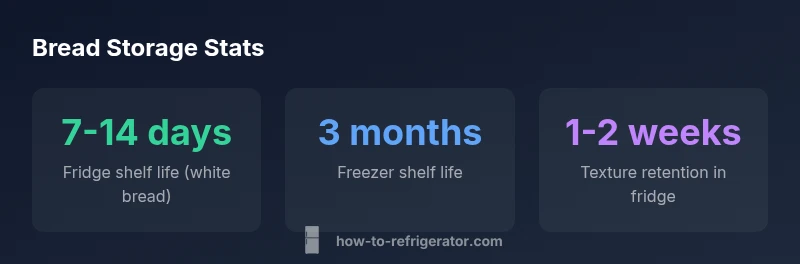
On average, bread will last about 1 to 2 weeks in the refrigerator when stored in an airtight bag or container. Refrigeration slows mold but can cause faster staling and changes to crumb texture. For longer storage without quality loss, freeze bread for up to 3 months and thaw as needed.
Why fridge storage matters
If you're considering how long will bread last in the refrigerator, the answer depends on the bread you buy or bake, how you package it, and how stable your fridge is. The How To Refrigerator team has found that the cold, dry air slows mold growth but accelerates bread staling, which means the bread can still be safe to eat even as its texture deteriorates. For homeowners, that implies using airtight packaging and consistent temperatures to maximize usable life. Temperature swings from opening the door introduce moisture shifts that encourage both mold and crumb dryness. In practical terms, treat the fridge as a short-term resting place rather than a long-term bread keeper. If you bake moist loaves or buy bakery bread with a soft crumb, anticipate faster texture changes than with dense loaves. The key is to minimize air exposure and moisture loss, and to separate bread storage from high-humidity produce. A simple, repeatable approach is to store slices or halves in labeled, airtight bags and use the freezer for longer-term storage when possible. In sum, fridge storage is a balance of safety and quality.
Bread shelf life by type
Different bread varieties behave differently in the fridge. White sandwich bread tends to stay soft and mold-free for about 7-14 days when kept wrapped tightly, though flavor and crumb can dull over time. Whole-wheat and multigrain loaves usually shorten to 5-12 days because their natural oils and bran layers invite moisture loss and crust hardening. Sourdough and artisanal loaves may retain acceptable texture for 5-10 days, depending on hydration and crust thickness. For all types, the fridge slows mold but speeds staling, so use the bread while it maintains its best texture. If you plan to keep bread for longer than two weeks, freezing portions is recommended and can preserve quality for up to about 3 months. Always use airtight packaging to minimize freezer burn or moisture loss. Quick tip: slice before freezing so you can thaw only what you need.
Bread shelf life by type in the fridge
| Bread Type | Fridge Shelf Life | Texture Notes |
|---|---|---|
| White bread | 7-14 days | Soft crumb fades after 2-3 days |
| Whole wheat | 5-12 days | Crumb dries faster |
| Sourdough/Artisan | 5-10 days | Crust may harden |
FAQ
Can I store bread in the fridge after buying it at the store?
Yes, if you want to slow mold growth. Keep it in an airtight bag or container and place it away from humid produce. Expect some staling in a few days, so use it while texture is best.
Yes. Store it airtight in the fridge and use it while the texture is still good.
Does refrigeration always extend bread life?
Refrigeration slows mold but speeds staling. It typically extends safety but not freshness; plan to freeze if you need longer storage.
It slows mold but speeds staling, so it may not keep quality as long as you expect.
Is freezing bread better than refrigerating for long-term storage?
Yes. Freezing preserves quality for about 3 months. Thaw slowly or toast to restore texture.
Yes. For long-term storage, freeze bread and thaw as needed.
How should I wrap bread for fridge storage?
Use airtight bags or wrap tightly in plastic or foil to minimize moisture loss and odor transfer.
Wrap it tightly in an airtight bag.
How can I tell bread has spoiled in the fridge?
Look for visible mold, unusual odors, or a sour taste to indicate spoilage. If in doubt, discard.
Check for mold or sour smells; when in doubt, discard.
Can I refrigerate homemade bread with a very soft crumb?
Homemade soft crumb bread tolerates refrigeration but may stale faster; consider freezing portions if you won't finish in a few days.
Homemade soft crumb bread may stale faster in the fridge; freeze for longer storage.
“Bread storage quality hinges on balancing mold risk and texture. Refrigeration reduces mold risk but accelerates staling, so plan for freezing when long-term storage is needed.”
Top Takeaways
- Store bread in airtight packaging to slow staling
- Use fridge storage for short-term keeping (1–2 weeks)
- Freeze for longer-term storage (up to 3 months)
- Label and rotate bread to avoid waste