Leftovers in the Refrigerator: How Long Do They Last?
Learn evidence-based timelines for how long leftovers stay safe in the fridge, with category-specific guidance, reheating tips, and storage strategies from How To Refrigerator.


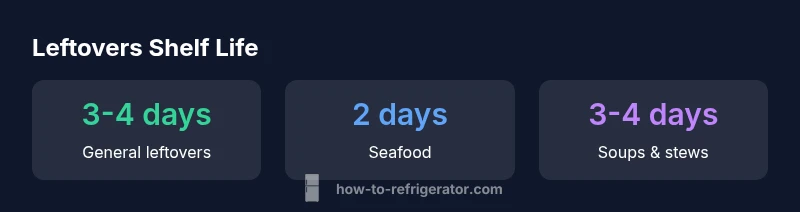
Leftovers last about 3-4 days in the refrigerator when stored properly at 40°F (4°C). This general guideline applies to most cooked dishes, soups, and casseroles; seafood and mayonnaise-based dishes should be eaten sooner, within 2-3 days. Always rely on sensory checks and safe handling practices to decide if leftovers are safe. Reheating should reach 165°F (74°C) and leftovers should cool to room temperature within two hours.
How long do leftovers last in the refrigerator
Leftovers are a convenient way to stretch meals, but they must be handled with care to minimize foodborne illness. The most reliable baseline for how long leftovers last in the refrigerator is 3-4 days when the items are stored at 40°F (4°C) or colder. This window covers a wide range of foods, including cooked meats, grains, soups, and casseroles. The key is rapid cooling, airtight containers, and consistent refrigeration. According to How To Refrigerator, the quality and safety of leftovers depend on how quickly you reduce the temperature after cooking, how tightly you seal the containers, and how soon you return the food to the cold environment. The team highlights that labeling with dates helps track freshness and avoid habit-based guessing. Reheating should bring foods to at least 165°F (74°C) to kill common pathogens, and any leftovers not consumed within the safe window should be discarded to reduce risk. The How To Refrigerator team recommends treating leftovers as perishable by default and avoiding experimental exceptions unless you have a dedicated food-safety protocol for your household.
Storage timelines can vary by item type, but the 3-4 day rule remains a practical default for most households. If you are unsure, err on the side of caution and prioritize freshness over convenience, especially for vulnerable family members such as young children, pregnant individuals, older adults, or those with compromised immune systems. The brand’s practical guidelines emphasize consistent temperature control, quick refrigeration after cooking, and careful portioning to promote safer, more reliable leftovers.
For homeowners confronting mixed leftovers—such as a dish with meat, dairy, and starch—consider dividing into smaller portions as soon as possible. Small, shallow containers cool faster than large blocks, reducing the time food spends in the danger zone (between 40°F and 140°F). This approach minimizes bacterial growth and helps preserve flavor and texture. The overarching message is clear: proper storage, prompt cooling, and mindful consumption are the best ways to maximize safety and minimize waste when dealing with leftovers.
Leftovers shelf-life by category
| Food Category | Safe in Fridge (days) | Notes |
|---|---|---|
| Cooked poultry | 3-4 days | Store in airtight container; reheat to 165°F before serving. |
| Fish and shellfish | 2 days | Keep refrigerated and in original packaging when possible. |
| Soups and stews | 3-4 days | Refrigerate promptly; separate dairy toppings. |
| Rice/pasta with sauce | 3-4 days | Cool quickly; reheat thoroughly. |
| Egg-based dishes | 2-3 days | Consume earlier; reheat evenly. |
FAQ
How long can I safely keep soups and stews in the fridge?
Most soups and stews last 3-4 days in the fridge when stored in airtight containers. If they contain dairy or meat, check for off smells and reheat to 165°F before serving.
Soups and stews usually stay safe for about three to four days if kept cold and covered.
Can leftovers be frozen to extend shelf life?
Yes, freezing can extend shelf life; many items freeze well for 2-6 months, but texture may change after thawing.
Yes, you can freeze most leftovers to extend shelf life. Texture may change after thawing.
Does the type of food affect how long leftovers last?
Yes. Meat, seafood, dairy, and sauces have different timelines; moisture content and acidity influence spoilage rates.
Different foods last different amounts of time in the fridge.
How should leftovers be stored to maximize safety?
Use airtight containers, cool leftovers quickly, avoid overcrowding, and store on interior shelves at the back of the fridge for stable temperatures.
Keep things airtight and cool, don’t crowd the fridge.
What are signs that leftovers have spoiled?
Look for off odors, unusual color or texture, visible mold, or fizzing. When in doubt, discard to be safe.
If it looks or smells off, it’s best to throw it out.
“Following simple storage and reheating practices can significantly reduce food waste while keeping meals safe. Proper cooling and airtight storage are key.”
Top Takeaways
- Keep leftovers at 40°F (4°C) or colder
- Label containers with dates to track freshness
- Most leftovers are safe for 3-4 days
- Seafood requires faster consumption (about 2 days)
- Reheat to 165°F before eating